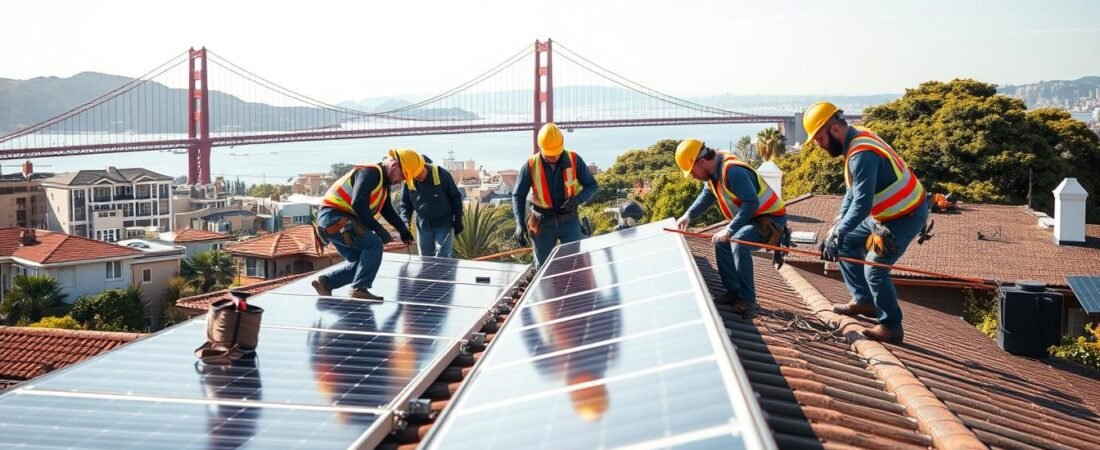
Find a practical directory to compare local installers by price, equipment, timelines, and service. This guide helps homeowners request quotes quickly and cut straight to the options that fit their roof and budget.
Expect clear, actionable comparisons that show how proposals line up on system size, production estimates, scope of work, warranties, and contract terms.
We cover local installers, national providers serving the area, and Bay Area equipment firms that shape system design. Choose based on roof type, shading, battery goals, and warranty preferences — not just star ratings.
Because dense building layouts and tricky roofs matter here, experience and design approach often beat the lowest headline price. Use our short list and request quotes from a vetted service provider to get apples-to-apples proposals.
Why San Francisco homeowners are choosing solar panels and solar battery storage
Homeowners in the Bay Area choose rooftop systems to lower monthly bills and add reliable backup during outages. Many want predictable costs now and protection against rising utility rates later.
Lower electric bills with clean power
Local owners use solar panels to offset utility usage and stabilize payments. Panels produce daytime energy that cuts grid consumption and shrinks monthly statements.
Backup power during outages
Adding a solar battery gives backup when the grid goes down. Some homeowners install whole-home backup, while others choose partial backup for key circuits. Batteries also time-shift generation to peak-price hours for extra savings.
Environmental benefits in the Bay Area
Many buyers value lower household emissions and the chance to power a home with solar energy. Choosing storage supports local resilience goals and reduces reliance on fossil-fuel generation.
| Motivation | Typical goal | How storage helps |
|---|---|---|
| Lower bills | Reduce monthly costs | Store daytime generation for evening use |
| Outage protection | Maintain essential loads | Backup circuits or whole-home support |
| Environmental impact | Lower emissions | Shift to clean power and reduce grid demand |
Choosing the right installer matters. The rest of this guide explains how pros translate goals into equipment, sizing, and warranties so homeowners get the results they expect.
What this service directory covers and how to use it
Find practical service listings that emphasize workmanship, permitting help, and clear proposals. This section explains who benefits most and how to scan listings fast for real value.
Who this list is for
This directory is for homeowners planning an installation and wanting to compare service options efficiently. It helps you move beyond brand names to what matters on your roof and permit paperwork.
How to compare a company quickly
Look at core items first. Strong design, permitting support, clean installation practices, and reliable long-term help matter more than flashy ads.
- Quick-compare checklist: licensing/insurance, years in business, equipment options, warranty coverage, and reviews.
- Shortlist a few firms, then request comparable quotes with the same assumptions (battery yes/no, monitoring, financing type).
- Experience in dense neighborhoods lowers surprises from permitting, interconnection, and layout constraints.
| What to check | Why it matters | Red flags |
|---|---|---|
| Licensing & insurance | Protects you from liability and ensures code compliance | No proof of coverage or vague certifications |
| Years in business | Signals local experience and support capability | Frequent name changes or short track record |
| Warranty & service | Long-term repairs and performance guarantees | Unclear warranty terms or no labor coverage |
| Comparable quote assumptions | Ensures apples-to-apples cost and production estimates | Different battery, monitoring, or inverter choices across bids |
For a quick overview of local options and buyer advice, see this buyer guide. Later sections will show how to read proposals and spot scope gaps or unrealistic production estimates.
solar panel companies san francisco: what to look for before you request quotes
Before you request quotes, learn which traits separate dependable local installers from inexperienced bidders.
Local experience matters. Look for teams that understand roof pitch, old electrical panels, limited access, and homes packed close together. These factors change layout, shading, and safety needs.
Proven project management
Good project management shows in clear milestones, proactive updates, and permits handled without delays. Expect a company that tracks timelines and coordinates with utilities.
Track record and completion
Check documented projects, consistent reviews, and on-time finishes. Ask for recent references and photos of similar work in nearby neighborhoods.
Transparent pricing and equipment choices
Quotes should itemize system size, panel model, inverter type, battery add-ons, main-panel upgrades, and monitoring. Clear line items reduce surprises and make comparisons fair.
| What to check | Why it matters | What to ask |
|---|---|---|
| Local experience | Reduces permit and layout surprises | How many similar projects in your neighborhood? |
| Project management | Keeps time and cost predictable | Who is the point of contact and milestone schedule? |
| Itemized pricing | Makes bids comparable | Request an itemized scope with equipment models |
| Warranty coverage | Protects performance and labor | What are equipment and workmanship warranty terms? |
Equipment and warranty basics: discuss panel and inverter options, battery choices, and roofing approach early. Confirm equipment warranty, labor coverage, and a workmanship warranty to protect long-term value.
Solar installer vs solar manufacturer vs solar tech provider
Understanding who does what makes it easier to compare bids and know who will own long-term responsibility.
Installers who design and build residential systems
Installers handle site design, permits, and the physical build. They size arrays for your needs and coordinate inspections. Ask who will manage the project and provide a local service record.
Equipment brands and module makers
Manufacturers set specs for modules and warranties. They affect availability, degradation rates, and the length of factory support.
Remember: a brand name on a quote doesn’t mean that brand will be the contractor who does the work.
Inverter and MLPE companies that support performance
Inverters and MLPEs shape system performance, monitoring, and safety.
Choose hardware with clear performance data and robust monitoring so production estimates can be verified — don’t rely on vague “record” marketing claims.
- Tip: Confirm who sells the contract and who backs the equipment.
- Tip: Ask for monitored production estimates and warranty contacts.
Top-rated local installer spotlight: Luminalt (San Francisco)
Luminalt is a locally owned firm founded in 2004 by Jeanine and Noel Cotter. They built a reputation designing systems for tight roofs and dense neighborhoods.
Locally owned since 2004 with San Francisco-focused rooftop designs
What SF-focused rooftop design means: creative layouts for tight setbacks, partial shading, and narrow access. Their team adapts racking and tilt so systems fit unusual roofs without excessive upgrade work.
Solar PV panels plus battery energy storage for self-reliance
They pair solar PV panels with battery energy storage to reduce outage risk and boost resilience at home. Batteries store daytime production for evening use and provide backup when the grid falters.
Community involvement and Bay Area nonprofit projects
Luminalt has completed multiple Bay Area nonprofit and locally owned business projects. That track record shows local engagement and repeatable work quality.
Office location and service area considerations
Their office at 10 Carolina Street, San Francisco, CA 94103 supports quick dispatch and local service. Ask any installer, including Luminalt, how post-install service requests and monitoring are handled over the years.
“We prioritize clear communication and long-term support for every rooftop we serve.”
National residential solar options serving San Francisco
National providers can offer predictable pricing, broader financing, and a single customer portal for service. Many homeowners pick a national name for standardized processes and nationwide support while they compare local bids.
Sunrun: lease-style choices with storage
Sunrun sells residential solar panels and home batteries with flexible programs. You can lease to cut upfront cost or buy outright if you want full ownership.
SunPower: integrated systems and long warranty focus
SunPower positions itself as an all-in-one provider with storage and a strong warranty message. The company highlights more than 35 years in the market and stresses long-term coverage.
What to ask national providers:
- Who performs the install at my home and who handles service?
- How are warranties administered and who is the contact for claims?
- What financing terms affect total cost and contract flexibility?
| Provider | Offer | Install & Service |
|---|---|---|
| Sunrun | Leases or purchases; storage available | National network; ask who does onsite work |
| SunPower | All-in-one systems; long warranty emphasis | Direct service or certified local partners |
Tip: Get at least one local quote and one national quote to compare price, equipment, and warranty details side-by-side.
Bay Area solar and energy companies that influence equipment choices
Equipment choices from local tech firms shape how a rooftop system performs on foggy, varied roofs.
Enphase Energy: microinverters and module-level monitoring
Enphase Energy (Fremont) leads with microinverter-based systems and integrated batteries. Microinverters give module-level monitoring and can improve reliability on roofs with mixed shading.
Tigo: MLPE add-ons for safety and output
Tigo builds flexible MLPE like the TS4 platform. These add-on devices boost safety, help recover energy when modules mismatch, and make maintenance easier.
First Solar: thin-film module context
First Solar focuses on thin-film technology used mainly in larger projects. That technology shows homeowners that not all solar module types behave the same under heat and low light.
Why brands matter: hardware affects monitoring, shading behavior, and long-term service. Ask installers which equipment lines they install and what alternatives exist at different price points.
Given fog, morning shade, and varied roof planes in the francisco bay area, MLPE and microinverter choices often improve overall energy production and site-specific performance.
How to compare services and proposals from solar panel companies
A clear method for comparing proposals keeps you from getting lost in marketing claims and fine print. Start by aligning each bid to the same assumptions: roof area, battery yes/no, production target, and timeline.
Step-by-step comparison
- Check the design approach: integrated solar roofing vs standard roof mounts and how shading from trees or nearby buildings is modeled.
- Match system size to past utility bills and planned future loads (EV or heat pump).
- Compare battery options based on backup goals (keep fridge and lights on) versus bill savings (time-shifting).
What to verify in monitoring and guarantees
- Ask whether production estimates are conservative and viewable in a customer portal.
- Confirm performance guarantees and remedies if production falls short.
- Check who accesses alerts and how troubleshooting is handled.
Contract and scope checklist
- Scope of work with equipment models and exclusions.
- Who pays for electrical or roofing upgrades and how unexpected roof issues are addressed.
- Warranty details for parts, labor, and performance.
Customer service signals
Scan reviews for response times on monitoring alerts, warranty claims, and post-install support. A responsive service team matters far more than catchy pricing when problems arise.
Solar panel installation timeline in San Francisco: what to expect
A realistic schedule reduces surprises and keeps everyone aligned from quote acceptance to final interconnection.
Compare quotes and sign a contract
Request comparable bids with the same assumptions so you can compare apples to apples. Confirm which equipment is proposed, including panels and inverters, and note who will act as your solar installer.
Site visit (in-person or virtual)
Expect a short walk-through or a video call. This step verifies roof access, shading, and electrical access. It lowers the chance of change orders and delays.
Permits, documents, and ordering
Permit submission and equipment ordering can take the most time. Municipal workload and supply lead times affect when crews arrive.
Installation day: one to three days
Typical on-roof work includes racking prep, wiring runs, placing panels and inverters, and final tie-ins. Most homes finish in one to three days depending on roof complexity.
Inspection and interconnection approval
A city inspector must sign off before the utility grants permission to operate. The system may be installed before it is legally allowed to run, so plan around that gap.
Permits, inspections, and interconnection in the city and the San Francisco Bay Area
Administrative steps often stretch a project timeline even when installation is fast.
Before crews arrive, plans and permit applications are filed. That paperwork moves through reviews, corrections, and final approvals. Each step adds a little more time to the schedule.
Typical documentation flow
Plans → permit submission → reviewer comments (if any) → corrected resubmission → permit issuance. Once approved, the installer schedules the build and the town schedules an inspection.
What inspectors check
| Check | Why it matters | Common note |
|---|---|---|
| Electrical safety | Protects circuits and people | Proper wiring and labels |
| Mounting & flashing | Roof integrity | Secure attachments and weatherproofing |
| Code compliance | Meets local standards | Correct equipment labeling |
In the san francisco bay and the wider bay area, dense neighborhoods and varied building stock sometimes trigger extra coordination. Streets, access, and historic structures can require more review time.
Practical tip: Ask each installer what permitting support they include and how often they work in the francisco bay area. Confirm roof condition, early electrical panel checks, and clear access for inspection day to avoid delays in service.
Solar equipment basics: panels, inverters, and home battery systems
Knowing core gear helps you judge bids by real performance and likely cost.
Panel types and how they impact cost and performance
There are a few common module types: monocrystalline, polycrystalline, and thin‑film. Monocrystalline tends to be pricier but gives higher efficiency and a sleeker look.
Polycrystalline costs less but needs more roof area for the same output. Thin‑film can be lighter and better in low light, but it usually takes more space and degrades faster.
Inverters and microinverters for system efficiency
String inverters are cost effective for uniform roof exposure. They work well when shading is minimal.
Microinverters attach to each module and improve output on shaded or complex roofs. They give finer monitoring by module and simplify troubleshooting.
Solar battery storage for backup power and outage protection
Battery systems store daytime generation for evening use and provide backup during outages. Typical home systems can run essential loads—fridge, lights, router—for several hours to a day depending on battery size.
Critical loads means circuits you choose to keep powered in an outage. Discuss what you want to run and how long, so the installer sizes the bank accordingly.
Match equipment to goals: choose for maximum annual production, resilience, or fastest payback. Always ask for exact model numbers and datasheets so two quotes can be compared beyond just nameplate size.
| Component | Key benefit | What to ask for |
|---|---|---|
| Monocrystalline modules | High efficiency, compact footprint | Model number, efficiency %, degradation rate |
| String inverter | Lower initial cost | Warranty length, efficiency, service policy |
| Microinverters | Per-module performance and monitoring | Per-module warranty, monitoring portal access |
| Battery system | Backup power and time-shifting | Capacity (kWh), usable depth of discharge, warranty |
Pricing and cost factors for solar installation in San Francisco
Costs vary widely; a steep roof or tricky access often adds more to the final bill than the equipment itself. Understanding the major drivers helps homeowners compare bids and avoid surprises.
What typically drives the price
Roof complexity, height, and access can increase labor and specialized racking needs. Older homes may need electrical upgrades or main-panel work, which adds permit time and expense.
Equipment tier matters: higher-efficiency modules, microinverters, and batteries raise upfront cost but can boost production or resilience. Location-specific permit fees and interconnection charges also vary by city.
How to read a quote line-by-line
Start with the total installed cost, then check inclusions: design, permits, inspections, and labor. Confirm which equipment models are listed and whether taxes, utility fees, and warranty registration are included.
Watch for optional adders (roof decking repairs, panel-level devices, battery mounting). If the quote lacks clear line items, ask the company to itemize before signing.
Comparing proposals and financing options
Normalize bids by system size and estimated annual production so you compare true value. Note whether a proposal includes a battery and what warranty/service level is offered.
Financing: purchasing with cash or a loan gives ownership and tax benefits, while lease-style programs lower upfront cost but change long-term value and transfer rules. Compare total lifetime cost, not just monthly payments.
Pricing red-flag checklist
- Missing electrical scope — no clear panel or breaker work listed.
- Vague equipment descriptions — models or specs not named.
- Unrealistic production estimates — unusually high energy claims vs. local insolation.
- No breakdown of permit, inspection, or interconnection fees.
“Ask each company how escalators, scope changes, and unforeseen repairs will be billed before you sign.”
Warranties, workmanship, and long-term service
Choosing equipment is only half the decision — you also need clear promises about repairs, response times, and who will stand behind the work years from now.
Equipment warranty vs. labor and workmanship warranty
Manufacturer warranties cover product defects and output degradation over time. These are about the hardware itself.
Installer labor and workmanship warranty protect you when mounts, wiring, or roof penetrations fail. Ask for written terms and the length of coverage before signing.
Service departments, maintenance, and monitoring support
Good service affects savings more than a long factory warranty. Fast troubleshooting for monitoring alerts prevents lost production.
Ask whether service is handled in-house or by a third party, and how a customer opens a support ticket (phone, portal, or email). Confirm expected response times and escalation paths.
What normal maintenance and long-term expectations look like
- Ongoing monitoring and periodic portal checks.
- Occasional inverter or communications checks every few years.
- Basic roof and racking inspections after storms or major weather events.
Why years in business and a solid track record matter
Longevity suggests a company will honor warranty commitments and keep a service team available. Verify the record with local project references and consistent customer feedback.
Request proof of similar nearby jobs and clear documentation practices so future claims are smooth.
For a design and build approach that pairs clear workmanship protections with long-term support, review this residential design & build resource: residential design and craftsmanship.
Conclusion
Favor firms that offer clear communication, itemized pricing, and experience handling local permits. Choose service and local experience over marketing claims when evaluating bids.
Compare at least two to three quotes using the same assumptions about panels, equipment, and any battery add‑ons. This makes pricing and estimated production truly comparable.
Strong project management shortens permit, inspection, and interconnection delays and speeds your time to clean power and savings.
Match design to your goals: prioritize energy savings, outage resilience, or both. Confirm scope, model numbers, and warranty terms before you sign.
Next steps: confirm roof condition, gather recent utility bills, decide on battery needs, and request itemized proposals. Start contacting the best solar installer candidates and use this directory to compare the solar companies San Francisco homeowners commonly consider.