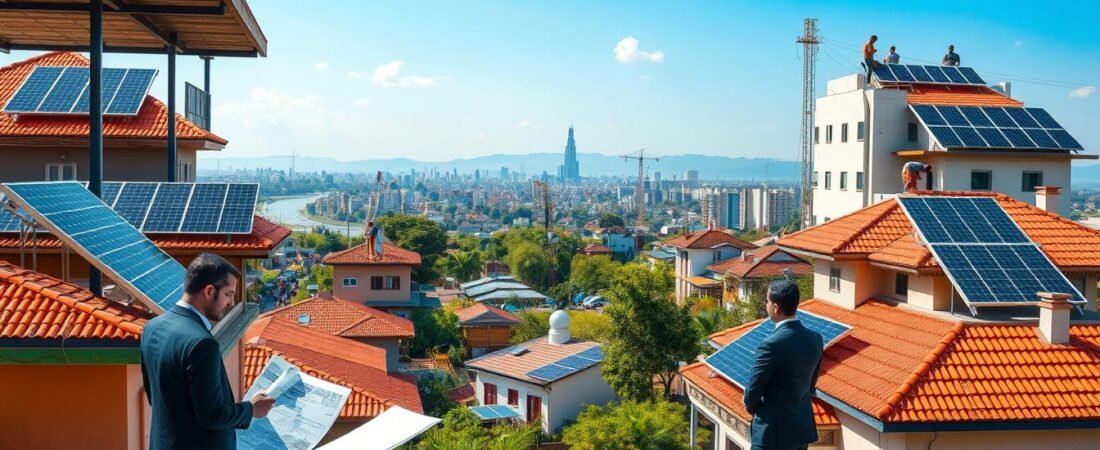
Thinking about a rooftop system? As of 2026, homeowners in India typically see a price range from INR 1.5 lakh to INR 5 lakh for a complete home setup. This guide helps you weigh that investment against monthly savings and long-term benefits.
Choosing the right panels and inverter affects performance and lifespan. System size, panel capacity, and household energy needs shape the final numbers.
Many buyers tap into government subsidies and incentives to lower upfront charges. Smart planning—like selecting efficient modules or adding battery storage—can boost returns and cut grid dependence.
Want a deeper breakdown of prices, system types, and subsidy details? Explore our full guide at solar panel installation cost in India for clear next steps.
Key takeaways: Typical 2026 home range INR 1.5–5 lakh; costs vary by size, capacity, and tech; subsidies can lower upfront spend; right setup means big savings and less grid reliance.
Understanding the Basics of Home Solar Systems
A home solar setup starts with a few core pieces that work together to turn sunlight into usable power. Knowing these parts helps you plan a reliable system and see how panels deliver daily benefit.
Core Components of a Solar Setup
Panels (PV modules) capture sunlight and convert it into direct current electricity for use in your home.
Inverters change that direct current into alternating current so appliances run smoothly.
Mounting structures and wiring secure the panel system and move electricity safely to your breaker box.
Batteries (optional) store surplus energy. They keep your lights on during outages and reduce reliance on the grid.
Solar Panel Technologies
Three common types meet most homeowner needs: Mono PERC, polycrystalline, and half-cut panels. Each offers a different mix of efficiency, durability, and price.
- Mono PERC: higher efficiency and better low-light performance.
- Polycrystalline: often a budget-friendly choice with solid reliability.
- Half-cut: improved shading tolerance and slightly higher output per area.
Why it matters: A well-matched system lowers electricity bills and boosts long-term benefits like less maintenance and a smaller carbon footprint.
Key Factors Influencing the Cost of Solar Panel Installation in India
How you pick equipment and set system size greatly shapes the final price. A bigger system needs more modules, stronger mounts, and extra wiring. These factors make the biggest impact.
Choices matter: High-efficiency solar panels, like monocrystalline units, cost more upfront but deliver more energy in tight roof space. Ground-mounted setups add labor and materials, so they raise installation expenses.
Practical details to watch:
- Inverter type (string vs microinverter) changes performance and long-term maintenance.
- Roof complexity and shading affect how many panels you need and the mounting work.
- Batteries and premium components add to initial spend but boost reliability and backup power.
- Government subsidies and incentives can lower the overall cost and improve payback.
One rule: run an energy audit before ordering. It prevents oversizing and helps balance upfront cost with lifetime savings for your home system.
Comparing Different Types of Solar Power Systems
Different system setups deliver unique mixes of savings, resilience, and upfront requirements. Choosing the right option helps match daily electricity needs with long-term goals.
On-Grid Systems
On-grid systems tie your home to the utility network. Excess energy can be exported for credits through net metering.
This makes them one of the most cost-effective choices for urban homes. Many government programs and subsidy schemes favor grid-tied setups.
Off-Grid Systems
Off-grid systems rely on batteries to supply all electricity. They are perfect where the grid is unreliable or absent.
Expect higher upfront costs because you need large battery banks and more robust controllers. The benefit is full energy independence and reliable backup.
Hybrid Configurations
Hybrid systems blend grid connectivity with battery backup. They let you save on bills while keeping lights on during outages.
Hybrids balance the benefits of both worlds. Choose this type when you want savings, resilience, and flexibility in one system.
- Key factors: local grid reliability, household power needs, and initial installation budget.
Breakdown of Installation Expenses and Component Pricing
Breaking down equipment, labor, and extras reveals where your money truly goes on a rooftop setup.
Quick note: installation charges typically run from INR 20,000 to INR 1 lakh depending on roof complexity and site work. High‑quality parts can raise the upfront price by about 10%–30% but improve lifespan and performance.
Average System Costs by Capacity
| Capacity (kW) | Typical Price Range | Notes |
|---|---|---|
| 1 kW | INR 65,000 – 85,000 | Good for small backup needs |
| 5 kW | Mid-range pricing; higher generation | Popular for average homes |
| 10 kW | INR 4,500,000 – 4,600,000 | Large households or small businesses |
Key factors that shape totals include the number of panels, inverter choice, mounting structures, and labor. Proper installation and quality components protect your energy returns and long‑term savings.
Navigating Government Subsidies and Financial Incentives
Government programs can sharply cut what homeowners pay upfront and speed up payback for rooftop systems. The PM Surya Ghar Muft Bijli Yojana is a flagship program that offers strong support for residential projects.
Subsidies under different schemes vary by region and can cover roughly 20%–70% of total outlay. That range makes a big difference when you plan a system for your home.
Generation‑Based Incentives (GBI) also reward actual output. These pay homeowners for the energy their panels produce over time and reduce net operating expenses.
Practical tip: check state guidelines and the latest application rules before you sign any contract. Policies, documentation, and eligible rates change by locality.
- Use subsidies and GBI together to shrink payback time.
- Work with your provider so applications and net‑metering paperwork are completed correctly.
- Compare offers — some programs require specific equipment or certified installers.
These financial incentives make rooftop power far more accessible for many homes. Take time to verify local government subsidies and incentives so you capture every available benefit.
Final Thoughts on Investing in Solar Energy
strong, A smartly planned solar system turns sunlight into years of reliable energy and steady savings. Proper care keeps panels productive for 25 to 30 years and boosts home value.
Use available government subsidies and incentives to lower upfront cost and speed payback. Choosing the right system and a certified installer makes a big difference for long-term benefits.
Whether you go on‑grid or off‑grid, this investment cuts electricity bills and raises resilience. If you need tailored advice, reach out to manufacturers like Bluebird Solar for expert guidance on your solar panel system.