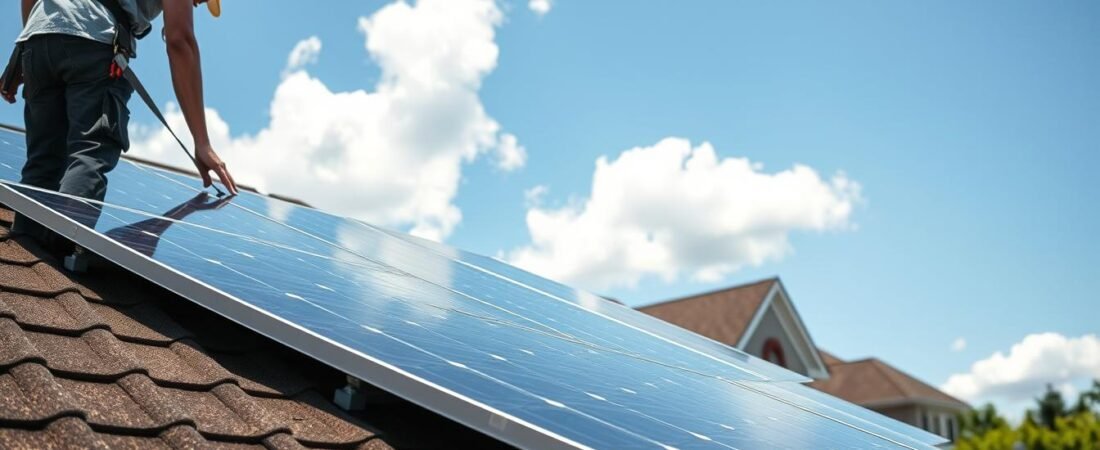
Choosing a reliable provider is the first step toward long-term energy independence for your Maryland home. This guide helps you make smart choices that protect your budget and boost efficiency.
We walk you through local options and explain how to maximize financial returns while improving energy performance. The goal is to simplify a complex process so you feel confident at every stage.
Our expert insights cover the current market and why many neighbors are switching to clean power. You’ll get clear tips to cut monthly utility costs and choose a partner that values quality workmanship.
Follow these professional recommendations to select a team focused on long-term performance and service tailored to your home’s needs. Start with the right information and you’ll avoid common pitfalls.
Why Rockville Homeowners Are Switching to Solar
When energy bills jump year after year, more residents turn to on-site generation to regain control.
Since 2020, Maryland electricity prices have risen 37%, so many homeowners are exploring alternatives to steady utility hikes.
With the state now ranked 10th nationwide for residential installations, clean power is quickly becoming a common home upgrade.
This guide explains how solar panels and rooftop systems convert sunlight into usable electricity, reducing dependence on the grid.
By investing in these systems you can lock in predictable energy costs for the next 25 to 30 years. That long-term predictability helps protect your household budget.
“Generating your own electricity lets you control consumption and support the state’s growing renewable infrastructure.”
- Cut monthly cost volatility
- Gain more control over household power
- Join an expanding network of local installations
Understanding the Rockville Solar Panel Installation Process
Knowing what to expect on site helps homeowners feel calm and prepared.
Site Assessment and Permitting
First, a dedicated team performs a professional site assessment to evaluate your roof and shade patterns. This step confirms the best system layout and expected energy output.
Your chosen company will prepare permits and paperwork. That saves you time and ensures the project meets local safety codes.
Installation Day Expectations
Most work takes one to three days. Technicians mount racking, run wiring, and install panels and inverters while protecting roofing materials.
After hardware is placed, a town inspector checks the work for final approval before grid interconnection.
Project managers answer questions and share resources throughout the job. Their guidance makes commissioning faster and keeps your new system running smoothly.
“Clear milestones and an assigned contact remove uncertainty and speed up completion.”
Financial Benefits and Energy Savings
Saving on electricity starts with a clear look at long-term costs and realistic payback timelines.
Homeowners in the area can expect significant returns. On average, a household saves about $84,000 over 25 years by adding panels and a well-sized system. That figure reflects lower monthly bills and reduced dependence on rising utility pricing.
Pepco rates are currently 18.20¢/kWh, above the Maryland average of 16.60¢/kWh. Generating your own electricity helps cut that immediate cost and protects you from future price swings.
“A typical system pays back in roughly 10 years; after that, the electricity it produces is essentially free.”
- Average savings: ~$84,000 over 25 years
- Typical payback: ~10 years
- Hedge against rising utility pricing
Use our local savings estimate to get a tailored cost and savings projection for your home. A short assessment of roof size, orientation, and current usage gives a clear money estimate and helps you plan wisely.
Navigating Maryland Solar Incentives and Rebates
State incentives can cut thousands from upfront costs, making clean energy more accessible for Maryland homeowners.
The Maryland Solar Access Program (MSAP) offers grants of $750 per kW, up to $7,500. That helps lower the initial cost of a system and shortens the payback period.
The Residential and Commercial Energy Storage (RCES) Grant Program provides up to $5,000 for battery add-ons. Adding storage increases electricity resilience and boosts long-term savings.
How Renewable Credits and Stacking Work
Maryland’s SREC program pays you for each 1,000 kWh your system generates. Payments continue for at least 15 years, creating steady income that improves returns.
- MSAP: $750/kW (max $7,500)
- RCES: Up to $5,000 for battery systems
- SREC: Income per 1,000 kWh for 15 years
“Stacking grants, credits, and the property tax exemption makes your system one of the most cost-effective home upgrades you can make.”
Our team can provide detailed information on stacking these incentives and the valuable property tax exemption so homeowners get the best total return over the years.
Leveraging Net Metering for Maximum Returns
Earning full-value credits for exported power changes the financial math for many homeowners. Maryland requires utilities to credit owners at the full retail rate when a system sends excess electricity back to the grid.
That 1-to-1 credit is powerful. Credits show up directly on your bill and reduce what you owe each month. Over time, that translates into steady savings and lower electricity costs.
Because credits roll over indefinitely, you can bank surplus energy produced in bright months and use it during cloudier seasons. This feature helps match production with demand across the year.
This service ensures your equipment works for your finances. By locking in favorable net metering terms now, homeowners secure a reliable way to manage power expenses for many years to come.
“Net metering turns seasonal overproduction into long-term bill relief, improving payback and overall savings.”
- Receive a 1-to-1 credit for each kWh exported.
- Credits appear on your utility bill to offset costs.
- Bank excess production indefinitely for future use.
Property Tax Exemptions and Local Credits
A full property tax exemption removes a common concern when families consider adding a home energy system.
Maryland offers a 100% real property tax exemption for qualifying systems. That means the added value from solar panels and other equipment is excluded from state and local assessments. In practice, your property tax bill does not rise because of the upgrade.
Montgomery County goes further with a local property tax credit that stacks with the state exemption. Homeowners can apply the county credit directly to their property tax bill for extra relief. Together, these measures cut effective cost and improve long‑term returns.
- The state property tax exemption excludes 100% of system value from assessments.
- County credits stack with state incentives to lower your effective bill.
- These measures help homeowners keep upfront savings and boost system payback.
| Program | What it Covers | How it Affects Your Bill |
|---|---|---|
| Maryland Property Tax Exemption | 100% of qualifying system value | No increase in state or local assessment |
| Montgomery County Credit | Local property tax credit for qualifying installations | Direct reduction on your county property tax bill |
| Combined Effect | Exemption + local credit | Lower lifetime cost and improved financial returns |
“Stacking state and local tax protections makes adding clean energy to your home more affordable.”
Financing Options for Your Solar Project
Affordable financing can turn a long-term home energy project into a monthly payment that fits your budget.
The Maryland Clean Energy Bank offers low-cost loans that let homeowners bundle panels, battery storage, and electrical upgrades into one project. These loans come with no dealer fees and no prepayment penalties, giving flexible ways to manage upfront cost and long-term pricing.
The Montgomery County Green Bank provides a 30-year program with 0% interest for the first 10 years in designated Equity Emphasis Areas. That option makes systems far more affordable for qualifying residents and speeds up net savings on electricity.
Compare financing against available rebates and incentives to find the best path. Our team can provide the information and an estimate needed to weigh loan terms, average pricing, and expected savings over the years.
“By securing low-interest financing, you can start saving on your electricity bill immediately while paying off your system over several years.”
| Program | Key Feature | Who Benefits |
|---|---|---|
| Maryland Clean Energy Bank | Low-cost loans; bundle panels, battery, upgrades; no fees | Homeowners wanting a single project loan |
| Montgomery County Green Bank | 30-year loan; 0% interest first 10 years in Equity Areas | Residents in qualifying Equity Emphasis Areas |
| Comparison Tip | Match loan terms with rebates and estimated savings | Choose based on cost, years to payback, and incentives |
- Bundle options simplify financing for panels and battery systems.
- Check eligibility for county programs to access better pricing and terms.
- Use a side-by-side estimate to compare loans, rebates, and expected electricity savings.
Choosing the Best Solar Companies in Rockville
A great provider pairs transparent estimates with a dedicated team that stays with you from quote to commissioning.
Start with reviews. Look for companies whose customers praise prompt service, honest pricing, and consistent workmanship. High-rated firms also provide references you can call.
Ask for a single point of contact. A dedicated team member keeps your project on schedule and answers questions about roofing types, permit time, and local code requirements.
Request a clear estimate that lists equipment, labor, and expected energy output. Top companies explain pricing and share documentation for state incentives so you can compare offers fairly.
- Check customer reviews for workmanship and service history.
- Confirm experience with your roof type and local permitting resources.
- Demand transparent pricing and a written estimate for your system.
“Top-tier companies answer every question and provide local references to build confidence in the project.”
| What to Check | Why it Matters | What to Ask |
|---|---|---|
| Customer Reviews | Shows real workmanship and service levels | Ask for recent references and online reviews |
| Dedicated Team | Simplifies communication and project timing | Confirm your single point of contact |
| Transparent Estimate | Helps compare pricing and incentives | Request itemized costs and expected savings |
| Local Experience | Speeds permitting and fits roof specifics | Ask about similar installations in nearby areas |
Conclusion
A well-planned transition to distributed energy can protect your budget and improve household resilience. , this guide shows how thoughtful choices deliver long-term value.
Using available solar incentives and rebates cuts upfront cost and boosts savings. Consider a vetted solar installation, low-cost financing, and programs that lower money outlay so payback comes sooner.
Leverage net metering and local property tax credits to keep your monthly bill and bills low for years. For program specifics and local enrollment details, see the Montgomery County program details. Choosing a top-rated team makes this way to cleaner energy reliable and rewarding.