Thinking about getting renewable power for your home? This quick guide helps homeowners plan a smooth switch. Good work takes time, especially when high-quality installers are busy. Expect a clear timeline and steps to protect your savings and peace of mind.
Average system sizes and costs matter. Fairfax homeowners often choose about an 8.1 kW system, with an average cost near $20,251 for a typical solar panel installation. Knowing price per watt helps you compare offers from any company or installer.
We walk through how to evaluate equipment, check reviews and reputation, and spot fair pricing and incentives. Our team offers practical tips so you can ask smart questions, read contracts with confidence, and find a provider who delivers long-term savings and reliable performance.
Understanding the Benefits of Solar Energy in Northern Virginia
Knowing the real benefits—cost savings, reliability, and incentives—makes comparisons simple.
Net metering gives homeowners a direct financial boost by crediting excess energy at the full retail rate. Many homeowners see lower monthly bills because utility credits offset daytime production.
Batteries turn intermittent output into steady power. Pairing storage with a home system improves resilience during outages and shifts more value to your household.
- Net metering rewards excess generation with utility credit.
- High-quality panels and equipment cut monthly energy bills.
- Local incentives and rebates improve payback and price-performance.
“Choosing reputable companies and experienced installers protects your investment and ensures system performance for years.”
| Benefit | What to Expect | Why It Matters |
|---|---|---|
| Lower monthly bills | Reduced grid purchases | Immediate savings and long-term value |
| Backup power | Battery pairing available | Reliability during outages |
| Financial incentives | Net metering + local rebates | Shorter payback and better ROI |
Our team recommends asking specific questions about cost, equipment warranties, and company reputation before signing any contract. That helps homeowners balance up-front price against long-term savings and quality.
Evaluating Your Home for Solar Panel Installation in Northern Virginia
Begin with a quick roof check to see if orientation, pitch, and condition support a new system. A basic assessment helps you avoid costly surprises and keeps the timeline on track.
Assessing Roof Suitability
Inspect roof age, material, and structural soundness. Older roofs may need repairs before any work starts. Orientation and pitch change how much power your panels produce each day.
Sunlight Exposure and Energy Needs
Track past power bills to estimate consumption and the number of panels you’ll need. In Fairfax, the average cost for a solar panel system is about $20,251 before the federal tax credit.
- Extra capacity: Expect roughly $3,590 more per added kilowatt.
- Equipment quality: Choose durable gear to protect performance over 25 years.
- Work with a reputable company: Licensed installers will check structure, shading, and watt needs.
“Have your team review bids, warranties, and any contract questions before you commit.”
Navigating Solar Costs and Financial Incentives
A clear view of fees, tax credits, and per‑watt pricing keeps your budget on track.
Start with the 30% federal tax credit. This incentive lowers the upfront cost and applies to systems and battery storage.
Compare quotes by price per watt to spot fair offers. Ask each company for an itemized quote so you see equipment and labor costs separately.
Beware of loan dealer fees. Some solar loans add dealer charges that can raise the total by 20% or more. Ask lenders and your installer about any extra fees before signing.
“Carefully review contracts so you understand payment terms and long‑term performance expectations.”
- Use the federal tax credit to reduce net cost.
- Compare per‑watt pricing across at least three companies.
- Ask specific questions about equipment warranties and loan fees.
| Cost Factor | What to Check | Impact on Savings |
|---|---|---|
| Federal tax credit | Eligibility and claim timing | Reduces upfront cost by 30% |
| Price per watt | Compare quotes and system size | Helps find best price for quality |
| Financing fees | Dealer fees, interest, term | Can add 10–20% to total cost |
For local pricing trends and detailed cost data, check local cost data. That helps homeowners plan realistic budgets and long‑term savings.
Selecting a Reputable Solar Company
Choosing the right company begins with clear proof of experience and customer care.
Look for firms that have served customers for at least five years. That length of service suggests reliable after‑sales support and warranty follow‑through.
Verify licenses and insurance carefully. In Virginia, check for an Alternative Energy Systems (AES) specialty certification from the state regulator. Confirm general liability and worker’s comp coverage.
Checking Years in Business
A company with steady years of operation usually handles permitting, rebates, and incentive paperwork better. Ask for examples of recent local projects.
Verifying Licenses and Insurance
Request copies of contractor licenses and proof of insurance. Ensure NABCEP certified staff or licensed electricians will handle equipment and wiring.
Reading Customer Reviews
Scan Google and Yelp reviews for trends about timeliness, pricing, and service after the job is done.
“A transparent company makes contracts and pricing clear before work begins.”
| What to Check | Why It Matters | Red Flags |
|---|---|---|
| Years in business (5+) | After‑sales support and warranty service | Frequent name changes |
| Licenses & insurance | Protects your home and workers | No certificates provided |
| Customer reviews | Shows quality, timing, pricing | Many unresolved complaints |
| Certified staff | Proper equipment handling and safety | Uses subcontractors without oversight |
What to Expect During the Installation Process
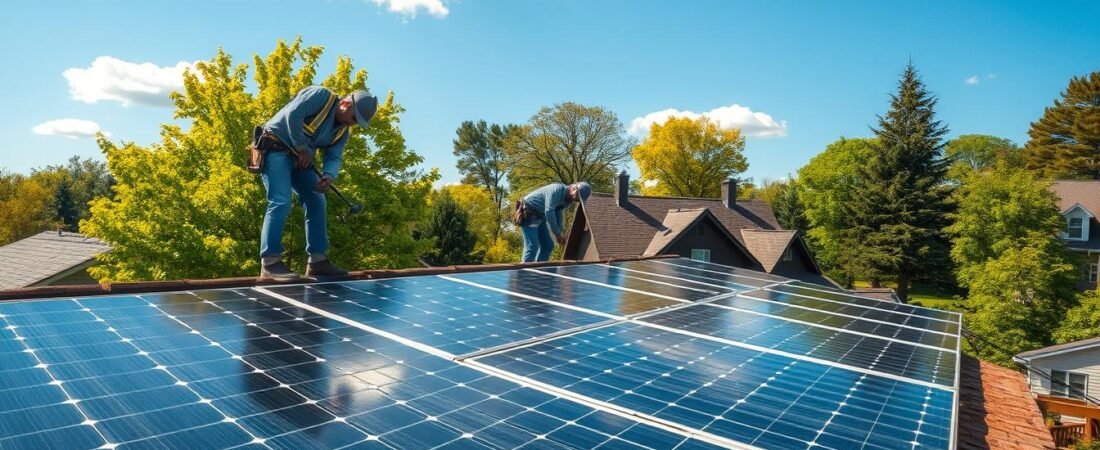
Expect a brief, organized process where crews mount racking, wire components, and test the system over one to three days.
Work timeline: Most jobs take one to three days for roof preparation, racking, and equipment mounting. Crews arrive with tools and a clear plan.
The installer will attach panels and inverters, run wiring, and secure all mounts. They test connections and safety switches before leaving site.
A local government inspector then reviews the work to confirm it meets building and safety codes. After town approval, your utility issues final interconnection permission.
- Site visits, permitting, and final interconnection are standard steps.
- A reliable company manages permits, scheduling, and final approvals.
- Good installers minimize disruption so your daily home routine stays normal.
“Once the system is approved, you can begin powering your home and tracking long-term savings.”
| Step | Who Handles It | Typical Time |
|---|---|---|
| Roof prep & racking | Installer crew | Half day to one day |
| Mounting equipment & wiring | Certified installers | One day |
| Local inspection | Town inspector | 1–7 days (scheduling) |
| Utility interconnection | Utility + company | Few days to weeks |
Choosing the Right Solar Equipment and Battery Storage
Picking the right gear means balancing efficiency, warranties, and roof compatibility.
Most modern modules are about 400 watts and exceed 19% efficiency. That helps a solar panel system deliver more power from limited roof space.
The Role of Batteries
Batteries add resilience. They store daytime output for evening use and supply backup during outages.
We recommend battery storage if you want backup or if your utility does not offer full-price net metering. A professional company or installer can size the battery to match your home’s usage and goals.
- Select panels with industry-standard 25-year product and performance warranties for long-term protection.
- Confirm inverters, racks, and the panel system are compatible with roof type and local code.
- Reliable equipment increases energy independence and lowers grid reliance.
“Ask installers about brands, warranty terms, and expected output so you get the best performance for your home.”
Comparing Solar Quotes and Contract Terms
Focus on clear numbers. Compare price per watt, expected yearly energy, and total project cost so you can rank offers objectively.
Get at least three quotes to compare system size, production estimates, and warranty terms. Note Virginia’s average range of $2.13–$3.19 per watt as a fair benchmark.
Read contracts carefully. A transparent company shows itemized costs, any dealer fees for loans, and clear remedies if a part fails or the installer goes out of business.
- Check for escalator clauses on leases or PPAs — around 3% is common.
- Ask companies about equipment brands, warranties, and expected payback.
- Prefer firms that explain per‑watt math and long‑term cost assumptions.
“Comparing multiple bids helps you find the best balance of quality panels, trusted installers, and a competitive total price.”
| What to Compare | Why It Matters | Red Flag |
|---|---|---|
| Price per watt | Easy cost comparison | Far below $2.13 (low quality) |
| Warranty & equipment | Protects long‑term output | No product or workmanship terms |
| Contract clarity | Limits future surprises | Vague fees or transfer terms |
Long-Term Maintenance and System Performance
A clear maintenance plan makes it easy to spot drops in performance early. Small fixes today keep the system producing reliably for years.
Workmanship Warranties
Choose a company that offers at least a ten-year labor warranty. This protects your roof and equipment from errors during installation.
Ask for warranty details in writing. Understand what is covered, who pays for labor, and how claims are handled.
Monitoring System Performance
Install a monitoring tool so you can track output and spot issues fast. Many solar companies include online portals or mobile apps.
- A reputable solar company will offer a workmanship warranty of at least ten years.
- Monitoring your solar panel system performance ensures panels generate expected energy.
- Performance guarantees from good companies give extra peace of mind.
- Excellent customer service from your installer keeps maintenance quick and clear.
- Regular checkups and cleaning help maintain peak system efficiency.
“Understanding warranty terms and staying proactive with monitoring preserves performance and value.”
Conclusion
Choosing the right team and clear contracts makes the path to clean home power much smoother. Work with a trusted solar company and read warranty terms so you know who will support your system for years.
Take advantage of available solar incentives and compare quotes for true savings. Quality matters: choose equipment and installers that match your home’s needs and offer strong workmanship guarantees.
With careful vetting, a fair contract, and routine monitoring, your panels will deliver steady value. A reliable company and installer help you enjoy lower bills and a cleaner future for your community.