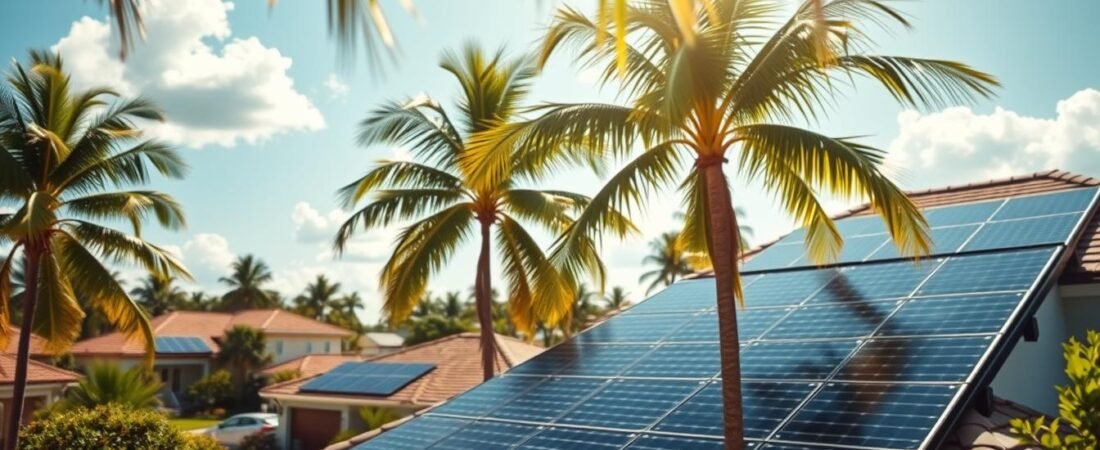
Curious about going solar in Palm Beach Gardens? This short guide explains what homeowners need to know right away. As of April 2026, the average solar panel system in Florida is about $2.20/W, a useful baseline when comparing quotes.
Home energy choices can lock in predictable bills for years. A professional installation can add value to your home and is not harmful to the roof. Many states also offer rebates and incentives that lower the upfront price.
Costs vary by system size, roof complexity, and company quotes. By comparing providers, you can find the right system that balances price and long-term savings. In the next sections, we break down ranges, incentives, and tips for smart comparisons.
Understanding the Financial Impact of Rising Utility Bills
Rising utility bills bite into household budgets whether you expect them or not. Many homeowners see monthly charges creep up and find fewer options in a tight budget. That steady climb makes energy planning a top priority for people who want control.
Generating your own power can protect a home from future hikes. For decades, it has given families predictable payments and reduced exposure to volatile electricity rates.
Below is a quick comparison to show how switching influences finances over time.
| Expense | Typical Trend | Impact on Home Budget |
|---|---|---|
| Utility bills | Increase over years | Less predictability, higher monthly spend |
| Home energy systems | Upfront investment, stable long-term | Predictable payments, shield from rate hikes |
| Traditional electricity | Variable and rising | Higher lifetime costs |
- Your monthly bill often rises regardless of budget changes.
- Many homeowners choose solar systems to lock in predictable energy costs.
- Understanding the financial effect of rising bills helps you decide if the investment fits your needs.
Current Solar Panel Cost Palm Beach Gardens Estimates
Knowing current market prices makes comparing quotes much easier. Use recent data to set realistic expectations before you contact local companies.
Average market pricing: As of April 2026 the Florida average is $2.20/W. That figure gives a baseline for estimating a home system and the likely solar panel cost for your project.
Average Market Pricing
A 5 kW solar panel system in Florida equals about $11,002 at the $2.20/W rate. This helps you see the typical price for a mid-sized installation.
Price Ranges for Installations
In Palm Beach Gardens a 5 kW installation can range between $126 and $159 per month based on available data and financing choices.
- A typical panel produces 250–300 W, so 20 panels are needed to reach 5 kW for a home.
- Many homeowners find that going solar reduces their monthly utility bill and increases long-term savings.
- Incentives and the federal tax credit can lower the total price, so request a detailed quote to see actual numbers for your system size.
“Using real market data lets you calculate potential savings and determine if you have the cash for installation.”
How System Size Influences Your Total Investment
System size directly shapes your upfront investment and future savings. The average system size in Florida is 14.71 kW, which many homeowners use as a benchmark when planning their project.
Doubling the system size effectively doubles the price of your installation. That simple rule helps you weigh expected generation against the initial outlay.
Larger systems produce more electricity, so they increase long-term savings even as they raise upfront costs. Discuss options with companies so incentives and rebates are applied correctly for your chosen size.
| System Size (kW) | Typical Effect | Owner Impact |
|---|---|---|
| 7.5 | Lower upfront price | Smaller monthly savings |
| 14.71 | State average benchmark | Balanced investment and output |
| 30 | High generation | Higher price, greater long-term return |
- Pick a size that matches your home energy use and roof limits.
- Compare prices by controlling for system size to find the best value.
- An appropriately sized solar panel system maximizes your investment over the years.
“Choosing the right system size is the most effective way to align price with performance.”
Evaluating the Long Term Savings Potential
Projecting 25-year savings shows whether an installation pays back for your family. Use realistic numbers to avoid surprises and focus on how much energy your system will produce each month.
Calculating Your Payback Period
Expected returns matter. Homeowners in Florida can expect average savings of about $52,080 over 25 years. That figure highlights the long-term value many owners see after installation.
The average payback period in Florida is roughly 11.09 years. Keep this number in mind when comparing quotes and financing offers.
- Going solar reduces your monthly utility bill and offsets upfront costs over time.
- If you can’t pay cash, explore financing to spread payments while you earn savings.
- Savings depend on system size, local electricity rates, and available incentives.
“A well-maintained solar panel system can provide reliable energy for 25 to 50 years, ensuring consistent savings for your home.”
For local pricing context, check this regional price guide when estimating payback and long-term benefits.
Navigating Federal and Local Solar Incentives
Smart use of credits and rebates can turn an expensive installation into an affordable upgrade. Knowing where to look and how credits stack helps you protect savings and shorten payback years.
Federal Tax Credit Benefits
The 30% federal tax credit remains the largest single incentive for homeowners. It reduces the net price of a solar panel system by nearly a third when you qualify.
“Take the 30% federal tax credit to lower upfront tax liability and speed up your return.”
Local Rebate Opportunities
State and utility rebates vary. Many local programs offer one-time cash rebates or performance-based incentives that stack with the federal tax credit.
- Combine federal and local incentives to lower overall costs and shorten payback.
- Ask installers to itemize rebates and tax credits on quotes so you see net savings.
- Keep receipts and tax forms to claim credits properly and avoid delays.
| Incentive | Typical Effect | Why It Matters |
|---|---|---|
| Federal tax credit (30%) | Reduces taxable purchase amount | Biggest single savings on your installation |
| Local rebates | Cash or bill credits | Lowers upfront or recurring costs |
| Utility programs | Performance or enrollment credits | Improves long-term electricity savings |
Tip: consult your installer and tax advisor to ensure you claim every available tax credit and rebate. Proper planning can make clean energy investments much more affordable for homeowners.
Comparing Financing Options for Your Home
Financing decisions shape the balance between upfront outlay and future savings.
Cash purchases offer the highest long-term savings because you avoid interest. You pay more up front, but net returns are often larger over the years.
Loans spread the price over time and can include $0-down offers. Keep in mind that interest reduces your lifetime savings, so compare APRs and terms carefully.
Leases and PPA let homeowners use energy without owning systems. These options lower initial money outlay and can start saving on electricity immediately. Ownership perks like tax credit claims may vary, so ask your provider.
| Option | Upfront | Long-term |
|---|---|---|
| Cash | High | Highest savings |
| Loan ($0-down possible) | Low | Moderate savings |
| Lease / PPA | Minimal | Lower savings |
“Compare offers from multiple companies to find the best mix of price, incentives, and terms.”
- Check if the federal tax credit applies to your chosen plan.
- Ask installers for an itemized estimate showing all costs and incentives.
Selecting the Right Solar Installer
Picking a reliable installer shapes both the performance and the long-term value of your home energy system.
Compare multiple quotes to let competition work in your favor. Different companies offer varied designs, warranties, and prices. Getting at least three quotes helps you see real differences in service and price.
Why You Should Compare Multiple Quotes
EnergySage Marketplace can reduce prices by up to 20% compared with hiring a single company. Use a marketplace or independent bids to check offers side by side.
- Look for installers with local experience and proper licenses.
- Ask each company to itemize incentives, rebates, and the federal tax credit.
- Compare system size, warranty length, and expected savings — not just the lowest price.
| What to Ask | Why It Matters | What to Expect |
|---|---|---|
| License and local references | Confirms experience in your area | Faster permits, fewer delays |
| Warranties and workmanship | Protects your investment | 10–25 years typical coverage |
| Itemized quote with incentives | Shows true net price | Includes rebates and tax credit details |
| System design and size | Matches energy needs to roof limits | Balanced output and savings |
“Compare several detailed quotes to ensure you get the best balance of quality, service, and long-term savings.”
Impact of Solar Installations on Property Value
A well-installed renewable system often boosts curb appeal and can raise a home’s resale value.
Professional installation usually reads as a quality upgrade to buyers. Many real estate agents report faster sales when a property shows lower expected electricity bills.
Because these systems do not harm the roof, they are viewed as a positive home improvement. That lowers buyer concerns and can support higher offers.
- Added value: A clean energy installation can increase sale price and market interest.
- Buyer appeal: Reduced utility bills are a clear selling point for homeowners.
- Tax benefit: The federal tax credit often makes the investment more attractive to buyers and sellers alike.
| Benefit | Effect on Price | Why Buyers Care |
|---|---|---|
| Lower monthly electricity | Supports higher offers | Immediate household savings |
| Professional installation | Perceived quality upgrade | Fewer inspection concerns |
| Federal tax credit | Improves net return | Reduces effective investment |
“A thoughtful installation often turns into long-term value and stronger buyer interest.”
Conclusion
A careful plan helps homeowners turn an installation into long-term savings and stronger resale appeal. Start by comparing several quotes so you pick the right size and warranty for your home. Simple research lets you spot the best offers.
Use available tax incentives and local rebates to lower net price. Properly claimed credits make a big difference when you total expenses for panels and equipment.
For many homeowners, combining incentives with a trusted installer delivers predictable monthly savings, added property value, and energy independence. Take the next step today and request detailed quotes for your home to see real numbers.