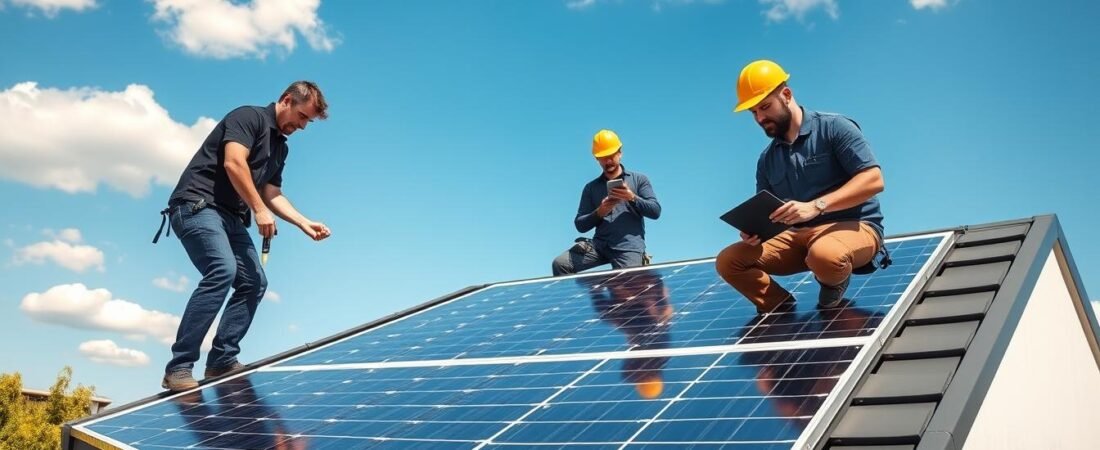
Choosing the right installer is the first step toward reliable clean energy and long-term savings. Finding a trusted team helps you maximize power output and avoid costly mistakes when you buy products, inverters, or batteries.
Compare quotes from reputable companies before you install solar. The market changes fast, and research into average price and costs keeps you informed about payback and long-term value.
With more than 35 years of combined experience, some providers show why quality matters. Our guide looks at systems, warranties, and how roof orientation and time of day affect performance.
We analyze trends tracked since 2012 to help customers spot fair prices and avoid companies that cut corners. Use this advice to pick the best solar installer for your home and budget.
Understanding the Solar Landscape in Melbourne
Neighborhoods vary widely in uptake, and that affects local pricing and retailer choices. In suburbs like Clyde more than 70% of homes have solar installed, which proves this technology works well in the local climate.
Across the city the average adoption rate sits near 25%, so many people still compare quotes to find the best retailer and price. Your roof orientation and the time of day you use power will change how much a system produces.
- Advanced batteries and inverters can boost savings and reduce long-term costs.
- Feed-in tariffs and tariff structure play a big role in payback and overall cost.
- Choosing quality products helps a system remain productive for many years.
It can be a bit of a challenge to find the right installer, but focusing on reputable companies improves customer outcomes. Compare quotes, check warranties, and ask how a retailer handles feed-in credits to estimate true savings.
How Much Power Can Your System Generate
How much energy your system produces each day hinges on sun, roof angle, and component quality.
Daily Energy Output
Using PVWatts, a typical roof receives about 4.8 kWh of raw sunshine per square meter each day. That baseline helps estimate real-world yields.
A common sized solar choice is a 6.6kW system. Properly set up, it can generate enough energy to cut grid use for many average households.
Factors Influencing Efficiency
Quality of inverters and panels shapes how much power systems deliver over the years. Even a bit of cloud cover reduces output, but high-grade products keep performance steady.
- Shift appliance use to midday to maximize savings.
- Compare quotes from a trusted retailer to get realistic production estimates.
- Consider batteries and modern inverters to store and manage excess energy for evening use.
A reputable business will explain how total output affects payback and long-term costs. Ask about expected yearly kWh and the assumptions behind any quoted price.
Financial Incentives and Expected Costs for Melbourne Solar Panel Installation
Upfront incentives and rebates can cut your purchase price more than many people expect. The federal STC rebate, run by the Clean Energy Regulator, lowers the initial cost significantly. For example, a common 6.6kW system generates 70 certificates at $36.90 each, giving a rebate of about $2,583.
Typical market prices (March 2026) sit near $5,600 for a 6kW choice and about $6,020 for a 6.6kW option. Those figures already make many projects attractive for most people.
Understanding Rebates and Payback Periods
Eligible households can also apply for a state rebate when work is done by a CEC-accredited retailer. Many customers hire a retailer or business to handle paperwork and rebate claims to save time.
- Check the fine print: confirm the STC discount and GST are included in quoted price to avoid hidden costs.
- Maximizing self-consumption during the day can shorten the payback period to about 4–5 years.
- Compare feed-in tariffs offered by your energy retailer — they affect long-term savings and power export value.
“High-quality inverters and panels will protect your savings for years and reduce maintenance headaches.”
Always verify warranty terms on all products, including batteries and inverters, and compare quotes from reputable companies before you commit.
Top Rated Solar Installers for Your Home
A short list of highly rated installers can speed up your decision and protect your budget.
Advanced Energy Solutions is run by Dan and Jim, who bring 35+ years of joint experience. They focus on correct placement and clear quotes so your system performs as expected.
Green Line Solar stands out for high-quality work and a 10-year workmanship warranty — double the industry norm. That extra coverage gives customers real peace of mind.
Choosing a trusted retailer means your home gets a well-sized system, premium inverters, and optional batteries. Many people prefer teams that manage the whole process from quote to final commissioning.
- Quality first: companies that prioritize products and workmanship reduce long-term costs.
- Compare quotes: look for clear pricing and realistic power estimates.
- Aftercare: good customer support keeps systems productive for years.
“Investing in a quality installation today prevents costly repairs tomorrow.”
For a broader shortlist of the best solar companies, see this guide: best solar companies.
Essential Criteria for Selecting a Quality Provider
The best outcomes come when a single company handles design, wiring, and aftercare. That setup keeps responsibility clear and reduces unexpected costs.
In-House Electrical Expertise
Choose a retailer with certified electricians on staff. In-house teams do the wiring and testing, so work meets local codes and standards.
Total Solar Solutions won the “Most Quality LG Focused” award in 2018 for high-end installations, showing how skilled teams matter.
Importance of After Sales Care
Good aftercare saves time and money. Essential Solar has completed almost 5,000 systems since 2012 and backs their work with ongoing support.
Ask about service windows, warranty claims process, and who answers customer calls after handover.
Quality of Components
Insist on premium inverters, durable panels, and clear warranty terms for both products and workmanship.
| Criterion | What to Check | Why It Matters |
|---|---|---|
| In-house expertise | Licensed electricians, no subcontracting | Better accountability and consistent workmanship |
| After-sales care | Service windows, support line, warranty handling | Fewer delays and smoother repairs |
| Components | Premium inverters, panels, and battery options | Higher yields, longer life, lower long-term costs |
Ask for transparent quotes that list product costs, labor, and any battery or mounting hardware fees. Avoid companies that hand most work to subcontractors.
“Investing in a reputable retailer now protects your power and reduces maintenance down the road.”
Solar Companies and Practices to Avoid
Some companies lure buyers with a rock-bottom price, then cut corners once a contract is signed.
Watch for firms that rely heavily on subcontractors. Reports name Arise Solar and Sunboost as examples. Customers say poor communication and surprise product swaps hurt performance.
A reputable retailer will never swap your chosen products, panels, or inverters without telling you. They provide clear, itemized quotes and steady after-sales support.
Avoid installers who pressure you to decide fast or refuse to show past work. Cheap labor can mean extra costs later when a proper team must fix errors.
“Quality installations require experienced professionals, not the cheapest labor available in the current market.”
| Risk | What to check | Impact |
|---|---|---|
| Subcontracting | Ask who does on-site work and check licenses | Inconsistent quality and delayed fixes |
| Product swaps | Confirm model numbers in the quote | Lower output, voided warranties |
| Poor support | Find reviews and warranty response times | Higher repair costs, longer downtime |
Protect your investment by checking a provider’s track record over many years and reading verified reviews from real customers.
For help choosing a trusted team, see this guide on choosing a reputable retailer.
Final Thoughts on Your Solar Investment
,Investing in a quality system today can lower your energy bills for many years and give steady, reliable power to your home.
Choose from the best solar installers to ensure top products and expert workmanship. Comparing quotes will help you find the right price and expected payback period.
Keep maintenance in mind: good inverters and a reliable battery extend system life and protect long-term savings. Regular checks and timely servicing keep panels and systems productive year after year.
Thank you for reading. Be practical, ask questions, and pick a reputable installer so your investment pays off in comfort and lower costs.