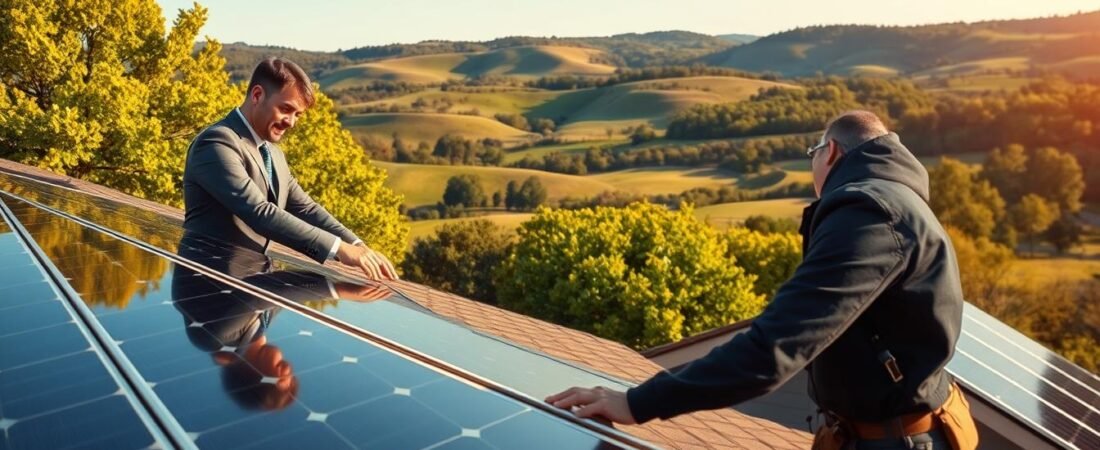
Thinking about a clean energy upgrade? This guide gives homeowners clear steps to assess whether a system fits their roof, budget, and long-term goals.
We break down the state’s rules, incentives, and what to expect from a trusted provider. You’ll learn how modern tech delivers better output and how warranties and production guarantees protect your investment.
Our approach helps you compare equipment, review financing, and select a vetted company without high-pressure sales. Expect timelines for permits, roof work, and utility interconnection so you can plan with confidence.
Ready to explore options? See tailored offers and service details from a local provider here: Dominion Energy Solutions for Virginia. This first step can lead to long-term savings and more control over your home’s energy use.
Understanding Solar Potential in Virginia
Virginia averages about 205 sunny days each year, which gives many homeowners a reliable baseline for estimating energy output.
That level of sun exposure aligns with the national mean and supports both small rooftop systems and larger utility projects.
Because the market has expanded rapidly over the last decade, residents now have more access to advanced equipment and service options.
- Areas like Virginia Beach can use the average sunshine to boost household production.
- Many local companies have grown their offerings statewide to meet demand.
- Choosing among solar companies means checking track records and local reviews for the best solar results.
“Understanding local potential is the first step toward cutting fossil fuel use and lowering monthly bills.”
Start by assessing site exposure, vendor history, and available technology. These steps help turn good sunlight into measurable savings.
Assessing Your Home for Solar Panel Installation in Virginia
Begin with data: your monthly kWh totals reveal whether adding on-site generation will pay off. Many experts consider homes that use more than 500 kWh per month good candidates.
Energy Consumption Patterns
Gather six to twelve months of bills to spot trends. The average Virginian uses about 1,095 kWh per month, which often justifies a larger system.
Tip: check seasonal peaks and major loads like heat pumps or EV chargers before you talk to companies.
Roof Orientation and Shading
Roof slope and shade shape real output. South- and west-facing roofs usually deliver the best power across many states.
Heavy trees or nearby buildings can cut yields, so ask a qualified solar installer for a site survey.
- Typical cost: ~$3.35 per watt; an 11 kW system totals around $25,795.
- Compare how much energy your roof can produce to estimate ROI and payback.
Financial Benefits of Going Solar
A well-sized system turns high utility bills into predictable savings and raises your home’s market value. With the average Virginian paying about $153.08 per month for electricity, on-site generation can significantly cut yearly costs.
Homeowners often see clear results quickly. Most save roughly $1,836 per year by offsetting utility use. Over 25 years, total savings can exceed $30,832 after paying the initial system cost.
- Average home value rises ~4.1%, roughly $15,284 on a $372,801 property.
- Locking lower electricity rates shields your budget from future price hikes.
- Federal and state incentives reduce upfront cost and improve payback.
| Metric | Annual Value | 25-Year Value |
|---|---|---|
| Electric bill savings | $1,836 | $30,832 |
| Home value increase (4.1%) | $15,284 (one-time) | — |
| Average monthly electricity | $153.08 | — |
Bottom line: For many homeowners, the mix of incentives, reduced electricity bills, and added resale value makes this a strong financial move. Expect steady returns over the years and a clearer path to energy independence.
Navigating Solar Incentives and Tax Credits
Knowing which incentives apply will boost your project savings from day one. The federal tax credit (ITC) covers 30% of your total system expense, which averages about $11,055 for many Virginia homeowners.
Net metering is required by the state, so customers can sell excess energy back to their utility for credits. Dominion Energy currently pays full retail for exported credits. Other utilities may use an avoided-cost buy-back, so check terms with your provider.
Additional incentives include tradable Solar Renewable Energy Credits (SRECs) and a residential property tax exemption that prevents higher property taxes after adding a system. These incentives and federal support make going solar more affordable for many homeowners.
- Confirm how local companies handle buy-back and crediting policies.
- Factor incentives into payback estimates for each year of system performance.
| Incentive | What it covers | Typical value |
|---|---|---|
| Federal ITC | 30% of system cost | ~$11,055 (avg) |
| Net Metering | Credit for exported electricity | Full retail or avoided-cost rate |
| SRECs | Payment per 1,000 kWh produced | Varies by market |
| Property Tax Exemption | Excludes added value from taxes | 100% exemption |
Tip: Compare offers and check detailed terms before you sign. For a concise list of local rebates and programs, visit local solar rebates and incentives.
“Understanding incentives is key to maximizing long-term returns.”
Selecting High-Quality Solar Equipment
Choose equipment that balances proven output with long-term reliability for the best homeowner outcomes.
Efficiency and Power Output
Select modules that offer at least 450 watts per unit as of 2025. This ensures you get modern, efficient panels that deliver strong day‑to‑day output.
Choosing the Right Inverter
Pick an inverter that matches panel capacity and supports batteries if you plan storage. Good inverters improve system uptime and make maintenance simpler.
Importance of Warranty Terms
Long warranties matter. Look for equipment warranties from 25 to 40 years to protect performance and reduce future cost risk.
“A robust warranty is a sign of quality and gives homeowners peace of mind.”
| Component | Expected Output | Typical Warranty (years) |
|---|---|---|
| High-efficiency panels | ~450 W per module | 25–40 |
| String inverter | Matches array capacity | 10–15 |
| Microinverter | Per-panel optimization | 20–25 |
Tip: Ask companies for spec sheets and degradation rates. Paying a higher price for top-tier equipment often saves you more money over the years.
The Step-by-Step Installation Process
Start by comparing offers so you know cost, schedule, and what each installer promises.
Get multiple quotes from reputable companies. Ask for detailed scopes, costs, and timelines. This step helps you pick the right installer for your home.
After you sign, a certified installer will do a site visit to confirm roof layout and equipment needs. Permits are submitted by the company to local authorities.
The on‑roof work usually takes one to three days. Crews mount racking, secure panels, wire the array, and connect the inverter to the electrical panel.
- Towns inspect the system and approve interconnection.
- Many companies handle the whole workflow, from quotes to powering your home.
- Expect final testing before the system feeds electricity to your grid.
| Phase | Who does it | Typical time |
|---|---|---|
| Quotes & selection | Homeowner & companies | 1–2 weeks |
| Permits & ordering | Installer | 2–6 weeks |
| On-site install | Installers | 1–3 days |
| Inspection & interconnect | Town & utility | 1–2 weeks |
“A clear step plan keeps projects on time and ensures safe, code-compliant results.”
Evaluating Your Solar Payback Period
Calculating how long it takes to recoup your upfront cost helps you set realistic expectations.
On average, the payback period for a solar panel system in the state is about 12 years. Most homeowners see a range between 9 and 15 years. That range matches national figures and reflects local incentives and utility pricing.
Use a reliable solar calculator or ask your installer for a customized estimate. Small differences in equipment cost, roof orientation, and local rates change the timeline.
- If payback goes beyond 15 years, your ROI will be weaker.
- After payback, the remaining life of most systems—about 25 years—delivers mostly pure savings.
- Monitor your monthly electric bill to confirm expected performance and savings.
| Metric | Typical Value | Why it matters |
|---|---|---|
| Average payback | 12 years | Break-even for cost vs. savings |
| Common range | 9–15 years | Depends on incentives and usage |
| Equipment lifespan | ~25 years | Years of net savings after payback |
“A realistic payback estimate is the best tool for deciding if going solar fits your home and budget.”
Common Pitfalls and Scams to Avoid
Before you sign any contract, know how predatory offers look and where to spot them.
Watch for upfront payment schemes. NBC Washington reported cases where disingenuous companies took down payments and never completed the work. If a firm demands large sums before permits or materials are ordered, pause and verify their licenses.
Avoid predatory leases. Leases usually block homeowners from claiming the federal tax credit and do not boost your home’s resale value. Sales reps may push leases with aggressive pressure; ask for clear math that compares buying vs leasing.
Some companies pretend to be utility representatives to gain trust. Confirm identities by calling the utility directly. Also be skeptical of “free panels” marketing—these offers often hide fees or long-term obligations.
- Research local solar companies and installers virginia to confirm reviews and project history.
- Ask for transparent quotes that list price, incentives, warranty, and timeline.
- Work with a vetted solar installer so warranties remain valid and equipment gets proper care.
“Protecting your money and your home means avoiding predatory leases that prevent you from benefiting from federal tax incentives.”
Impact of Local Climate on System Performance
Knowing seasonal weather trends lets you set realistic expectations for yearly power output. The state averages about 205 sunny days per year, which supports strong clean energy yield for most homes.
Above-average rainfall helps keep modules cleaner, which can boost efficiency without frequent manual washing. Even when sunlight is less intense, modern equipment still produces meaningful electricity.
Extreme weather like hurricanes or high winds can pose risks. A solid warranty from your installer and robust racking reduce service costs and protect equipment over the years.
Local companies design systems to handle common wind loads and roof conditions. In areas such as Virginia Beach, available sunlight and proper engineering usually justify the cost and expected power output.
- 205 sunny days support reliable annual yields.
- Rain cleans modules, helping maintain output.
- Strong racking and a good warranty limit storm risk.
| Climate Factor | Effect on Performance | What to check |
|---|---|---|
| Sunny days (~205/yr) | Higher annual energy yield | Estimate yearly kWh production |
| Rainfall | Keeps modules clean, improves efficiency | Inspect for debris and proper tilt |
| Wind & storms | Potential damage risk | Verify racking wind rating and warranty |
| Low-light conditions | Consistent, reduced power output | Choose modern modules with good low-light response |
“Plan around local weather and pick equipment rated for your state’s conditions to keep performance steady year after year.”
Conclusion
A stepwise approach—assess needs, compare quotes, and pick a certified installer, helps homeowners move confidently toward energy independence.
For many, a well‑sized system is the best route to steady savings and higher resale value. Use your usage data and work with vetted companies to confirm fit.
Leverage federal incentives and local programs to lower upfront cost. Avoid predatory leases and demand transparent quotes from any company you consider.
The virginia solar market shows strong support and reliable returns. Connect with a trusted local expert for a personalized assessment and next steps toward going solar.