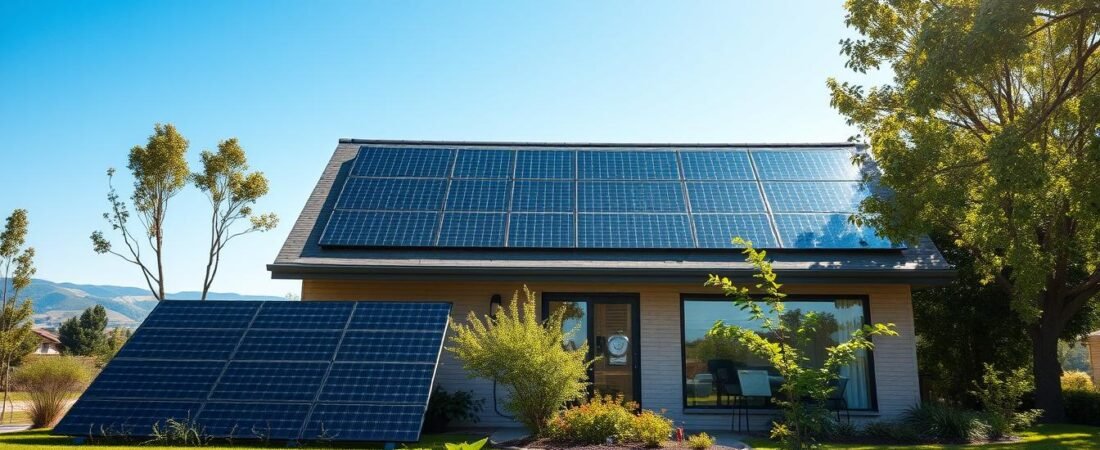
Investing in clean electricity can cut your monthly utility price and give you more control over household costs. Modern solar power tech lets you harness the sun and run appliances, heating, and cooling with greater efficiency.
Choosing the right solar panels for your property helps you stay powered during peak demand and reduces reliance on the grid. A good installation and quality panels mean reliable energy for decades and lower long-term bills. This short guide will help you weigh options, compare capacity and price, and pick a setup that fits your lifestyle.
Understanding Home Solar Panel Solutions
Learning how a sunlight-to-electricity setup functions is the first step toward true energy independence. A basic system converts rays into DC electricity and then into usable AC for appliances.
High-quality panels are built to last and perform even in varied weather. Modern systems include inverters and monitoring gear that keep production steady and predictable.
Many homeowners pick these systems because they lock in a clearer price for electricity. That predictability helps protect budgets from rising utility rates and future price shocks.
We evaluate options to match capacity with usage and budget. Below is a quick comparison to guide early decisions.
| Feature | Typical Benefit | Consideration | Estimated Lifespan |
|---|---|---|---|
| Monocrystalline | High efficiency | Higher upfront price | 25–30 years |
| Polycrystalline | Lower cost | Moderate efficiency | 20–25 years |
| Thin-film | Flexible installs | Lower output per area | 15–20 years |
“A well-sized system provides long-term value by stabilizing electricity expenses.”
- Learn system components to size correctly.
- Compare warranties and degradation rates.
- Confirm local incentives to lower effective price.
The Evolution of Solar Cell Technology
New cell designs focus on cutting resistive loss and improving shade performance.
Half-cut cell advantages are now mainstream. Splitting cells reduces current and heat, which lowers resistive loss. That yields higher output on cloudy days and when parts of an array are shaded.
Several leading products show this trend. The Hyundai Solar 435 Watt Bifacial Cell All Black reaches an industry-leading 22.28% efficiency. QCells’ 430W QTron uses N-type Q.ANTUM NEO half-cells to boost shade tolerance.
Efficiency standards
Manufacturers also use laser cutting and N-type wafers to improve durability and conversion. ZNshine’s 108-cell half-cut modules aim to minimize resistive loss while keeping a competitive price.
- Higher efficiency means more energy per square foot.
- Half-cut layouts improve shade handling and reduce hotspots.
- Modern design blends durability with an all-black aesthetic for curb appeal.
| Model | Key Feature | Efficiency / Benefit |
|---|---|---|
| Hyundai 435W Bifacial | Bifacial, all-black | 22.28% — high conversion |
| QCells 430W QTron | N-type half-cells (108) | Better shade tolerance, higher output |
| ZNshine 108-cell | Half-cut, laser-cut cells | Lower resistive loss, competitive price |
“Picking high-efficiency products helps you maximize power from limited roof space.”
Choosing the Right Solar Kit for Your Property
Start by deciding if you need a system tied to the utility or one that stands alone. That choice shapes every other decision — from capacity to cost and installation method.
Grid-Tie Systems
Grid-tie kits work with the utility to offset bills. They are typically simpler to install and cost less up front.
Net metering can credit excess output, so your effective price per kWh drops over time.
Off-Grid Independence
Off-grid solar kits deliver full independence. These kits include batteries and charge controllers to run remote properties.
They cost more initially but remove the need for utility lines and provide reliable power where grid access is limited.
Ground vs Roof Mounts
Choose ground mounts when you need flexible tilt angles and easier maintenance.
Roof mounts save space and blend with a property’s look. Evaluate shading, orientation, and local codes before finalizing the installation plan.
| Option | Best For | Typical Components | Estimated Price Range |
|---|---|---|---|
| Grid-Tie Kit | Lower upfront cost, bill reduction | Panels, inverter, racking | $6,000–$15,000 |
| Off-Grid Kit | Remote sites, full independence | Panels, batteries, charge controller, inverter | $10,000–$30,000 |
| Ground Mount | Large arrays, optimal tilt | Panels, mounts, concrete or driven posts | $1,000–$4,000 (plus kit cost) |
“Match the kit to your daily load and site conditions to maximize value.”
Essential Components of a Complete Power System
Reliable electricity starts with carefully selected parts that fit your system’s demands.
Key components include the solar panel, an efficient inverter, sturdy racking, and proper wiring. Each piece affects output, safety, and the long-term price you pay for energy.
Our solar kit bundles these items so installation is smoother. Kits also include monitoring hardware so you can track performance and spot issues early.
Durable components lower maintenance and keep the power system reliable for years. We pick inverters and panels with strong warranties and proven field results.
- Inverter: Converts DC to usable AC with minimal loss.
- Racking: Keeps panels secure and correctly tilted for best output.
- Monitoring: Real-time data to optimize energy production.
| Component | Function | Why It Matters | Typical Warranty |
|---|---|---|---|
| Solar panel | Generates DC electricity | Determines peak output and degradation | 25 years |
| Inverter | Converts DC to AC, manages output | Impacts efficiency and grid compatibility | 10–15 years |
| Racking & Mounts | Secures array to roof or ground | Ensures safe installation and correct tilt | 10–20 years |
“Choosing matched components reduces surprises and helps lock in lower energy costs.”
Benefits of Integrating Battery Storage
A battery gives you control over when stored energy is used, cutting peak-hour costs.
Backup power during outages keeps essential circuits running when the grid goes down. High-voltage batteries support refrigerators, medical devices, and communications gear without interruption.
Adding batteries to your kit also helps shift consumption away from expensive peak hours. That lowers monthly utility price exposure and stretches the value of every kilowatt you generate.
Our battery backup kits pair with panels and inverters to deliver dependable standby power. They provide peace of mind during storms and other unexpected events.
- Store excess daytime energy for evening use.
- Maintain critical loads with high-voltage battery banks.
- Reduce reliance on grid price spikes by discharging when rates are highest.
| Benefit | What It Does | Typical Result |
|---|---|---|
| Day/Night Shifting | Stores daytime output for night use | Lower bills, less grid dependence |
| Emergency Backup | Keeps critical circuits powered | Reliable power during outages |
| Peak Shaving | Discharges during high-rate periods | Reduced utility price exposure |
“A well-designed battery system acts as a reliable backup, ensuring essential systems stay online.”
Evaluating Mounting and Racking Options
Secure racking and proper mounts are the silent guards that keep your array performing year after year.
Choosing durable mounting hardware protects your investment and reduces long-term upkeep. Good racking resists wind and snow loads and keeps the modules aligned for peak output.
Quality products lower the risk of leaks, corrosion, and costly repairs. The right choice also affects your overall price and system lifespan.
Look for racking engineered for easy installation. Systems that allow fast, safe attachment to roof or ground shorten labor time and cut potential errors.
- Durability: Handles weather and keeps the array stable.
- Compatibility: Matches your panel layout and tilt needs.
- Serviceability: Easy access for maintenance and inspections.
“A well-chosen mounting system preserves output and protects the rest of your equipment.”
Maximizing Efficiency with Inverter Technology
The right inverter turns raw DC into reliable AC with minimal loss and fuss. Choosing inverter tech early helps your system reach peak performance and reduces long-term price surprises.
Microinverters vs String Inverters
Microinverters attach at each module so every unit works independently. This is ideal when shading or orientation varies across an array.
Benefits: better panel-level monitoring and higher output in partial shade.
String inverters link multiple modules to one central unit. They cost less up front and suit simple, low-shade roofs.
Benefits: lower price and easier maintenance for uniform installations.
- The EG4 12000XP inverter is a top-tier option for converting DC to AC and keeping systems efficient.
- Advanced inverters in our kits monitor energy production and flag underperformance.
- Picking the right inverter ensures panels deliver maximum usable power to your property.
“Matching inverter type to site conditions often yields the biggest efficiency gains.”
For a deeper look at inverter performance and metrics, see our inverter efficiency guide.
Assessing Your Energy Needs and System Size
A short energy check today prevents overspending and ensures the kit you choose delivers steady power when you need it.
Answer a few quick questions about monthly usage, peak times, and major appliances. That helps us recommend the right solar kit size and the optimal inverter choice.
We run numbers with a solar panel calculator to estimate how many panels you need to offset utility costs. Assessing battery needs is as important as sizing the array when planning a full system.
Our team will walk you through the key questions and explain trade-offs so you avoid overspending. Get a personalized quote today that outlines expected output, battery capacity, and final price.
“Sizing right saves money and delivers reliable power when it matters most.”
- Quick usage audit to match a kit to your needs.
- Calculator estimates for panels and battery backup.
- Custom quote showing performance and price.
Financial Considerations and Investment Value
Evaluating the long-term cost and resale gains helps you see the true return on your investment.
Investing in a solar panel system can raise your home’s resale value and hedge against rising energy costs. Good design and the right inverter reduce losses and boost lifetime savings.
SunPower offers flexible financing with $0 down to lower the barrier to quality products and battery storage. That option makes high-efficiency kits easier to afford and spreads the initial price over time.
Adding a battery increases system value by storing excess energy for evening use. Our solar kit bundles aim to keep the price per watt competitive while maximizing output.
- Compare loan terms to find the lowest long-term price.
- Factor in incentives and warranty value for true returns.
- Prioritize design and component quality to protect investment.
| Option | Typical Terms | Effect on Price | Best For |
|---|---|---|---|
| Cash Purchase | No interest, upfront payment | Lowest lifetime price | Long-term owners |
| Financing ($0 down) | Low or no upfront cost, fixed payments | Higher short-term price, smooth monthly impact | Budget-conscious buyers |
| Lease / PPA | Monthly fee, limited ownership | Lowest entry price, less long-term savings | Renters or short-term occupants |
“A well-planned purchase balances price, performance, and future resale value.”
Conclusion
With almost 20 years of experience, GoGreenSolar delivers trusted installs and clear value. Our team pairs the right components to build a reliable solar power system that fits your needs and site.
Choosing the best kit today helps you lock in lower energy bills and gain long-term resilience. We offer options from a basic solar kit to full systems with battery backup and matched inverter gear.
Investing in quality panels and a battery system secures your energy future and can lower price exposure. Contact our experts today for a personalized quote and a seamless installation plan.