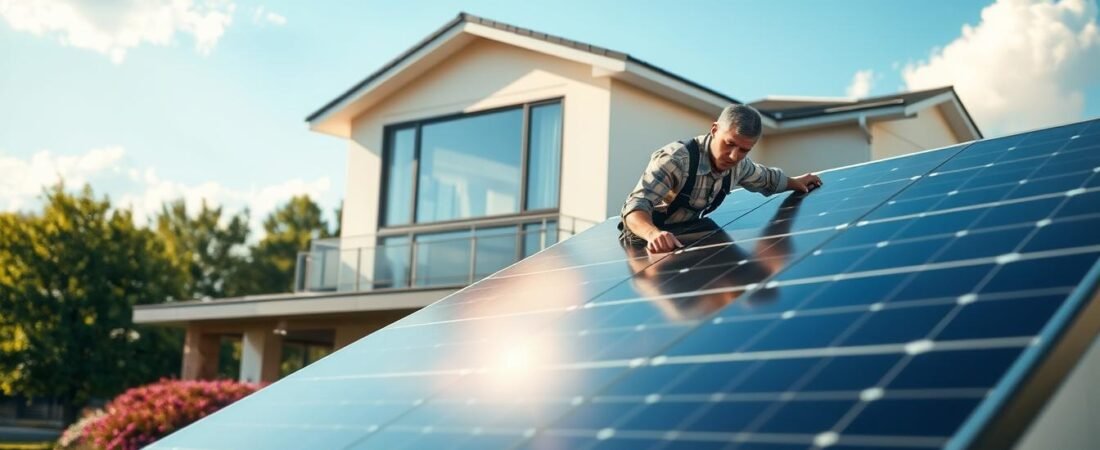
Thinking about switching your home to clean energy? This short guide walks you through the basics and helps set realistic expectations. Many Americans began choosing solar energy years ago, and stories like Lakisha Harris’s 2021 move into a solar-equipped home in Accokeek, Maryland show how life can change with a new system.
The process can feel overwhelming, but it often follows clear steps. From planning to permits and a professional installer visit, the full timeline usually takes two to six months. Timing matters, so planning ahead keeps surprises at bay.
Why consider this option? A well-coordinated project reduces reliance on traditional power and adds long-term value to your home. Each project is unique, but with the right team you can make the transition smoothly and enjoy cleaner energy from the sun.
Understanding the Benefits of Solar Energy
Choosing sun-based energy can shrink your carbon footprint and pad your wallet over many years.
Environmental wins: Clean energy cuts greenhouse gas emissions and lowers local pollution. Investments from the U.S. Department of Energy’s Solar Energy Technologies Office have helped make solar energy more affordable for many American families.
Environmental Impact
Switching to a well-designed system reduces reliance on fossil fuels. That means less pollution and a smaller climate footprint.
Financial Incentives
Money matters: A properly planned solar system can offer roughly 25 years of electricity bill savings.
- State and federal incentives help lower upfront costs.
- Many utility programs reward homeowners for installations and can offset equipment and labor.
- Modern systems often cut monthly utility bills and boost long-term savings.
| Benefit | Typical Impact | Who to Check With |
|---|---|---|
| Lower emissions | Reduced CO2 and local pollutants | State environmental office |
| Electricity bill savings | Up to 25 years of reduced bills | Local utility company |
| Incentives | Tax credits, rebates, performance payments | State energy office / utility |
Tip: Incentives and programs change often. Contact your utility and state office to confirm current offers before you commit.
Assessing Your Home for Residential Solar Panel Installation
A site visit helps determine if your roof, wiring, and location can support a new clean-energy system.
What an installer will check:
- Roof condition, size, direction, and sun exposure to estimate energy output and best layout.
- Structural capacity so the panels and mounts are safe for your building.
- Electrical panel and service lines to see if upgrades are needed to support the system.
Many homeowners use the assessment to spot other efficiency upgrades that boost savings and comfort.
“A proper site review prevents surprises and creates a clearer path to long-term energy savings.”
| Check | Why It Matters | Typical Outcome |
|---|---|---|
| Roof size & direction | Determines how many panels fit and their exposure to sun | Layout plan and estimated production |
| Structural & building codes | Ensures safety and compliance with state rules | May require reinforcements or design changes |
| Electrical upgrades | Checks if your panel and wiring can handle new capacity | Possible service upgrade or inverter selection |
Choosing the Right Solar Installer
A strong installer will steer your project from quote to final approval with fewer surprises. Start by prioritizing companies with a solid track record in your area and at least five years in business.
Vetting Potential Companies
Get at least three quotes so you can compare price, warranties, and proposed equipment. Quotes reveal differences in design, projected output, and total cost over time.
Look for credentials: choose installers who list a NABCEP certified professional on staff. That certification signals higher quality and safer work on your home and building.
- Read customer reviews to confirm reliability and post‑sale support in your state and local area.
- A good installer will manage permits and coordinate with the utility to speed final approvals.
- Compare warranties, expected system output, and the company’s response time for service.
“Choosing the right installer protects your investment and keeps the process moving on schedule.”
Designing Your Custom Solar System
A thoughtful system design turns usage data and local code into a plan that meets your household needs.
Your solar engineer will analyze monthly electricity use, roof layout, inverter wiring, and building rules. This makes sure the system size matches your home and daily habits.
The design step for complex projects usually takes two to three weeks and rarely more than four. During this time the engineer will map wiring, note any electrical upgrades, and identify storage options.
- Detailed load analysis sets the right panel array and expected output.
- Upgrades and battery choices are included so storage integrates smoothly.
- A clear design balances price with long‑term energy savings for your property.
Tip: If you plan to be one of the many battery buyers, ask the installer how the wiring will connect batteries and the inverter. Good planning avoids costly changes later.
“A well‑designed system gives the best value and performance over time.”
Navigating the Permitting and Approval Process
Before crews arrive, most of the work happens on paper — permits, codes, and utility sign-offs.
Applying for permits is often the longest part of the process. In many areas, approval can take up to two months.
Your installer will usually prepare and submit the building permit and the interconnection application to your local utility. This reduces errors and keeps the timeline moving.
Building Code Requirements
Local building codes ensure the design meets safety and structural standards. Proper documentation shows inspectors that your home and systems comply.
Tip: Make sure the design drawings match permit filings to avoid delays at final inspection.
Utility Paperwork
Coordinating with the utility is essential for grid connection and safe electricity flow. Utilities review interconnection plans and may require specific meter or inverter settings.
Your installer will track the utility’s approval and update you on any required changes or expected time frames.
- Permit filing: Handled by your installer, with city or county.
- Approval time: Varies by state and municipality; expect weeks to months.
- Utility sign‑off: Required before the system can be energized.
“Clear paperwork and prompt communication with your utility make the final steps smooth.”
| Step | Who Manages It | Typical Time |
|---|---|---|
| Building permit submission | Installer / contractor | 2–8 weeks |
| Interconnection application | Installer & utility | 2–6 weeks |
| Final approval & inspection | Local inspector & utility | 1–3 weeks after paperwork |
The Physical Installation Phase
The hands-on part of the project is short but busy, with crews mounting racks, wiring, and testing equipment.
What happens on your roof: installers fasten racking, secure the panels, and run electrical conduit to the inverter. This work usually takes a few hours to a few days, depending on roof size and system complexity.
Teams use safety gear and follow local code throughout the installation. If you chose battery storage, technicians place and wire batteries so the system can store energy and export power when allowed.
The installation phase turns plans into a working system. Once crews finish, testing and commissioning make sure the equipment communicates with the inverter and your utility meter.
“A careful, professional install protects performance and gives the best long-term value.”
- Mount racking and secure panels to the roof.
- Wire the modules to the inverter and the main service.
- Install battery storage if selected and run final tests.
| Task | Who Does It | Typical Time |
|---|---|---|
| Mount racking and modules | Installer crew | Half day to 1 day |
| Electrical wiring & inverter setup | Licensed electrician / installer | Several hours to 1 day |
| Battery or storage hookup | Specialized technician | Half day |
Final Inspections and Grid Interconnection
A local inspection and utility sign‑off are the final steps before your system starts producing clean energy.
What the inspector checks: a visit to your home confirms the work meets building code and safety standards. The inspector will review mounting, wiring, and any electrical upgrades.
Permission to operate comes from your utility. They will usually install a new meter that records how much electricity your solar panels produce and send to the grid.
“Final approval ties together safety, design size, and utility requirements so your system works as planned.”
| Step | Who | Typical time |
|---|---|---|
| Final building inspection | Local inspector | 1–7 days after request |
| Meter installation | Utility representative | 1–14 days |
| Permission to operate (interconnection) | Utility | 1–3 weeks |
Once the utility grants permission to operate, your home is officially tied to the grid and you can manage your electricity bill more effectively. For more on the inspection process, see this solar inspections guide.
Maintaining Your Solar System for Long-Term Savings
Small maintenance steps ensure your household continues to get the most from its clean energy gear. Solar panels have no moving parts, so routine upkeep is simple and affordable.
Most rooftop arrays stay fairly clean thanks to their angle and rain. Still, a gentle wash about twice a year keeps a solar panel operating near peak output.
If you added battery storage, follow the manufacturer’s care instructions to protect capacity and lifetime. Regular checks help spot loose wiring, so you avoid lost electricity or downtime.
- Keep module surfaces clear of heavy dust, leaves, and bird droppings.
- Schedule an annual review with your installers or the company that sold the system.
- Consider a maintenance plan if you prefer hands-off care—many providers offer inspections and cleaning.
“A little attention now prevents bigger costs later and keeps savings steady.”
Takeaway: Simple, timed checks and occasional cleaning preserve performance. That small effort helps your home enjoy reliable energy and long-term savings after installation.
Conclusion
A clear plan, good quotes, and careful vetting turn a complex project into a reliable energy upgrade. This approach helps you capture long‑term savings and enjoy cleaner power at home.
Follow the steps in this guide to compare installers and companies, read reviews, and check state incentives that cut the price of your installation and system. Ask questions about utility timelines and battery storage options during the process.
Whether you add panels or choose storage and a battery, your commitment matters. Small choices today lead to steadier electricity costs and real environmental wins. Use these stories and resources to start with confidence on your solar energy journey.