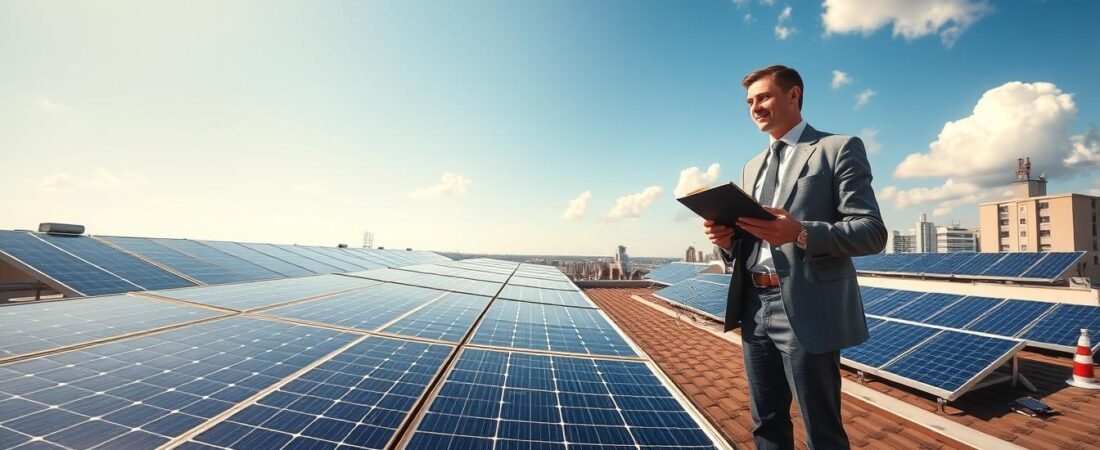
Thinking about a home energy upgrade? Understanding the total cost of a solar energy system means looking past the upfront cost. Many homeowners are surprised to learn that installing panels can yield long-term savings of $37,000 to $154,000 over 25 years.
The typical house needs about 12 kW to cover its electricity use. That makes system size a key factor when estimating panels cost and installation costs. Local incentives like a federal tax credit can lower your net system cost.
Think of this as an investment in free electricity. By researching how much solar panels cost and how installation varies by roof and equipment, homeowners can plan for both the upfront cost and long-term savings.
Understanding the Current Panel Solar Price
National averages show that residential systems now cost much less per watt than they did a decade ago.
Market Trends
Today’s market reports an average of $2.58 per watt before incentives. That is a big drop from about $7 per watt in 2010.
Competition among manufacturers and installers is stronger now. This boosts availability and helps push panels cost down for many homeowners.
Why Costs Have Decreased
Better manufacturing and higher efficiency lower the cost per watt. More efficient equipment means more power from the same roof area.
- Tech improvements raise output and reduce replacement needs.
- Scale and market maturity cut soft costs like permitting and labor.
- Incentives and tax credits lower net cost for many buyers.
| Year | Avg Cost per Watt | Key Drivers |
|---|---|---|
| 2010 | $7.00 | Early-stage manufacturing, higher equipment cost |
| Present | $2.58 | Efficiency gains, competition, lower installation costs |
| Notes | Varies by state | Costs vary with system size, roof complexity, and incentives |
Average Installation Costs Across the United States
Understanding national averages helps you plan. According to industry data, a 12 kW system costs about $30,505 before any federal or state tax credit incentives. That gives a baseline when comparing quotes for home solar.
Smaller systems cost less up front. For example, a 7.2 kW installation averaged about $21,816 in 2026 when paid in cash. Your final cost depends mainly on system size and local labor.
Other factors that change installation costs include permitting, roof type, and needed electrical upgrades. These regional differences mean two nearby homes can get very different bids.
- Get multiple estimates: compare at least three installers to find the best value.
- Factor incentives: a federal tax credit can cut your net cost significantly.
- Think long-term: many homeowners recover the investment through years of lower electricity bills.
Breaking Down Equipment and Soft Costs
Solar Panels and Inverters
Equipment—modules and inverters—makes up about 46% of a typical system price.
But the modules themselves are less than a third of that equipment share. The inverter you pick, such as a microinverter or string option, can change final costs by hundreds or thousands of dollars.
Labor and Installation
Installer labor tends to be modest. Labor is roughly 7% of installer expenses, while profit margins average near 11%.
That means installation costs include more than on-roof work; sales and overhead are big drivers of the quote you receive.
Permitting and Overhead
Soft costs—permits, inspections, interconnection fees, and customer acquisition—add several thousand dollars in many states.
Take advantage of incentives and the federal tax credit when calculating the total cost and long-term savings.
| Category | Share of Total | Typical Impact |
|---|---|---|
| Equipment (modules + inverters) | ~46% | Main hardware cost; inverter choice affects price |
| Labor | ~7% | On-roof work and commissioning |
| Soft costs (permits, marketing, overhead) | ~47% | Permitting adds a few thousand; customer acquisition raises installer fees |
- Tip: Compare quotes line-by-line to spot markup in soft costs.
- Tip: Ask about inverter options and warranty to protect long-term savings.
How System Size Influences Your Total Investment
Choosing the right system size sets the stage for both upfront costs and long-term savings. The system size you pick is the main factor that determines how much solar panels will cost for your home.
Generally, larger systems lower the average cost per watt because fixed fees get spread over more capacity. A 10 kW system is a common choice for families who want to cut most of their monthly electricity use.
Scaling up raises the total cost, but it often improves the investment efficiency. Soft costs like permitting and interconnection usually stay fairly fixed, so a bigger system reduces those costs per unit.
- Primary factor: system size drives your total cost and expected savings.
- Lower per-watt cost: larger systems benefit from bulk efficiencies.
- Better ROI: sizing to cover most household electricity often maximizes long-term payoff.
- Plan with needs: match system cost to your energy use, roof space, and equipment choices.
Impact of Roof Characteristics and Home Complexity
Not all homes are equally ready for a clean energy upgrade; roof features matter. Small differences in shape, shading, and access can change labor needs and final costs.
Addressing Shading and Electrical Upgrades
Shading from trees or nearby structures can reduce output. Removing or trimming trees often costs $300 to $1,500, depending on size and location.
Electrical upgrades are common. Many homeowners need a 200-amp electrical panel to support a new system safely. Upgrading adds time and equipment costs but protects long-term performance.
“Planning for shading and wiring up front prevents surprises and helps systems deliver expected electricity year after year.”
- Complex roofs with many planes or skylights increase labor for a successful solar panel installation.
- South-facing roofs at ~30° slope give the most efficient orientation for most homes.
- Multi-story homes tend to raise labor costs because of access and safety needs.
- If the roof is unsuitable, a ground-mounted option is possible but may need extra structural work.
| Issue | Typical Impact | Estimated Cost / Note |
|---|---|---|
| Tree trimming or removal | Improves output | $300 – $1,500 |
| Electrical panel upgrade | Supports added power safely | 200-amp recommended; cost varies by home |
| Roof complexity & access | Raises labor and time | Multiple planes, skylights, or height increase labor |
Tip: Address shading and wiring early to keep installation smooth and protect incentives and warranties. Over 1.5 million Americans have been connected with trusted companies to help navigate these choices.
Regional Variations in Solar Pricing
Costs for home energy systems shift a lot from state to state.
Arizona often reports some of the lowest numbers, while Nebraska and South Dakota typically run higher. These differences reflect local labor rates and permitting rules.
Local utility interconnection requirements can add fees or extra work. Older grids sometimes need upgrades, which raises installation costs and the system cost for a home.
System size also matters: in some regions you must install larger arrays to reach the same annual electricity output. That changes the total outlay and how quickly homeowners see savings.
- Labor and permitting: major drivers of regional variation.
- Interconnection and equipment upgrades: affect final bills.
- State incentives and tax programs: can offset higher local fees.
| State | Typical Trend | Why it varies |
|---|---|---|
| Arizona | Lower costs | Lower labor & high installer competition |
| Nebraska / South Dakota | Higher costs | Permitting and fewer installers |
| General | Costs vary by area | Labor, permits, utility rules, system size |
Tip: Check state-level data and local incentives before accepting a quote. That gives a clearer picture than national averages.
Financing Options for Your Solar Energy System
Choosing how to pay for your home energy upgrade affects both short-term cash flow and long-term returns.
Cash purchases usually cost the least over the life of the system because you avoid interest and dealer fees. A one-time payment also simplifies incentives and tax credits.
Loans let homeowners own equipment while paying monthly. Be careful: dealer fees on many loans can add an average of 19.99% to the principal, which raises the total cost over time.
Leases and PPAs often start at $0 down. They offer immediate savings on electricity bills but do not transfer ownership or tax benefits to the homeowner.
- Compare: cash, loan, and lease offers side-by-side to judge total costs and benefits.
- Read terms: watch for dealer fees, interest rates, and prepayment penalties.
- Think long-term: ownership usually yields larger lifetime savings, while leases can ease upfront cash strain.
| Option | Ownership | Upfront cost | Typical benefit |
|---|---|---|---|
| Cash | Yes | High | Lowest lifetime cost; full tax incentives |
| Loan | Yes | Low–Medium | Spread payments; possible dealer fees (~19.99%) |
| Lease / PPA | No | $0 | Immediate bill relief; no ownership benefits |
Leveraging Tax Credits and Local Incentives
The federal investment tax credit (ITC) lets homeowners deduct 30% of installation costs from their federal taxes. That tax credit alone can shave thousands off the total cost of installing solar panels and related equipment.
Many states and utilities add rebates or performance-based incentives. States like New Jersey and Massachusetts often offer particularly generous programs. Combining these local incentives with the ITC lowers your upfront cost and improves ROI.
Quick tips:
- Check for utility rebates that cut the system outlay.
- Look for performance incentives that pay over time for produced electricity.
- Confirm eligibility rules—these change by state and year.
Final step: consult a tax professional before you commit. They can confirm you qualify for the federal tax credit and any local rebates so your investment and long-term savings are accurate.
Long-Term Savings and Return on Investment
A typical homeowner recoups the cost of a system in about 10 years. After that payback period, the electricity generated is essentially free and trims utility bills for many more years.
Example: a 10 kW array can save roughly $1,440 per year for a typical household. Those yearly savings add up and improve your overall return on investment.
Tax incentives like the federal tax credit shorten the payback window and boost net savings. Homeowners who factor in incentives, equipment warranties, and minimal maintenance get a clearer financial picture.
- Most systems break even in ~10 years, then yield years of low-cost electricity.
- Installing solar panels can increase property value and appeal to buyers.
- Occasional inspections keep the installation operating at peak efficiency.
| Metric | Typical Value | Why it matters |
|---|---|---|
| Average payback | ~10 years | Marks when ongoing savings begin |
| Annual savings (10 kW) | $1,440 | Reduces household electricity bills |
| Long-term benefit | 10–25+ years of low-cost power | Improves home value and hedges rising utility costs |
To estimate your personal return, use tools that calculate how much panels save and factor in your system size and local incentives. For a quick resource, see how much solar panels save.
Conclusion
A well-planned home energy upgrade can deliver steady savings and greater independence from the grid.
Investing in clean generation reduces monthly bills and boosts property value. While the upfront outlay may feel large, federal tax credits and long-term savings make ownership a smart move.
By knowing how much solar panels cost and what affects that total—system size, roof traits, and local incentives—you can plan with confidence. Get multiple quotes and compare warranties and projected savings to find the best fit.
Final thought: weigh benefits over decades, not just the initial number. If you want to know much solar panels save your home, start with local estimates and a clear energy goal.