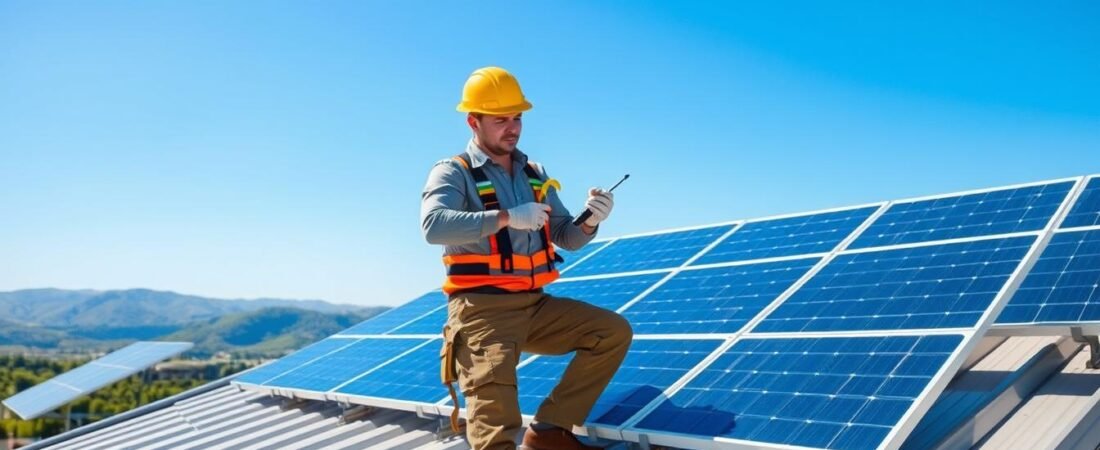
Ready to add clean energy without worrying about roof damage? This short guide explains why fits well with metal surfaces and how homeowners in the United States can benefit.
Metal roofs are light, durable, and often made from recycled materials. They can last 40 to 70 years, which pairs nicely with the 25–30 year warranties most energy systems offer.
One big advantage is that installing systems on standing seam designs often avoids drilling holes. That keeps your home watertight and speeds up the work.
Thin-film options from makers like MiaSolé are built to match metal roof types and make mounting simpler. These products also lower embodied energy during manufacture.
Want to learn more about best practices and what to ask installers? Check this helpful guide about panels for metal roofs: panels for metal roofs.
Why Metal Roofs Are Ideal for Solar Energy
A reflective metal covering can boost system performance and shrink a house’s cooling load. That extra reflectivity often cuts summer heat and lowers energy use, especially when paired with shade from mounted arrays.
Environmental benefits are clear: many metal surfaces contain recycled materials and can earn credits with LEED or ENERGY STAR programs. Choosing recyclable cladding reduces waste across a home’s life cycle and supports greener building scores.
Durability advantages also stand out. Compared to typical asphalt that lasts 12–30 years, metal options can last up to 70 years. This longevity means fewer replacements and less material discarded over time.
“Pairing durable cladding with energy arrays maximizes cooling and minimizes long-term waste.”
- Reflective finish keeps interiors cooler and lowers demand.
- Long service life reduces the need for early replacement.
- Combining panels with a durable surface helps preserve older roofing types and extends overall performance.
Understanding Your Specific Metal Roofing System
Different profiles need tailored attachment methods. A standing seam metal surface has vertical ribs that let installers clamp gear without drilling holes. That design helps keep the building watertight.
Not all sheets are the same. There are many profiles, gauges, and alloys to consider. The wrong bracket can stress a panel or void a warranty.
Work with a trusted local installer who will check gauge, seams, and fastener types. Proper mounting preserves the roof membrane and prevents leaks.
“Choosing the correct mounting hardware for your roof type saves time, money, and stress later.”
- Identify your panel profile early to avoid warranty problems.
- Standing seam is often preferred because it supports non-penetrating clamps.
- A professional will match brackets to gauge and metal type for safe attachment.
| Roof Type | Mount Approach | Weathertight Risk |
|---|---|---|
| Standing seam metal | Clamp mounts (no holes) | Low |
| Corrugated panels | Bracket & flashing | Medium |
| Trapezoidal sheets | Ridge or anchor mounts | Medium–High |
For detailed guidance, see this guide for metal roof mounting.
Solar Panel Installation on Metal Roof: A Step-by-Step Overview
A good first step is a site survey that tells whether clamps or drilled anchors will best secure the array.
The survey helps installers pick a safe mounting option and avoid future leaks. Your contractor will check seams, gauge, and fasteners to see if non-penetrating clamps are possible or if anchors are needed.
Most qualified installers include a workmanship warranty to protect your roof and give you peace of mind. Getting multiple quotes is the best way to find a company with the right experience.
- Confirm clamp vs anchor approach during the site visit.
- Ask about workmanship warranty and leak protection.
- Use platforms like EnergySage to request quotes and note your roof type.
| Step | What the Crew Does | Why It Matters |
|---|---|---|
| Survey | Inspect seams, gauge, and airflow | Determines safe mounting choice |
| Mounting selection | Clamps or anchors chosen | Prevents membrane damage and leaks |
| Final checks | Warranty review and seal tests | Protects money and long-term performance |
“Proper mounting system selection is the most important step to ensure your system remains secure and your roof remains protected from water damage.”
Comparing Mounting Systems for Different Roof Profiles
Different roof profiles demand distinct mounting approaches to protect the membrane and drainage paths. Choosing the right mounting system helps avoid leaks, preserves warranty coverage, and speeds the job.
Standing seam clamps
Best for standing seam metal panels that allow clamp attachment without pierce work. These clamps are made from high-strength aluminum and use a single bolt to secure the clamp. That means no drilled holes and minimal risk to the seam metal surfaces.
Corrugated metal brackets
Corrugated metal roofs need brackets that fasten to the top crest so drainage valleys stay clear. Top-quality brackets include rubber gasket seals that remove the need for messy sealants and help maintain a weathertight finish.
Trapezoidal ridge mounts
Trapezoidal roofing has broader flats between peaks. Installers use ridge mounts made for that profile; one leading maker offers over 15 mount types. Standard practice is to apply sealant at any drill locations to prevent leaks.
- Standing seam clamps attach directly to seams—no holes required.
- Corrugated brackets protect drainage by anchoring to crests with gaskets.
- Trapezoidal mounts come in many styles; sealant is often used at drilled points.
- Be wary if an installer tries to use only two fastener types for all profiles.
| Profile | Mount Type | Key Benefit |
|---|---|---|
| Standing seam metal | Clamp | No penetrations, low leak risk |
| Corrugated metal | Top-crest bracket | Keeps valleys clear, gasket sealed |
| Trapezoidal | Ridge/anchor mounts | Fits flats; sealant at holes |
“Use the bracket that matches your profile—it’s the easiest way to protect the structure and the system.”
Safety Considerations for Professional Installers
Before crews climb, a clear safety plan must be in place. Confirm that fall arrest points tie into structural members rather than just thin sheeting.
For corrugated metal and trapezoidal profiles, this matters more than ever. Many of these roofs lack standing seams, so anchors often require drilled attachment to framing.
When holes are needed, professional installers must use temporary anchors and track all penetrations. The company should remove anchors after work and seal holes to prevent future leaks.
Fall Protection Requirements
Good practice includes harness systems, lifelines, and anchor points that meet local codes. Teams must know profile-specific hazards for safe mounting and bracket placement.
- Attach fall protection to structure, not just sheet fasteners.
- Drill only when clamps are impossible; plan for sealing afterward.
- Document anchor removal and sealing to protect warranties and avoid leaks.
“Proper anchors keep workers safe and protect the roof’s long-term integrity.”
| Risk | Required Action | Outcome |
|---|---|---|
| No standing seam | Drill structural anchors; use certified hardware | Secure fall protection; potential drill holes |
| Temporary anchors used | Remove anchors; seal penetrations | Reduced leaks; preserved warranty |
| Unfamiliar profile | Site assessment by trained installers | Safe mounting and correct brackets |
Maximizing Energy Efficiency and Home Value
Pairing a high-reflectance roof finish with an efficient energy system boosts savings and makes your home more attractive to buyers.
Homes with solar panels can sell for up to 4% more, according to Zillow. That lift helps recoup costs and can speed a sale in many markets.
The Inflation Reduction Act offers a 30% federal tax credit for qualifying solar photovoltaic panels. That credit reduces upfront costs and saves you real money.
Light-colored metal roofs reflect far more sunlight—often 55–90%—so interiors stay cooler. That lowers AC use and helps the array produce more net savings.
- Higher resale value: up to a 4% premium.
- Federal credit: 30% IRA tax credit reduces costs.
- Energy security: lock in lower rates as electricity prices rise.
“Combining efficient panels with a reflective roof surface creates a sustainable, cost-smart home.”
Bottom line: a coordinated setup of panels and a reflective roof improves efficiency, protects against rising electricity bills, and often adds measurable resale value.
Long-Term Maintenance and Warranty Expectations
Routine upkeep and clear warranty terms keep your investment productive for decades.
Maintenance is simple. Most systems need a basic cleaning once or twice a year to remove dust and debris. Simple checks keep energy output near peak and spot loose fasteners or shading issues early.
Standing seam metal roofs often outlast energy modules by decades. Many seams last 40–60 years, so you likely won’t replace your roof when the array reaches end of life.
Mounting hardware usually accounts for about 10–25% of total project cost. Choosing a preassembled option like S-5 PVKIT™ 2.0 can save time and money while reducing labor risk.
Read warranty documents closely. Some manufacturers void coverage if penetrations are made. Confirm rules about drilled anchors and ask your company to document any holes and seals.
“Plan routine checks, pick quality mounts, and verify warranties to protect your investment over many years.”
- Schedule a cleaning once or twice a year.
- Keep records of any penetrations and seals.
- Pick a reputable installer and long-lasting mounting gear.
| Item | Typical Expectation | Why It Matters |
|---|---|---|
| Cleaning frequency | 1–2 times/yr | Maintains output |
| Mounting cost | 10–25% of project | Budget and durability |
| Seam lifespan | 40–60 years | Often outlives modules |
Conclusion
Wrapping up a project well protects your investment and keeps future costs low.
Combine durability with smart design, and you gain lasting efficiency and fewer surprises. A long-lived metal surface often outlasts a solar panel, cutting replacement needs and upkeep.
Select the correct mounting for your profile to guard against leaks and preserve warranties. Take advantage of federal tax credits and energy savings now to lower net expense.
Work with qualified installers who document anchors, seals, and warranty terms. That simple step ensures safety, clarity, and steady returns for years to come.