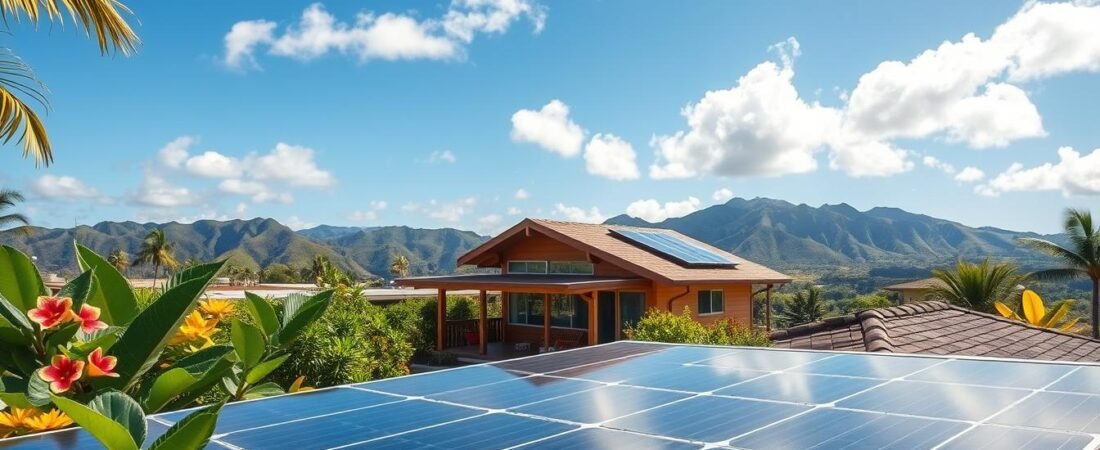
High electricity bills make switching to cleaner power a smart move. Residents face rates over $0.40 per kWh, the highest in the country. That makes system choices and quality equipment more important than ever.
The typical home needs about 5.5 kilowatts to offset usage. The average cost for a system sits near $18,645 before credits. Working with a trusted company helps protect that investment.
A good installer follows a clear process: site visit, permit filing, and local final inspection. Read customer reviews to spot firms with a proven track record of quality service and long-term reliability.
Choosing efficient panels and experienced crews maximizes electricity output and long-term savings. This short guide helps homeowners weigh cost, service, and industry experience so they get the best value for their money.
Why Hawaii is the Ideal Location for Solar Energy
Strong sunlight, frequent outages, and steep utility rates make the islands one of the best places to adopt home energy systems. Residents face high bills that help systems often pay for themselves in about five years.
Top-rated companies like Tesla and Malama Solar offer advanced equipment and monitoring to boost production. Choosing a reputable company helps stabilize the local grid and reduces dependence on imported fossil fuel electricity.
- High utility rates drive faster payback periods.
- Modern technology improves output across varied island climates.
- Industry growth over recent years means more competitive options for homeowners.
| Advantage | Impact | Typical Result (years) |
|---|---|---|
| High electricity costs | Greater savings per kWh | ~5 |
| Grid strain & outages | Value of local generation | Immediate reliability gains |
| Top companies available | Higher system performance | Long-term uptime |
For a deeper look at benefits and incentives, see this guide on going solar in Hawaii.
Where Can I Find Solar Panel Installation Services in Hawaii
Look for firms with clear pricing, strong reviews, and local permitting know-how.
More than 75 installers operate across the state, so start by narrowing options to providers that serve your island and county.
Malama Solar is a leading residential company with crews on Oahu and the Big Island. Independent Energy Hawaii and other reputable names earn high marks from customers for transparent cost estimates and quality equipment.
Compare written quotes, check online reviews, and confirm how many years each installer has served local homeowners. A reliable installer will explain expected savings, average watt output, and product warranties.
- Verify credentials and county permit experience.
- Ask for recent customer references and performance data.
- Demand clear pricing and a full equipment list.
| What to Check | Why It Matters | Benchmark |
|---|---|---|
| Years in business | Shows local experience and track record | 5+ years preferred |
| Customer reviews | Reveals service quality and post‑sale support | 4+ stars average |
| Transparent pricing & products | Protects your money and system performance | Itemized quote with equipment specs |
Top Rated Solar Companies for Your Home
A few companies stand out for combining strong equipment warranties with reliable local support. Use this short guide to compare strengths, warranties, and customer experience before choosing an installer.
Tesla
Tesla is known for cutting-edge technology and an integrated approach to home solar and storage. The company offers a 25-year warranty on equipment and performance, which helps protect your investment over many years.
Malama Solar
Malama Solar is a top-rated regional provider with a 4.5/5 score. The team pairs quality panels and local knowledge to deliver consistent results.
Local ties and clear pricing make Malama a strong choice for homeowners who want community-focused support.
Independent Energy Hawaii
Independent Energy Hawaii earns praise for outstanding customer service. Customers report easy communication, helpful guidance on financing, and smooth project timelines.
- Compare financing: cash, loans, or power purchase agreements.
- Confirm warranty terms and equipment specs before signing.
- Look at customer reviews and recent system performance data.
Understanding the Financial Benefits of Solar Power
Tax incentives and local rebate programs turn a large upfront expense into a manageable long‑term investment.
The Federal Investment Tax Credit (ITC) offers a 30% credit on the total system cost. The state credit provides an additional 35% credit up to $5,000. Together, these reduce your initial outlay by thousands and lower the effective cost of equipment and labor.
Programs such as GEMS Hawaii and GreenSun Hawaii help make adoption more accessible for low‑income households. Many customers report that their systems pay for themselves in roughly five years, thanks to high local electricity rates and durable products.
- Lower upfront cost: Federal and state credits reduce what you pay today.
- Stable savings: Generate electricity at a predictable, lower cost than utilities.
- Support programs: Help with financing and access for qualifying residents.
| Incentive | Effect | Typical Result |
|---|---|---|
| Federal ITC (30%) | Reduces federal tax liability | Thousands in savings |
| State Credit (35%) | Additional state tax reduction | Up to $5,000 |
| Local programs | Financing & rebates | Lower monthly cost |
How to Maximize Your Energy Savings
Small adjustments to system size and equipment choice deliver outsized monthly savings for most homeowners. Start by matching capacity to your typical usage. Right-sizing reduces wasted expense and raises annual savings.
Federal Tax Credits
The Federal Investment Tax Credit (ITC) remains the single most powerful tool to lower upfront cost. Claiming the credit cuts what you pay today and improves payback.
Using federal credits with a competitive price per watt—Hawaii’s average is $3.39 per watt—boosts long‑term value. Many customers report saving hundreds a month after systems go online.
State Rebate Programs
State incentives and local rebate programs further reduce outlay. Combine those credits with HECO’s Bring Your Own Device program to earn incentives for battery owners.
High‑efficiency panels matter in tight roof spaces. Choosing quality equipment from reputable companies and working with a skilled installer ensures the system produces the most energy for your home.
- Size smart: match system output to monthly consumption.
- Compare per watt cost: lower per‑watt prices improve lifetime savings.
- Use incentives: federal and state credits cut total cost significantly.
The Importance of Choosing High Efficiency Equipment
When roof space is tight, choosing high-efficiency equipment makes every watt count. High-efficiency panels such as Maxeon, Panasonic, and Tesla convert more sunlight into usable energy per square foot.
Efficiency ratings matter because they determine how much energy a system produces from limited area. That affects expected savings and the effective cost per watt.
Investing in quality products also pays off through longer life and stronger warranties. Many customers report that higher upfront cost is offset by bigger monthly savings over several years.
“Choose a reputable company and a certified installer to ensure panels operate at peak efficiency.”
- High-efficiency panels maximize output on small roofs.
- Top brands deliver proven performance and robust warranty terms.
- Professional installation protects long-term system production.
| Benefit | Result | Why it matters |
|---|---|---|
| Higher efficiency | More kWh per roof area | Better savings and faster payback |
| Quality equipment | Longer useful life | Lower replacement risk |
| Certified installer | Optimal performance | Reduced maintenance |
Why Professional Installation Outperforms DIY Projects
A trained installer protects your roof and ensures the system performs as intended. Professional crews offer workmanship warranties that cover repairs from leaks and mounting errors. That protection matters during heavy rainy seasons.
DIY projects often miss subtle details like proper flashing, sealant application, and torque settings on mounts. Those mistakes increase risk of water intrusion and reduce long‑term energy production.
Avoiding Roof Leaks
Professional companies assess roof condition, orientation, and weight limits before placing panels. They size the system to match household needs and local climate challenges.
- Workmanship warranty: protects homeowners against common failures.
- Code compliance: installers ensure permits and safety rules are met.
- Accurate sizing: maximizes savings and system lifespan.
“Many customers say the peace of mind from a pro installation is worth the extra cost.”
| Benefit | Effect | Why it matters |
|---|---|---|
| Workmanship warranty | Repair coverage | Reduces unexpected cost |
| Experienced installer | Fewer leaks | Protects home and equipment |
| Proper sizing | Higher savings | Better long‑term value |
Essential Factors to Consider When Selecting an Installer
Prioritize a company that offers clear quotes, multiple product options, and battery solutions.
Experience matters: choose a solar installer with at least five years in the industry. Longer tenure means the company is more likely to be around to honor warranties and support systems.
Reputation and customer reviews reveal real performance. Look for firms with steady ratings and responsive service teams. Ask for recent references and examples of completed home projects.
Transparency on cost and equipment is essential. A professional solar company provides an itemized quote that lists panels, inverters, batteries, expected savings, and all fees.
- Confirm warranty terms for both equipment and workmanship.
- Prefer companies that offer multiple panel brands and storage options.
- Check years in business and local reviews before you sign.
| Factor | Why it matters | Benchmark |
|---|---|---|
| Years active | Shows stability to honor warranties | 5+ years |
| Product range | Lets you match equipment to roof and budget | Multiple panel brands, battery options |
| Transparent quote | Reduces surprises and clarifies expected savings | Itemized equipment and labor |
Navigating Local Permits and Interconnection
A smooth path to activation depends on proper permits and a final interconnection sign-off.
Your installer is responsible for filing required permits and documents with town and utility offices. This reduces delays and helps keep cost estimates accurate.
A town representative will inspect the system and approve it before the utility allows grid connection. That inspection confirms safety, code compliance, and proper wiring of equipment.
- Experienced companies handle paperwork and interact with inspectors on your behalf.
- Professional installers know local rules, saving time and reducing errors.
- Correct permitting protects warranty coverage and long‑term energy production.
“A professional company managing permits and interconnection lets customers focus on the benefits, not the forms.”
| Step | Who Does It | Why It Matters |
|---|---|---|
| Permit filing | Installer / company | Ensures code compliance and avoids delays |
| Final inspection | Town representative | Validates safety and wiring before interconnection |
| Utility approval | Utility company | Allows panels and systems to export energy to the grid |
How Solar Systems Increase Property Value
Adding a modern home energy system often raises resale value and attracts buyers who want predictable monthly costs.
Zillow estimates a typical rooftop system increases property value by about 4.1%. With an average home value of $840,748, that boost often exceeds $34,000.
In larger markets such as Honolulu and Oahu, the return on investment is especially strong. Buyers in these areas expect durable equipment and clear documentation from the company that installed the panels.
Well-documented systems make listings more attractive. A professional company will supply commissioning records, warranty paperwork, and expected annual energy production. That proof helps appraisers and buyers verify value.
- Higher sale price: Verified systems often sell for more than comparable homes.
- Market appeal: Prospective buyers seek reduced electricity expenses and reliable equipment.
- Documentation matters: Warranty and production records support appraisal increases.
| Benefit | Typical Result | Why It Helps |
|---|---|---|
| Home value increase | ~4.1% (Zillow) | Adds thousands to equity |
| Buyer demand | Faster sales in urban areas | More competitive listings |
| Verified performance | Clear warranty & output data | Supports appraisal and buyer confidence |
“Long-term savings on electricity are a strong selling point that helps justify the initial cost of equipment and installation.”
The Role of Solar Batteries in Hawaii
Battery storage turns daytime excess into overnight reliability for island homes.
With net metering no longer mandated, batteries offer a practical path to energy independence. They store surplus daytime output so households keep lights and appliances on after sunset and during outages.
Many companies now recommend adding storage to a rooftop system. A battery reduces reliance on the grid and can push monthly utility bills toward zero.
- Store daytime production for night use.
- Provide backup during frequent outages.
- Lower long‑term cost and increase home resilience.
Professional installers match capacity to typical use and the size of your panels and inverter. That ensures the equipment and products pair well with your system and warranty needs.
| Benefit | Result | Why it matters |
|---|---|---|
| Backup power | Continued service during blackouts | Peace of mind |
| Stored energy | Use at night | Lower bills |
| Proper sizing | Longer life | Protects warranty and equipment |
“Customers who add storage report higher satisfaction and fewer interruptions.”
Evaluating Warranty Coverage and Long Term Protection
Warranty terms often determine which company will protect your long‑term investment. Most reputable installers offer at least 25 years of coverage for equipment and performance. That full-length protection matters when comparing offers.
Workmanship warranties typically run for about 10 years. Those guarantees cover roof penetrations, mounting faults, and installation errors that could cause leaks or reduced output.
Customer service plays a big role during claims. Choose a company with clear documentation, a fast claims process, and references from customers who used coverage effectively.
- Confirm that the warranty is transferable to a new owner.
- Ask whether parts, labor, and performance are fully covered.
- Get written proof of coverage and expected timelines for claims.
| Coverage Type | Typical Length | Why It Matters |
|---|---|---|
| Equipment & performance warranty | 25 years | Protects output and product defects |
| Workmanship warranty | 10 years | Covers installation errors and leaks |
| Transferability | Varies | Boosts resale value and buyer confidence |
“The best solar companies in the industry stand behind their work and provide clear long‑term protection plans.”
For objective comparisons and trusted reviews, see this trusted reviews when vetting prospective solar companies and their warranty terms.
Common Challenges During the Installation Process
Permitting snags and complex electrical layouts are common hurdles during system buildouts.
Roof condition often dictates timing. Hidden rot or flashing issues may require repair before crews mount panels. That work adds a day or more to the schedule.
Permits and inspections sometimes take longer than quoted. Local reviews, requested changes, or utility paperwork can delay activation.
- Unexpected roof repairs increase cost and time.
- Complex wiring or older service panels need upgrades.
- Typical on‑site work lasts one to three days, depending on size and roof complexity.
Experienced companies manage these risks. They plan for contingencies, document warranty coverage, and keep customers informed.
“Good communication and a reputable company make the process smoother and protect your investment.”
| Challenge | Impact | Typical Resolution |
|---|---|---|
| Roof repairs | Schedule delay, added cost | Repair before mounting; 1–2 days |
| Permit delays | Activation hold | Installer handles filings; follow-up with inspectors |
| Electrical upgrades | Additional labor, parts | Panel or meter upgrade; 1 day |
How to Request and Compare Quotes
A clear, itemized estimate is the best way to avoid surprises during project buildout. Ask each provider for a written quote that lists equipment, labor, and expected yearly energy production.
Request quotes from multiple solar companies so you can compare cost per watt and the exact panels proposed. A reputable solar installer will tailor estimates to your roof, usage, and local rules.
- Compare at least three quotes to spot outliers and hidden fees.
- Confirm permits, labor, and equipment are included to avoid extra charges later.
- Ask questions about warranty coverage and expected timeline for installation.
“Take time to review each proposal; clear answers from a company signal good post‑sale support.”
| Item | What to check | Why it matters |
|---|---|---|
| Cost per watt | Breakdown of panels and inverter | Shows true equipment and cost value |
| Warranty | Length and transferability | Protects long‑term performance |
| Timeline | Permit to activation | Sets expectations for service and energy delivery |
Conclusion
Good planning and quality workmanship keep your system producing reliably for many years. Choose a reputable company that offers clear quotes, strong warranties, and responsive service. That protects your investment and raises resale value.
Federal and state tax credits reduce the upfront cost significantly. Pair that with a smart equipment choice to lower your cost per watt and improve long‑term savings.
Compare multiple written quotes to pick the best solar provider for your roof and budget. With proper care, a well‑built system will deliver predictable energy savings for years and help you move toward a more sustainable home.