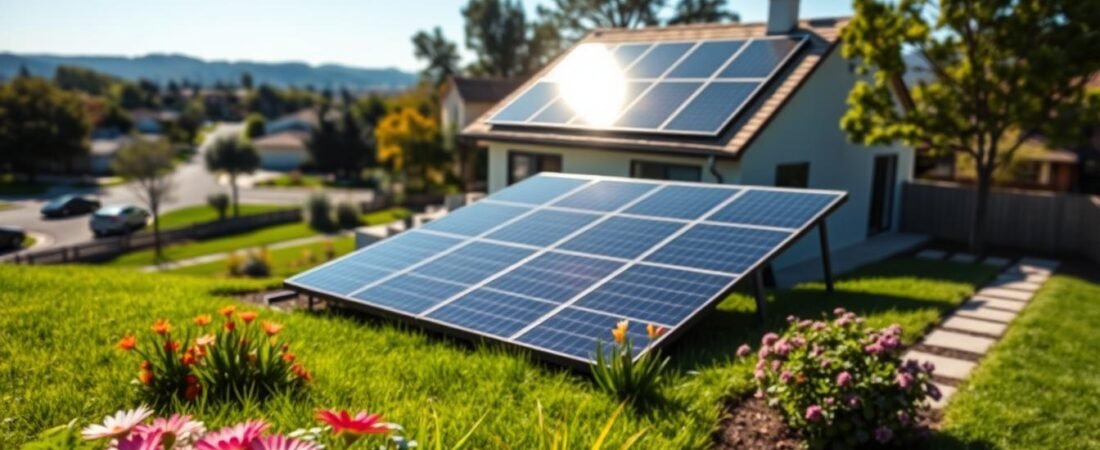
Published April 2026 by Catherine Lane, this guide makes it simpler to estimate what a residential setup will mean for your budget and bills.
The National Renewable Energy Laboratory and other agencies provide the data behind national averages. In 2026, a typical 7.2 kW system bought with cash runs about $21,816.
Federal tax credit and local incentives can trim that number significantly, so the upfront price is not the whole story.
To understand true expenses, look at your energy use, roof size, utility rates, and whether you add batteries or extra equipment. Those factors change payback and long-term savings over a 25-year lifespan.
This short guide will walk homeowners through the main drivers of purchase, installation, and ongoing value so you can decide if an installation matches your goals.
Key takeaways: Average 7.2 kW price ~ $21,816 (2026); federal credits lower net spend; savings accumulate over 25 years.
Understanding the Solar Panel Cost for Home in 2026
Recent buyer data and installer quotes reveal what most homeowners can expect to pay this year.
Current Market Averages
Baseline pricing: A typical 7.2 kW system averages about $21,816 before incentives. That equals roughly $3.03 per watt on a cash purchase.
Tax credit rules changed in 2026, but homeowners who installed on or before December 31, 2025, may still claim credits on returns. Local rebates and state incentives further reduce net spend.
Impact of System Size
Size matters. Larger setups—say 10 kW—usually lower the price per watt compared with smaller 4 kW systems. That makes bigger systems more economical per unit of power.
Financing can raise the total paid over the years. Loans with high interest and dealer fees (averaging about 19.99%) add to the final bill.
- 7.2 kW average: $21,816; ≈ $3.03 per watt.
- Higher capacity tends to cut per-watt rates.
- Check rebates, utility rates, and financing before signing.
Average Installation Expenses Across the United States
State benchmarks from the National Renewable Energy Laboratory reveal wide variation in installation totals. Labor rates, permit fees, and local market demand shift prices between states.
Regions such as Florida often show different pricing than Rhode Island. That difference comes from local permitting rules and contractor hourly rates. BLS wage data helps adjust estimates by region.
- Benchmarks: NREL state data guides average estimates.
- Labor & permitting: These add substantially to a system’s total.
- Incentives: Federal tax credit and local rebates reduce net spend.
Whether a system is large or small, location and size are the main drivers of final expenses. Homeowners should compare regional data and multiple bids to get the best value.
Breaking Down Your Solar Investment
When you separate equipment, labor, and soft charges, you see which pieces move the needle.
Equipment and Hardware
Modules and inverters are essential, but modules themselves make up only about 12% of total spending. Inverters, racking, wiring, and optional battery storage raise the equipment tab quickly.
Adding a battery can increase equipment spending by roughly $15,000, yet it adds backup power and resilience.
Soft Costs and Permitting
Soft costs—permits, inspections, design, and customer acquisition—compose a large share of the final price homeowners see on quotes.
These fees vary by city and by company. They are often the reason a proposal looks higher than just equipment totals.
Labor and Installation
Labor depends on roof complexity, stories, and obstacles like skylights. A simple, single-story roof typically costs less than a steep, multi-level layout.
Compare bids and ask installers to itemize labor, soft fees, and equipment so you can negotiate effectively.
| Category | Typical Share | Notes | Impact on Price |
|---|---|---|---|
| Modules | ~12% | Physical panels and frames | Low direct share but vital for output |
| Inverter & Equipment | 15–25% | Inverters, racking, wiring, batteries | Can rise sharply with battery add‑ons |
| Soft Costs | 25–40% | Permits, design, permits, sales | Major driver of regional price differences |
| Labor & Installation | 20–30% | Roof work, mounting, electrical hookup | Higher on complex roofs or multi‑story homes |
Tip: Remember the federal tax credit and local incentives when you compare net prices. Ask each installer to show post‑incentive totals so you can evaluate real value.
Key Factors That Influence Your Total Price
How your roof faces and how much shade it gets will change both the size of the system you need and the final price. Small choices in equipment and layout often change long‑term savings more than the upfront number.
Roof Characteristics and Sun Exposure
Orientation and pitch matter. South‑facing roofs usually need fewer modules and less labor, which lowers the overall price.
Complex roofs with dormers, vents, or multiple slopes raise labor and time on the roof. That increases quoted fees and installation timelines.
Shade from trees or nearby buildings reduces output. Shading often forces a larger system or different equipment, which raises system cost and may require optimizers or microinverters.
- Efficiency tradeoffs: Premium models can run up to 25% more but yield higher energy over time.
- Usage matters: High electricity demand needs a larger system, increasing totals.
- Local factors: State rates and incentives, plus the federal tax credit, affect payback and net price.
Comparing Cash Purchases and Financing Models
Paying cash usually yields the strongest long-term returns and the simplest ownership path. Cash eliminates interest, dealer fees, and monthly payments. It also makes claiming the federal tax credit straightforward.
Loans spread payment over ~20 years but often add dealer fees that can increase the total paid by about 43% over the loan life. That reduces net savings even when monthly bills fall immediately.
“The cheapest route over decades is ownership paid upfront; financing can mask true expenses.”
Leases and PPAs remove upfront expense, but they give lower lifetime savings and typically block you from claiming incentives. Owning the system lets you capture tax breaks and local rebates directly.
| Option | Upfront | Lifetime Value | Incentives |
|---|---|---|---|
| Cash | High | Highest | Full access |
| Loan | Low–Medium | Medium (interest adds up) | Access if you own |
| Lease / PPA | None | Lowest | Usually none |
Tip: Compare quotes on a post‑incentive basis and read loan disclosures carefully. For a deeper look at options, see our financing vs cash comparison.
Long-Term Maintenance and Repair Considerations
Simple upkeep keeps your system productive. Routine checks and quick fixes usually protect output and reduce surprises. Most owners find the work small compared with the energy benefits over the years.
Routine Cleaning Requirements
Professional cleaning typically runs about $150–$300 per visit, depending on array size. Regular washes remove dust, pollen, and bird residue that cut generation.
Many homeowners schedule one to two visits a year. In dusty or coastal areas, cleaning twice yearly helps preserve peak power.
Common Repair Costs
Expect a few predictable replacements: Inverters often need replacing every 10–13 years. Wiring fixes vary widely, from roughly $100 to over $1,000.
If a panel is damaged and not under warranty, repairs can run about $400–$1,200 each. Good warranties cut that risk considerably.
| Item | Typical Timeline | Typical Range |
|---|---|---|
| Cleaning | Annually or biannually | $150–$300 per visit |
| Inverter replacement | 10–13 years | $1,000–$3,000 (varies by model) |
| Wiring repairs | As needed | $100–$1,200+ |
| Panel repair (no warranty) | As needed | $400–$1,200 per unit |
Plan ahead. Include maintenance in your long-term budget, especially if you add a battery or high-end equipment. With modest upkeep, a properly installed system can deliver clean electricity for 25 years or more.
Evaluating the Financial Value of Solar Energy
Think of a rooftop system as a long-term hedge against rising utility rates and unpredictable bills.
A typical payback period is about ten years. After that, many owners enjoy roughly 15 years of low‑to‑no electricity bills.
The federal tax credit is a major part of the math. On average, that credit saves homeowners about $6,545 on an installation.
High utility rates—often above $0.17 per kWh—shorten payback and boost net value. Net metering further increases returns by crediting excess generation on your bill.
“Adding a battery can raise resilience and let you sell stored power when rates peak, lifting the system’s overall value.”
Consider three quick checks before you buy:
- Estimate your current annual electricity spend and compare it to projected generation.
- Apply the federal tax credit and local rebates to see the net price.
- Factor in a battery if you need backup or want peak‑rate savings.
Bottom line: With a ~10‑year payback, incentives that save thousands, and net metering, a well‑sited system offers clear financial benefits over its lifetime.
How to Choose the Right Installer for Your Needs
A trusted installer turns a good equipment buy into a reliable, long‑lasting system. Start by requesting at least three detailed quotes. Comparing bids reveals differences in labor, warranties, and final pricing.
More than 1.5 million Americans have used professional platforms to find vetted companies. Use those reviews to vet reputation and average response times.
Ask each candidate to explain design choices. A quality contractor will assess your roof, energy use, and local permitting needs. They should show expected yearly generation and explain equipment warranties.
“The right installer will help you navigate state rules and secure permits while delivering reliable installation.”
Quick checklist:
- Get three quotes and compare post‑incentive totals.
- Check reviews and platform vetting status.
- Ask about labor crews, timelines, and warranty terms.
- Confirm the installer handles permits in your state.
| What to Verify | Why It Matters | Questions to Ask | Red Flags |
|---|---|---|---|
| Licensing & insurance | Protects you from liability | Show license numbers and policy details | No proof or vague answers |
| Warranty & workmanship | Ensures repairs without surprise bills | Length and transferability of warranty | Short or nontransferable coverage |
| Itemized quote | Clarifies labor, equipment, and soft fees | Ask for line‑by‑line pricing | Blanket totals without detail |
| Local permitting experience | Saves time and avoids fines | Ask about recent permits in your city | Unfamiliar with state or local rules |
Final tip: Balance price with proven work, clear communication, and solid warranties. The cheapest bid rarely yields the best long‑term value for your system and electricity savings.
Conclusion
Long-term energy decisions matter more than the sticker number. A well‑sited rooftop setup yields steady savings, greater independence from utility rate swings, and clear value over many years.
Use the federal tax credit and local incentives to lower upfront expense. Compare at least three detailed bids and review warranties before you commit.
Whether you pay cash or finance the installation, proper upkeep and a quality installer keep generation high and repairs rare. Take the time to research now — the right choice pays back as reduced electricity bills and reliable power later.