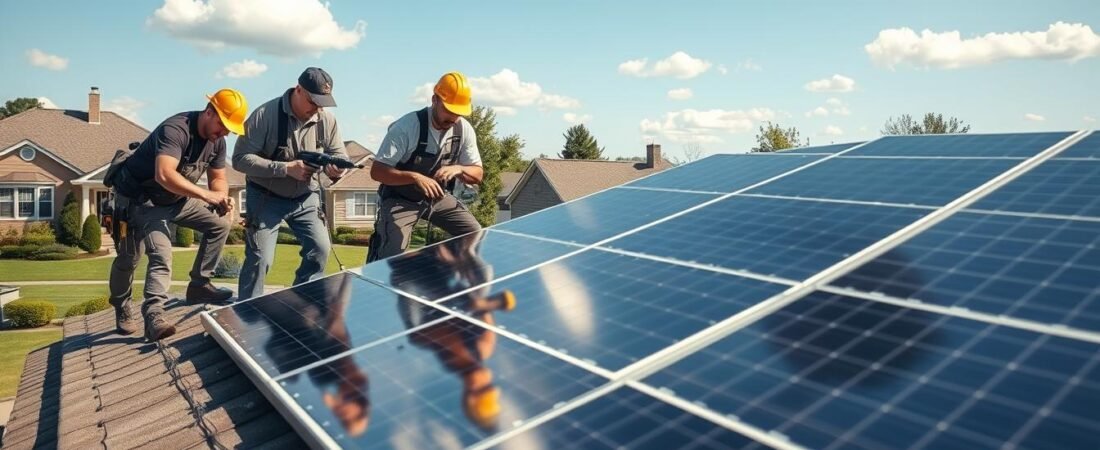
Choose a local, trusted service that guides homeowners and small businesses from start to finish. Our company handles consultation, design, permitting, inspection, and interconnection support so you get a smooth, full-service experience.
Producing your own electricity lowers reliance on the grid and helps manage energy bills with practical, proven systems. We focus on clear communication and quality work so every step is easy to follow.
Fairfax County encourages adoption and notes systems can pay for themselves in about 10 to 20 years. The county also offers consumer resources and warnings about door-to-door scams, which we respect by keeping transparent, ethical practices.
Before you request a quote, you’ll learn about costs, incentives, timelines, equipment options, and warranties. Request a quote today and expect friendly customer service from a local team that values quality and trust. Visit our services page to get started.
Solar Panel Installation Fairfax, VA for Homes and Small Businesses
Right-fit rooftop systems start with a site-specific design based on shading, orientation, and usage. We size each system for the roof area and your typical electricity needs so production matches expectations.
Who we serve: homeowners and small business owners seeking a rooftop PV solution tailored to property layout and energy goals.
Rooftop PV systems designed for your property
Custom design means a detailed panel layout, inverter selection, and production estimate. We confirm designs with a site visit, either in person or virtual, to verify roof orientation and shading.
Local permitting and utility coordination
Our company handles county permitting and works with the utility on interconnection after inspection. Fairfax County waives permitting fees for new projects, which can lower upfront cost and cut friction.
- Typical early steps: request a quote, provide basic usage and roof info, schedule a site visit.
- Early timeline: design confirmation takes days to a couple of weeks depending on access and data.
- After approval: we proceed with ordering equipment, scheduling the project, and keeping you updated on timeframes.
Local advantage: an experienced team reduces delays and keeps the project moving smoothly from quote to commissioning.
Why Fairfax Homeowners Are Going Solar
Homeowners are choosing on-site generation to shrink monthly bills and gain energy independence. The most immediate benefit is lower monthly energy bills from producing electricity right at your roof.
Lower monthly energy bills by generating your own electricity
Net utility costs fall when daytime production offsets what you would otherwise buy from the grid. That reduces monthly bills and smooths spikes in winter or summer.
Increase property value with a solar power system
Homes with systems often sell faster and at higher prices. Buyers see this as an added value—a ready-made way to cut future energy bills.
Reduce your carbon footprint with clean solar energy
Choosing clean energy is a practical step to cut greenhouse gases without changing daily comfort. Adding storage provides extra protection from power loss during extreme weather.
“Many homeowners find the long-term return and community benefits make this a smart home investment.”
- Many systems can pay for themselves in about 10 to 20 years, per county guidance.
- Lower bills, higher resale value, and cleaner energy are the top drivers for going solar.
Next: Learn how it works and what to expect during the quote-to-power process.
Our Solar Installation Process From Quote to Powering Your Home
A clear, step-by-step plan helps homeowners move from a quote to a fully operating system with confidence. This section lays out what happens after you request an estimate so you know the timeline and milestones.
Compare quotes and choose your company
Look beyond price. Compare equipment specs, warranty lengths, production estimates, and the scope of work before you sign a contract.
Site visit to confirm design
An in-person or virtual visit verifies roof condition, shading, and final placement. This step finalizes the production estimate and schedule.
Permits, paperwork, and ordering
We submit permits and utility forms, then order equipment so the project stays on time. Proper documentation speeds town approval and interconnection.
Installation day and inspection
On-roof work typically takes one to three days and includes racking, wiring, placing panels, and installing inverters. After that, a town inspection clears the system for interconnection.
Expect the full timeline to vary with permitting and utility schedules. An experienced crew manages the sequence to minimize disruption and get you to power quickly.
Solar Incentives and Savings Available in Fairfax, VA
Several programs at the federal, state, and county level make meaningful savings possible for homeowners. These incentives reduce upfront cost and improve long-term returns for rooftop systems.
Key programs that lower your net cost
Federal ITC (2023–2032): A 30% tax credit applies to parts and labor. That directly cuts effective pricing and reduces how much money you pay up front.
Virginia net metering: You earn a retail credit for excess power exported to the grid. Credits roll month to month and true up after a 12‑month cycle; leftover production may result in a payout per utility rules.
Property tax exemption: Effective January 1, 2022, qualifying PV systems are exempt from added property tax. This protects homeowners when the system raises home value, preserving savings.
SRECs (performance credits): Owners earn credits per MWh produced. In Virginia, SRECs can be worth up to $70 each—10 MWh of production could translate to roughly $700 in earnings.
| Incentive | What it does | Typical benefit | Notes |
|---|---|---|---|
| Federal ITC | 30% tax credit | Reduces cost by 30% | Applies to parts and labor (2023–2032) |
| Net metering | Retail credits for exports | Lower monthly bills | Credits roll monthly; annual true-up |
| Property tax exemption | No added home tax for qualifying systems | Protects long-term savings | Effective 1/1/2022 |
| SRECs | Sell performance credits | Up to $70 per MWh (example) | Earned per MWh produced |
Local savings: Fairfax County waives permitting fees for new installations, which lowers initial money outlay and speeds project start.
Want a clear picture of total pricing and savings? Schedule a consultation and we’ll review incentives, cost estimates, and timelines so you know exactly what to expect.
Solar Battery Storage Options for Backup Power
A battery stores extra daytime energy so you can use electricity after sunset or during an outage. This turns unused production into on-demand power when you need it most.
Store excess energy for nighttime use and outages
What it does: a battery captures excess output from your solar system instead of sending it to the grid. Later, the battery discharges to run lights, a refrigerator, or other circuits you select.
Added resilience during extreme weather
Fairfax County notes that storage adds protection during storms and power loss. This provides peace of mind and can keep critical loads running for hours or, with larger systems, for many more.
- Pairs with panels and your inverter to store and release energy.
- Backup can serve selected circuits or the whole home depending on size and design.
- Decide by thinking about runtime needs, which appliances matter most, and long-term value over years.
Next step: schedule a consultation to evaluate if battery storage is the right way to meet your goals and which service fits your property.
Solar Panel Installation Cost, Financing, and What Impacts Pricing
A clear view of cost drivers helps you balance upfront money with long-term performance. Below are the main factors that shape final pricing and how incentives and financing can lower your net outlay.
What drives local pricing
Major cost drivers include system size, equipment selection, roof complexity, electrical work, and final design. Bigger systems raise material and labor needs. Complex roofs add time and special hardware.
Defining quality and long‑term value
Quality means bankable equipment, strong warranties, and skilled workmanship that protects your roof and your investment. Higher-quality inverters and panels often produce more energy over decades.
Incentives and savings that reduce net cost
The federal ITC cuts net cost by 30% (2023–2032). Net metering gives retail credit for exports. SRECs can add earnings per MWh. Combined, these programs improve payback and lower out-of-pocket money.
Financing and getting a fast quote
Common options: cash purchase, bank or specialty loans, and some $0‑down offers through third parties. A fast quote needs your address, recent electric usage, and basic roof details. Good quotes include production estimates, equipment list, warranties, and total cost.
| Factor | How it affects price | What to ask |
|---|---|---|
| System size | Larger capacity = higher total cost | Is size matched to your usage? |
| Equipment quality | Premium products cost more but last longer | What are model names and warranty terms? |
| Roof complexity | Steep or multiple planes increase labor | Will extra flashing or mounts be needed? |
| Incentives & programs | ITC, net metering, SRECs reduce net money | How will incentives be applied to final pricing? |
Compare quotes apples-to-apples. Check equipment, warranties, and expected production so you choose a system that fits both budget and goals.
Why Choose Our Fairfax Solar Energy Team
Selecting an experienced local crew reduces surprises and keeps projects on schedule from estimate to final power.
Licensed installers and in-house expertise
Our team uses licensed electricians and trained roof technicians. In-house expertise means consistent workmanship, safer wiring practices, and fewer handoffs that waste time.
Quality products and strong warranties
We pick quality products with clear manufacturer guarantees and back them with workmanship warranties. That protects your roof and long-term performance.
Transparent communication and customer care
Expect one point of contact, proactive updates, and after‑service support for monitoring or questions. Our customer service keeps you informed at every milestone.
Spot scams and choose reputable pros
Fairfax County warns about door-to-door pressure tactics and unclear pricing. Avoid “today only” deals, vague incentive claims, or pushy sales reps.
- Verify licensing and insurance.
- Read local reviews and ask for references.
- Get warranties and production estimates in writing.
“Transparent proposals and a clear scope of work are the best signals of a low-risk choice.”
Ready to learn more? Schedule a free consultation and get an honest assessment and quote—visit our Fairfax solar services to request time today.
Conclusion
A clear proposal and steady communication turn a complex project into an easy decision. A rooftop system is a practical way to cut utility reliance, add value to your home, and support cleaner energy in the community.
When a full-service crew manages permits, inspection, and hookup, the process stays straightforward. Typical on-roof work takes one to three days, with total timing set by permitting and utility coordination.
Incentives and local benefits can improve affordability. Ask for a transparent quote that lists expected production, warranties, and final cost so you can compare offers.
Ready to begin? Request a quote and start planning a solar panel solution with backup options for your home. Learn more from the top solar companies resource.
FAQ
What types of rooftop systems do you design for homes and small businesses?
How long does the whole process take from quote to activation?
What incentives and savings are available in Fairfax County?
Can I finance a system or go with
What types of rooftop systems do you design for homes and small businesses?
We design photovoltaic (PV) systems that match your roof layout, shading profile, and energy goals. Options include standard rooftop arrays, flush-mounted panels, and low-profile racking for historic or HOA-sensitive properties. We size systems to offset your electricity use and can add battery storage for backup or time-shifting use.How long does the whole process take from quote to activation?Typical timelines range from site assessment and permitting to activation. Expect design and quoting in 1–3 weeks, permitting and equipment ordering in 2–8 weeks depending on local approvals, and installation in 1–3 days. Final inspection and interconnection timelines vary by utility but often add 1–4 weeks.What incentives and savings are available in Fairfax County?Homeowners can use the federal Investment Tax Credit (ITC), state net metering credits, and a property tax exemption for qualifying systems. You may also earn Renewable Energy Credits and see reduced permitting fees locally. Incentives change, so we run a benefits check when we provide your quote.Can I finance a system or go with
FAQ
What types of rooftop systems do you design for homes and small businesses?
We design photovoltaic (PV) systems that match your roof layout, shading profile, and energy goals. Options include standard rooftop arrays, flush-mounted panels, and low-profile racking for historic or HOA-sensitive properties. We size systems to offset your electricity use and can add battery storage for backup or time-shifting use.
How long does the whole process take from quote to activation?
Typical timelines range from site assessment and permitting to activation. Expect design and quoting in 1–3 weeks, permitting and equipment ordering in 2–8 weeks depending on local approvals, and installation in 1–3 days. Final inspection and interconnection timelines vary by utility but often add 1–4 weeks.
What incentives and savings are available in Fairfax County?
Homeowners can use the federal Investment Tax Credit (ITC), state net metering credits, and a property tax exemption for qualifying systems. You may also earn Renewable Energy Credits and see reduced permitting fees locally. Incentives change, so we run a benefits check when we provide your quote.
Can I finance a system or go with
FAQ
What types of rooftop systems do you design for homes and small businesses?
We design photovoltaic (PV) systems that match your roof layout, shading profile, and energy goals. Options include standard rooftop arrays, flush-mounted panels, and low-profile racking for historic or HOA-sensitive properties. We size systems to offset your electricity use and can add battery storage for backup or time-shifting use.
How long does the whole process take from quote to activation?
Typical timelines range from site assessment and permitting to activation. Expect design and quoting in 1–3 weeks, permitting and equipment ordering in 2–8 weeks depending on local approvals, and installation in 1–3 days. Final inspection and interconnection timelines vary by utility but often add 1–4 weeks.
What incentives and savings are available in Fairfax County?
Homeowners can use the federal Investment Tax Credit (ITC), state net metering credits, and a property tax exemption for qualifying systems. You may also earn Renewable Energy Credits and see reduced permitting fees locally. Incentives change, so we run a benefits check when we provide your quote.
Can I finance a system or go with $0 down options?
Yes. We offer multiple financing paths including loans, leases, and power purchase agreements (PPAs). Many lenders provide low- or no-down options. Financing availability depends on credit and program terms; we help compare offers to find the best net cost and monthly payment for you.
Will a system work during a grid outage?
Standard grid-tied systems shut off during outages for safety. To run lights and essential loads, you’ll need a storage system or an inverter with backup capability. Battery systems store excess production and provide power when the grid is down, increasing resilience during storms.
How much can I realistically save on my electricity bills?
Savings depend on your energy use, system size, and local rates. Many homeowners see substantial reductions—sometimes covering 60–100% of usage. Incentives, net metering, and system performance affect payback, which commonly ranges from 10 to 20 years.
What factors most affect project cost and system sizing?
Major factors include your home’s energy consumption, roof area and slope, shading, equipment brand and efficiency, and any needed electrical upgrades. Complex roofs and higher-tier inverters or batteries raise costs. We provide a transparent estimate showing how each element influences price.
How do you handle permitting and utility interconnection in Fairfax County?
Our team prepares permit applications, single-line diagrams, and utility paperwork. We coordinate with Fairfax County inspectors and the local utility to submit interconnection requests and respond to reviews. We track approvals so your project stays on schedule.
What warranties and product guarantees come with a system?
We install equipment from recognized manufacturers that offer product and performance warranties—typically 10–25 years for panels and 5–12 years for inverters. Our workmanship warranty covers installation labor for a specified period. Exact terms appear in your contract.
How do I choose between different installers and avoid scams?
Compare local licensed contractors by checking certifications, references, online reviews, and sample contracts. Verify licenses, insurance, and local Better Business Bureau ratings. Beware of high-pressure door-to-door offers; reputable firms provide written proposals and clear financing terms.
Can I add batteries later if I start with a grid-tied system?
Yes. Many systems are designed to be battery-ready. If you plan to add storage later, tell us during design so wiring, inverter choice, and electrical panel capacity accommodate the future upgrade with minimal rework.
Do panels require much maintenance?
Maintenance is minimal. Occasional visual checks, cleaning after heavy pollen or dust buildup, and ensuring unobstructed drainage usually suffice. We offer maintenance plans for performance monitoring, cleaning, and rapid response to any issues.
How do net metering and SRECs affect my return on investment?
Net metering credits excess generation against your consumption at retail or near-retail rates, improving monthly savings. Solar Renewable Energy Credits (SRECs) provide additional revenue in some programs. Both reduce payback time; their value depends on local policy and market prices.
Will adding a system increase my property value?
Studies show properly documented PV systems can raise home resale value. Buyers value lower utility bills and energy independence. If you finance the system, disclose outstanding balances; owned systems typically deliver the greatest value uplift.
What products and inverter types do you recommend?
We recommend high-efficiency modules from established brands and inverters matched to your system goals—string inverters for simplicity, microinverters for shading or complex roofs, and hybrid inverters for battery integration. Product recommendations balance performance, warranty, and cost.
down options?Yes. We offer multiple financing paths including loans, leases, and power purchase agreements (PPAs). Many lenders provide low- or no-down options. Financing availability depends on credit and program terms; we help compare offers to find the best net cost and monthly payment for you.Will a system work during a grid outage?Standard grid-tied systems shut off during outages for safety. To run lights and essential loads, you’ll need a storage system or an inverter with backup capability. Battery systems store excess production and provide power when the grid is down, increasing resilience during storms.How much can I realistically save on my electricity bills?Savings depend on your energy use, system size, and local rates. Many homeowners see substantial reductions—sometimes covering 60–100% of usage. Incentives, net metering, and system performance affect payback, which commonly ranges from 10 to 20 years.What factors most affect project cost and system sizing?Major factors include your home’s energy consumption, roof area and slope, shading, equipment brand and efficiency, and any needed electrical upgrades. Complex roofs and higher-tier inverters or batteries raise costs. We provide a transparent estimate showing how each element influences price.How do you handle permitting and utility interconnection in Fairfax County?Our team prepares permit applications, single-line diagrams, and utility paperwork. We coordinate with Fairfax County inspectors and the local utility to submit interconnection requests and respond to reviews. We track approvals so your project stays on schedule.What warranties and product guarantees come with a system?We install equipment from recognized manufacturers that offer product and performance warranties—typically 10–25 years for panels and 5–12 years for inverters. Our workmanship warranty covers installation labor for a specified period. Exact terms appear in your contract.How do I choose between different installers and avoid scams?Compare local licensed contractors by checking certifications, references, online reviews, and sample contracts. Verify licenses, insurance, and local Better Business Bureau ratings. Beware of high-pressure door-to-door offers; reputable firms provide written proposals and clear financing terms.Can I add batteries later if I start with a grid-tied system?Yes. Many systems are designed to be battery-ready. If you plan to add storage later, tell us during design so wiring, inverter choice, and electrical panel capacity accommodate the future upgrade with minimal rework.Do panels require much maintenance?Maintenance is minimal. Occasional visual checks, cleaning after heavy pollen or dust buildup, and ensuring unobstructed drainage usually suffice. We offer maintenance plans for performance monitoring, cleaning, and rapid response to any issues.How do net metering and SRECs affect my return on investment?Net metering credits excess generation against your consumption at retail or near-retail rates, improving monthly savings. Solar Renewable Energy Credits (SRECs) provide additional revenue in some programs. Both reduce payback time; their value depends on local policy and market prices.Will adding a system increase my property value?Studies show properly documented PV systems can raise home resale value. Buyers value lower utility bills and energy independence. If you finance the system, disclose outstanding balances; owned systems typically deliver the greatest value uplift.What products and inverter types do you recommend?We recommend high-efficiency modules from established brands and inverters matched to your system goals—string inverters for simplicity, microinverters for shading or complex roofs, and hybrid inverters for battery integration. Product recommendations balance performance, warranty, and cost.
FAQ
What types of rooftop systems do you design for homes and small businesses?
We design photovoltaic (PV) systems that match your roof layout, shading profile, and energy goals. Options include standard rooftop arrays, flush-mounted panels, and low-profile racking for historic or HOA-sensitive properties. We size systems to offset your electricity use and can add battery storage for backup or time-shifting use.
How long does the whole process take from quote to activation?
Typical timelines range from site assessment and permitting to activation. Expect design and quoting in 1–3 weeks, permitting and equipment ordering in 2–8 weeks depending on local approvals, and installation in 1–3 days. Final inspection and interconnection timelines vary by utility but often add 1–4 weeks.
What incentives and savings are available in Fairfax County?
Homeowners can use the federal Investment Tax Credit (ITC), state net metering credits, and a property tax exemption for qualifying systems. You may also earn Renewable Energy Credits and see reduced permitting fees locally. Incentives change, so we run a benefits check when we provide your quote.
Can I finance a system or go with
FAQ
What types of rooftop systems do you design for homes and small businesses?
We design photovoltaic (PV) systems that match your roof layout, shading profile, and energy goals. Options include standard rooftop arrays, flush-mounted panels, and low-profile racking for historic or HOA-sensitive properties. We size systems to offset your electricity use and can add battery storage for backup or time-shifting use.
How long does the whole process take from quote to activation?
Typical timelines range from site assessment and permitting to activation. Expect design and quoting in 1–3 weeks, permitting and equipment ordering in 2–8 weeks depending on local approvals, and installation in 1–3 days. Final inspection and interconnection timelines vary by utility but often add 1–4 weeks.
What incentives and savings are available in Fairfax County?
Homeowners can use the federal Investment Tax Credit (ITC), state net metering credits, and a property tax exemption for qualifying systems. You may also earn Renewable Energy Credits and see reduced permitting fees locally. Incentives change, so we run a benefits check when we provide your quote.
Can I finance a system or go with $0 down options?
Yes. We offer multiple financing paths including loans, leases, and power purchase agreements (PPAs). Many lenders provide low- or no-down options. Financing availability depends on credit and program terms; we help compare offers to find the best net cost and monthly payment for you.
Will a system work during a grid outage?
Standard grid-tied systems shut off during outages for safety. To run lights and essential loads, you’ll need a storage system or an inverter with backup capability. Battery systems store excess production and provide power when the grid is down, increasing resilience during storms.
How much can I realistically save on my electricity bills?
Savings depend on your energy use, system size, and local rates. Many homeowners see substantial reductions—sometimes covering 60–100% of usage. Incentives, net metering, and system performance affect payback, which commonly ranges from 10 to 20 years.
What factors most affect project cost and system sizing?
Major factors include your home’s energy consumption, roof area and slope, shading, equipment brand and efficiency, and any needed electrical upgrades. Complex roofs and higher-tier inverters or batteries raise costs. We provide a transparent estimate showing how each element influences price.
How do you handle permitting and utility interconnection in Fairfax County?
Our team prepares permit applications, single-line diagrams, and utility paperwork. We coordinate with Fairfax County inspectors and the local utility to submit interconnection requests and respond to reviews. We track approvals so your project stays on schedule.
What warranties and product guarantees come with a system?
We install equipment from recognized manufacturers that offer product and performance warranties—typically 10–25 years for panels and 5–12 years for inverters. Our workmanship warranty covers installation labor for a specified period. Exact terms appear in your contract.
How do I choose between different installers and avoid scams?
Compare local licensed contractors by checking certifications, references, online reviews, and sample contracts. Verify licenses, insurance, and local Better Business Bureau ratings. Beware of high-pressure door-to-door offers; reputable firms provide written proposals and clear financing terms.
Can I add batteries later if I start with a grid-tied system?
Yes. Many systems are designed to be battery-ready. If you plan to add storage later, tell us during design so wiring, inverter choice, and electrical panel capacity accommodate the future upgrade with minimal rework.
Do panels require much maintenance?
Maintenance is minimal. Occasional visual checks, cleaning after heavy pollen or dust buildup, and ensuring unobstructed drainage usually suffice. We offer maintenance plans for performance monitoring, cleaning, and rapid response to any issues.
How do net metering and SRECs affect my return on investment?
Net metering credits excess generation against your consumption at retail or near-retail rates, improving monthly savings. Solar Renewable Energy Credits (SRECs) provide additional revenue in some programs. Both reduce payback time; their value depends on local policy and market prices.
Will adding a system increase my property value?
Studies show properly documented PV systems can raise home resale value. Buyers value lower utility bills and energy independence. If you finance the system, disclose outstanding balances; owned systems typically deliver the greatest value uplift.
What products and inverter types do you recommend?
We recommend high-efficiency modules from established brands and inverters matched to your system goals—string inverters for simplicity, microinverters for shading or complex roofs, and hybrid inverters for battery integration. Product recommendations balance performance, warranty, and cost.
down options?Yes. We offer multiple financing paths including loans, leases, and power purchase agreements (PPAs). Many lenders provide low- or no-down options. Financing availability depends on credit and program terms; we help compare offers to find the best net cost and monthly payment for you.Will a system work during a grid outage?Standard grid-tied systems shut off during outages for safety. To run lights and essential loads, you’ll need a storage system or an inverter with backup capability. Battery systems store excess production and provide power when the grid is down, increasing resilience during storms.How much can I realistically save on my electricity bills?Savings depend on your energy use, system size, and local rates. Many homeowners see substantial reductions—sometimes covering 60–100% of usage. Incentives, net metering, and system performance affect payback, which commonly ranges from 10 to 20 years.What factors most affect project cost and system sizing?Major factors include your home’s energy consumption, roof area and slope, shading, equipment brand and efficiency, and any needed electrical upgrades. Complex roofs and higher-tier inverters or batteries raise costs. We provide a transparent estimate showing how each element influences price.How do you handle permitting and utility interconnection in Fairfax County?Our team prepares permit applications, single-line diagrams, and utility paperwork. We coordinate with Fairfax County inspectors and the local utility to submit interconnection requests and respond to reviews. We track approvals so your project stays on schedule.What warranties and product guarantees come with a system?We install equipment from recognized manufacturers that offer product and performance warranties—typically 10–25 years for panels and 5–12 years for inverters. Our workmanship warranty covers installation labor for a specified period. Exact terms appear in your contract.How do I choose between different installers and avoid scams?Compare local licensed contractors by checking certifications, references, online reviews, and sample contracts. Verify licenses, insurance, and local Better Business Bureau ratings. Beware of high-pressure door-to-door offers; reputable firms provide written proposals and clear financing terms.Can I add batteries later if I start with a grid-tied system?Yes. Many systems are designed to be battery-ready. If you plan to add storage later, tell us during design so wiring, inverter choice, and electrical panel capacity accommodate the future upgrade with minimal rework.Do panels require much maintenance?Maintenance is minimal. Occasional visual checks, cleaning after heavy pollen or dust buildup, and ensuring unobstructed drainage usually suffice. We offer maintenance plans for performance monitoring, cleaning, and rapid response to any issues.How do net metering and SRECs affect my return on investment?Net metering credits excess generation against your consumption at retail or near-retail rates, improving monthly savings. Solar Renewable Energy Credits (SRECs) provide additional revenue in some programs. Both reduce payback time; their value depends on local policy and market prices.Will adding a system increase my property value?Studies show properly documented PV systems can raise home resale value. Buyers value lower utility bills and energy independence. If you finance the system, disclose outstanding balances; owned systems typically deliver the greatest value uplift.What products and inverter types do you recommend?We recommend high-efficiency modules from established brands and inverters matched to your system goals—string inverters for simplicity, microinverters for shading or complex roofs, and hybrid inverters for battery integration. Product recommendations balance performance, warranty, and cost.
FAQ
What types of rooftop systems do you design for homes and small businesses?
We design photovoltaic (PV) systems that match your roof layout, shading profile, and energy goals. Options include standard rooftop arrays, flush-mounted panels, and low-profile racking for historic or HOA-sensitive properties. We size systems to offset your electricity use and can add battery storage for backup or time-shifting use.
How long does the whole process take from quote to activation?
Typical timelines range from site assessment and permitting to activation. Expect design and quoting in 1–3 weeks, permitting and equipment ordering in 2–8 weeks depending on local approvals, and installation in 1–3 days. Final inspection and interconnection timelines vary by utility but often add 1–4 weeks.
What incentives and savings are available in Fairfax County?
Homeowners can use the federal Investment Tax Credit (ITC), state net metering credits, and a property tax exemption for qualifying systems. You may also earn Renewable Energy Credits and see reduced permitting fees locally. Incentives change, so we run a benefits check when we provide your quote.
Can I finance a system or go with $0 down options?
Yes. We offer multiple financing paths including loans, leases, and power purchase agreements (PPAs). Many lenders provide low- or no-down options. Financing availability depends on credit and program terms; we help compare offers to find the best net cost and monthly payment for you.
Will a system work during a grid outage?
Standard grid-tied systems shut off during outages for safety. To run lights and essential loads, you’ll need a storage system or an inverter with backup capability. Battery systems store excess production and provide power when the grid is down, increasing resilience during storms.
How much can I realistically save on my electricity bills?
Savings depend on your energy use, system size, and local rates. Many homeowners see substantial reductions—sometimes covering 60–100% of usage. Incentives, net metering, and system performance affect payback, which commonly ranges from 10 to 20 years.
What factors most affect project cost and system sizing?
Major factors include your home’s energy consumption, roof area and slope, shading, equipment brand and efficiency, and any needed electrical upgrades. Complex roofs and higher-tier inverters or batteries raise costs. We provide a transparent estimate showing how each element influences price.
How do you handle permitting and utility interconnection in Fairfax County?
Our team prepares permit applications, single-line diagrams, and utility paperwork. We coordinate with Fairfax County inspectors and the local utility to submit interconnection requests and respond to reviews. We track approvals so your project stays on schedule.
What warranties and product guarantees come with a system?
We install equipment from recognized manufacturers that offer product and performance warranties—typically 10–25 years for panels and 5–12 years for inverters. Our workmanship warranty covers installation labor for a specified period. Exact terms appear in your contract.
How do I choose between different installers and avoid scams?
Compare local licensed contractors by checking certifications, references, online reviews, and sample contracts. Verify licenses, insurance, and local Better Business Bureau ratings. Beware of high-pressure door-to-door offers; reputable firms provide written proposals and clear financing terms.
Can I add batteries later if I start with a grid-tied system?
Yes. Many systems are designed to be battery-ready. If you plan to add storage later, tell us during design so wiring, inverter choice, and electrical panel capacity accommodate the future upgrade with minimal rework.
Do panels require much maintenance?
Maintenance is minimal. Occasional visual checks, cleaning after heavy pollen or dust buildup, and ensuring unobstructed drainage usually suffice. We offer maintenance plans for performance monitoring, cleaning, and rapid response to any issues.
How do net metering and SRECs affect my return on investment?
Net metering credits excess generation against your consumption at retail or near-retail rates, improving monthly savings. Solar Renewable Energy Credits (SRECs) provide additional revenue in some programs. Both reduce payback time; their value depends on local policy and market prices.
Will adding a system increase my property value?
Studies show properly documented PV systems can raise home resale value. Buyers value lower utility bills and energy independence. If you finance the system, disclose outstanding balances; owned systems typically deliver the greatest value uplift.
What products and inverter types do you recommend?
We recommend high-efficiency modules from established brands and inverters matched to your system goals—string inverters for simplicity, microinverters for shading or complex roofs, and hybrid inverters for battery integration. Product recommendations balance performance, warranty, and cost.
down options?
Yes. We offer multiple financing paths including loans, leases, and power purchase agreements (PPAs). Many lenders provide low- or no-down options. Financing availability depends on credit and program terms; we help compare offers to find the best net cost and monthly payment for you.
Will a system work during a grid outage?
Standard grid-tied systems shut off during outages for safety. To run lights and essential loads, you’ll need a storage system or an inverter with backup capability. Battery systems store excess production and provide power when the grid is down, increasing resilience during storms.
How much can I realistically save on my electricity bills?
Savings depend on your energy use, system size, and local rates. Many homeowners see substantial reductions—sometimes covering 60–100% of usage. Incentives, net metering, and system performance affect payback, which commonly ranges from 10 to 20 years.
What factors most affect project cost and system sizing?
Major factors include your home’s energy consumption, roof area and slope, shading, equipment brand and efficiency, and any needed electrical upgrades. Complex roofs and higher-tier inverters or batteries raise costs. We provide a transparent estimate showing how each element influences price.
How do you handle permitting and utility interconnection in Fairfax County?
Our team prepares permit applications, single-line diagrams, and utility paperwork. We coordinate with Fairfax County inspectors and the local utility to submit interconnection requests and respond to reviews. We track approvals so your project stays on schedule.
What warranties and product guarantees come with a system?
We install equipment from recognized manufacturers that offer product and performance warranties—typically 10–25 years for panels and 5–12 years for inverters. Our workmanship warranty covers installation labor for a specified period. Exact terms appear in your contract.
How do I choose between different installers and avoid scams?
Compare local licensed contractors by checking certifications, references, online reviews, and sample contracts. Verify licenses, insurance, and local Better Business Bureau ratings. Beware of high-pressure door-to-door offers; reputable firms provide written proposals and clear financing terms.
Can I add batteries later if I start with a grid-tied system?
Yes. Many systems are designed to be battery-ready. If you plan to add storage later, tell us during design so wiring, inverter choice, and electrical panel capacity accommodate the future upgrade with minimal rework.
Do panels require much maintenance?
Maintenance is minimal. Occasional visual checks, cleaning after heavy pollen or dust buildup, and ensuring unobstructed drainage usually suffice. We offer maintenance plans for performance monitoring, cleaning, and rapid response to any issues.
How do net metering and SRECs affect my return on investment?
Net metering credits excess generation against your consumption at retail or near-retail rates, improving monthly savings. Solar Renewable Energy Credits (SRECs) provide additional revenue in some programs. Both reduce payback time; their value depends on local policy and market prices.
Will adding a system increase my property value?
Studies show properly documented PV systems can raise home resale value. Buyers value lower utility bills and energy independence. If you finance the system, disclose outstanding balances; owned systems typically deliver the greatest value uplift.
What products and inverter types do you recommend?
We recommend high-efficiency modules from established brands and inverters matched to your system goals—string inverters for simplicity, microinverters for shading or complex roofs, and hybrid inverters for battery integration. Product recommendations balance performance, warranty, and cost.