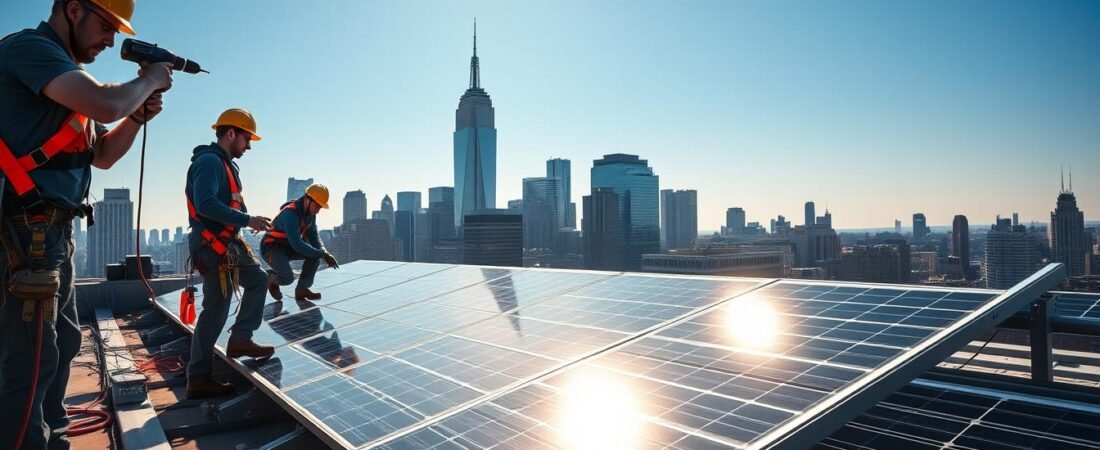
New York homeowners face unique choices when they consider clean power for their home. This brief guide pulls real ratings from residents who have already gone solar and names the key steps to evaluate cost, tax incentives, and long-term savings.
Trust matters: you will rely on a trusted installer to manage your home’s energy needs for the next 25 years. Proper work up front makes systems last and perform well in dense urban settings like New York.
We break down how to compare quotes, check local rules, and estimate returns. This friendly guide helps you weigh upfront cost against projected savings so you can choose with confidence.
Key takeaways: Ratings from actual homeowners, focus on installer quality, steps to estimate cost and savings, and guidance on tax incentives.
Understanding the Solar Landscape in New York
Understanding local sun patterns and building types is key to predicting year-round energy gains in New York.
New York averages about 4 to 4.5 peak sun hours daily, which is enough for many homes to generate meaningful electricity. Cold temperatures and harsh winters do not stop modern systems; they are made to work efficiently in chillier climates.
Transitioning to clean energy helps lower demand on the grid and reduces reliance on conventional fuels. The state’s market is evolving as more homeowners seek reliable power and smarter ways to manage consumption.
Today’s panels can also capture thermal energy for building use. That opens design options where equipment doubles as building material and helps boost seasonal output.
Tip: Match array orientation, roof strength, and local climate data to maximize yearly power. Small changes in placement yield steady gains across seasons.
- Peak sun: ~4–4.5 hours/day
- Built for cold weather and snow
- Reduces grid strain and fossil fuel use
Essential Criteria for Choosing a Solar Panel Installation NYC Provider
Picking the right installer affects your home’s performance, warranty coverage, and long-term value.
Years in business: Look for companies with at least five years serving new york homeowners. Firms that last this long usually offer steady service and follow-through on warranties.
Licensing and insurance
Check local compliance: While statewide licensing isn’t required, contractors must follow municipal rules and carry proper insurance. Ask for proof before you sign.
Customer review scores
Read real feedback: Google and Yelp scores reveal sales practices and service quality. High review scores and clear complaint resolution signal better service.
- Seek a workmanship warranty of 10 years or more.
- Prefer NABCEP-certified technicians for technical credibility.
- Compare multiple quotes to find the best price and loan or financing options.
Want a checklist for vetting candidates? See guidance on what to look for when hiring a solar energy.
Navigating Local Permits and Structural Requirements
Handling permits early saves delays and keeps your project on track with local rules and inspections.
Start with the ED16A form: All solar electric projects in new york must file an ED16A Electrical Permit Application with the Department of Buildings. This step begins the official review and triggers required inspections.
Structural clearance is mandatory. A Professional Engineer or Registered Architect must verify that your roof can handle the added weight. Installers should provide the engineer’s stamp before any equipment goes up.
Permit reviews are usually fast—expect about five to ten days from borough offices. Hot water work needs a separate Plumbing Permit, so plan both permit streams if you’re adding thermal systems.
Inspections are required for all permitted projects to confirm safety and code compliance. Homeowners pursuing a property tax abatement must submit the PTA4 application through The HUB as part of that filing.
For step-by-step permit guidance, visit the local DOB solar guidance. Clear paperwork and timely inspections help protect your property and long-term power performance.
Maximizing Savings Through Federal and State Incentives
A mix of tax credits, rebates, and low-interest loans makes clean energy far more affordable for many homeowners.
Federal credits: The Residential Clean Energy Tax Credit lets owners claim 30% of qualifying costs for equipment and battery storage. That credit cuts the upfront price and directly lowers your tax liability.
New York programs: New York state supports net metering at full retail rates, which reduces your monthly electric bill when your system exports power. NY-Sun Smart Energy Loan offers low-interest loans to spread costs over time.
Local rebates: NYSERDA runs a retail energy storage incentive program that rebates home battery purchases. Property tax exemptions are available for qualifying electric-generating systems, keeping assessed value from rising.
| Program | Benefit | Who it helps | Effect on electric bill |
|---|---|---|---|
| Federal Tax Credit (30%) | Direct tax credit | All qualifying taxpayers | Reduces upfront price |
| Net Metering | Full retail compensation | Grid-tied homeowners | Lowers monthly bill |
| NY-Sun Loan | Low-interest financing | Homeowners needing loans | Spreads cost, lowers monthly payments |
| NYSERDA Storage Rebate | Upfront rebate for batteries | Owners adding storage | Can cut peak charges |
Evaluating Solar Quotes and System Performance
A clear side-by-side comparison of bids removes guesswork and reveals hidden costs. Focus on two numbers: the quoted price per watt and the estimated annual power output. Those figures show how much you pay for real-world production.
Comparing Price Per Watt
Use the local benchmark of $2.29 to $3.43 per watt to spot fair offers. Most modules today are about 400 watts and exceed 19% efficiency, so check how many modules and expected yearly kilowatt-hours each quote lists.
Understanding Financing and Dealer Fees
Loans often add dealer fees that can tack on 20% or more to the total. Compare the total financed cost for a personal loan or home equity option against a cash price.
- Ask for a full amortization showing rates and total interest.
- Watch for escalator clauses in PPA-style offers; keep them under 3% annually.
- Use tools like the SolarReviews calculator to verify production numbers.
Tip: A slightly higher price per watt can be worth it if equipment quality, warranty, and installer reputation improve long-term savings and value.
The Role of Battery Storage in Your Energy Strategy
Battery storage can turn intermittent generation into a dependable backup that keeps your home running during outages. It stores excess daytime power so you use your own clean energy after the sun goes down.
For many homeowners in New York, a battery adds resilience and reduces reliance on the grid. While net metering still offsets your electric bill, storage helps families who want greater independence.
Good batteries integrate with your inverter to boost efficiency and extend system life. Choose units that match your existing inverter or come with a compatible hybrid inverter to avoid extra conversion losses.
Cost matters: state incentives, like the NYSERDA retail energy storage program, can lower the out‑of‑pocket price. Financing options and loans spread cost while helping you realize savings over time.
- Provides backup power during outages
- Maximizes self-consumption of daytime output
- Eligible for New York incentives and tax programs
Quality Equipment and Long-Term Maintenance
Choosing durable equipment and a clear upkeep plan keeps your home producing reliable clean energy for decades. As of 2025, top modules commonly rate about 450 watts, giving higher power per square foot.
Warranties matter: premium gear often carries 25 to 40 year guarantees for repairs and replacements. That reduces long-term risk and helps preserve your home’s value.
High-quality components show lower degradation. They hold more of their rated output over time, which raises lifetime savings even if the upfront price is higher.
- Get written warranty terms and performance guarantees.
- Confirm your installer offers routine inspections and maintenance plans.
- Compare total lifecycle costs, not just the initial loan or purchase price.
Tip: A strong service agreement and trusted installer in New York state protect performance and make tax and incentives easier to claim. Prioritize quality to save time and costs over the system’s life.
Conclusion
Ultimately, smart choices about equipment, permits, and financing deliver reliable generation and real savings.
Going solar in new york can boost your home’s value and cut long-term costs when you vet installers and compare quotes. Check warranties, confirm permit steps, and review any tax and incentives that apply.
Consider a loan only after you compare total costs and projected savings. Prioritize quality panels and a clear service plan so your system performs and the power stays steady.
Make professional guidance your final check. Good planning protects your investment and helps your household enjoy cleaner energy for years.