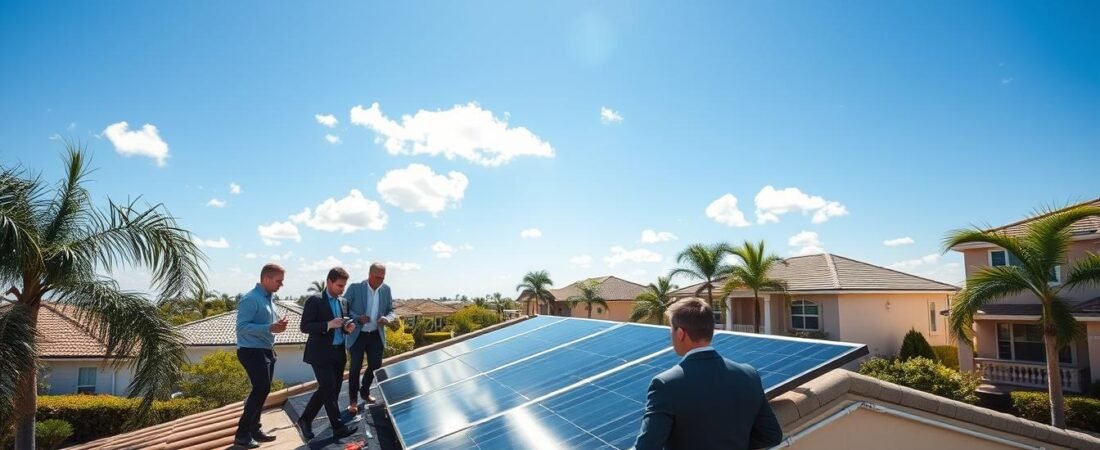
This buyer’s guide walks you through choosing a contractor, understanding pricing and incentives, comparing equipment, and sizing timelines and payment options for home energy systems. It’s built for homeowners who plan to compare installers, quotes, warranties, financing, and long-term value—not just chase the lowest price.
What to expect: a typical project moves from quotes and contract to a site assessment, permitting, the install, inspection, and utility interconnection approval. We highlight measurable benchmarks like price per watt, typical 5 kW pricing, and basic payback concepts so you can sanity-check proposals.
Orlando homeowners are looking now because of strong sun, heavy cooling demand, and rising electric rates. We also note that incentives and policies change; verify current programs with your installer, utility, and official incentive databases.
Who this is for: single-family homeowners, roof owners, and buyers considering batteries for hurricane-season resilience. Use this guide to set realistic expectations and compare offers with confidence.
Why Orlando Is a Smart Market for Solar Energy Right Now
Local weather and usage patterns put many homes in a strong spot to capture value from rooftop generation.
Quick facts: Orlando averages about 233 sunny days per year and Florida ranks among the top five states for production. Residents also use more electricity than many states because of long cooling seasons.
High sun meets high demand
High daytime demand plus abundant sun is the sweet spot: the more electricity your home uses, the more value you can capture by producing power on-site.
Climate and equipment choices
- Long cooling seasons align production with daytime use, improving returns compared with cloudier regions.
- Humidity, heavy rain, and storms make corrosion-resistant mounts and quality flashing important for long-term performance.
- Wind-rating and secure roof attachments matter — experienced installers know local codes and storm risks.
- Frequent outages motivate some buyers to add batteries so essential circuits stay powered during storms.
Realistic expectation: your exact payoff depends on roof orientation, shading, utility rate plans, and how exported energy is credited. Work with a local pro to get a tailored estimate for years of reliable savings.
Solar Panel Installation Orlando: What Homeowners Should Expect
Start by knowing the typical buyer timeline so you can spot realistic milestones and avoid vague promises. A clear roadmap helps you compare companies and hold an installer to agreed dates.
Typical buyer journey:
- Request quotes and pick an installer, then sign a contract with scope and equipment listed.
- Site visit (in-person or virtual) and final design.
- Permits filed and equipment ordered.
- Install (usually 1–3 days) followed by inspection and utility interconnection approval.
Comparing installers and signing a contract
Get at least three bids. Compare production models, warranties, and financing. A good contract shows scope, an equipment list, warranty terms, change-order policy, and which party handles permits.
Site visits: in-person vs virtual
Satellite or drone measurements save time for straightforward roofs. Choose an in-person roof walk for complex layouts, older roofs, or serious shading concerns.
| Assessment type | Best for | Key benefit | Limitations |
|---|---|---|---|
| Virtual | Simple roofs, standard shading | Faster quotes, lower scheduling delays | Less accurate for obstructions and roof condition |
| In-person | Complex roofs, older homes | Accurate measurements and visible roof issues | Requires more scheduling time |
| Hybrid | Most homeowners | Balance of speed and accuracy | May add a small fee for the site visit |
Permits, install day, and final approvals
Reputable companies handle municipal permits and utility paperwork. On install day, crews prep roof mounts, run wiring, place inverters, and mount modules. The work often finishes in 1–3 days for a typical house.
Final steps: a government inspection and utility interconnection approval are required before the system can export power. Track timelines and ask your company for the expected completion date so you can plan.
How Much Solar Costs in Orlando and How Pricing Is Measured
Understand the two common price formats. Installers quote either a total system price or a price per watt. The per-watt number is best for apples-to-apples comparisons because it normalizes size differences and makes offers easier to compare.
In this market, a fair range is about $2.06–$3.10 per watt, with an average near $2.58/W. That translates to roughly $10,922–$14,778 for a typical 5 kW solar system before incentives. Higher quotes often reflect premium panels, complex roofs, batteries, or needed electrical upgrades.
Florida homes often install larger systems because cooling loads are high. Bigger projects usually lower the per watt price due to scale and fixed labor costs spreading across more wattage.
Ask for a written production estimate and an itemized equipment list. Verify module specs, inverter type, warranties, and expected annual output so you can judge true value—not just sticker price.
Red flags: vague equipment descriptions, short workmanship warranties, high-pressure deadlines, or a business model that can’t support 25-year service obligations. Get at least three proposals and weigh per-watt price plus warranty and service reputation.
How Much Money You Can Save With Solar Panels in Orlando
A practical payback estimate starts with a clear definition and realistic numbers. Payback is the point when annual bill savings equal what you paid out of pocket or your net financed cost.
Understanding payback and long-term savings
Sanity-check any savings estimate by comparing three things: the system’s projected annual production, your current electricity rate, and the net cost after incentives. Ask for conservative and optimistic scenarios so you see a range.
As a reference, the average local payback is about 8.47 years, with roughly $34,967 in 20-year savings. Your results will vary by roof, usage, and rate plan.
How net metering credits lower monthly bills
Net metering lets you send extra power to the grid and receive credits that reduce future bills. This can cut monthly costs significantly, but reaching a $0 bill depends on fixed charges, credit rules, and system sizing.
- Summer cooling often uses most daytime energy, reducing exports.
- Spring and fall can produce more credits when demand is lower.
- Ask installers to model rate increases and multiple usage profiles.
Bottom line: a well-sized system can help you save money and lower bills, but get a written estimate and scenario models to judge the real payback for your home.
Orlando Solar Incentives, Rebates, and Tax Credits to Lower Your Upfront Cost
A mix of federal credits, state exemptions, utility rebates, and smart financing can cut what you pay up front and improve long‑term value.
The big four that reduce real cost:
- Federal Residential Clean Energy Tax Credit — a direct tax credit for qualifying homeowners.
- Florida property and sales tax exemptions that lower immediate and future tax burdens.
- Utility rebates from local providers that reduce cash needed at purchase.
- Financing options such as PACE or lender programs that spread payments over time.
Who typically qualifies and key notes
Homeowners who purchase a system, whether cash or with a loan, usually qualify for the federal tax credit if they have sufficient federal tax liability. Verify the current percentage and rules before you file.
| Incentive | Who benefits | Typical impact on cost |
|---|---|---|
| Federal tax credit | Homeowners with tax liability | Reduces federal tax owed (check current rate) |
| Florida property exemption | All homeowners | Adds value without higher property taxes |
| Sales tax exemption | Purchasers of equipment | Immediate reduction in purchase price |
| Utility rebates (e.g., OUC) | Customers of participating utilities | $0–$1,000+ depending on program and funds |
| PACE / loan programs | Property owners who qualify | Spreads payments; may add fees—read terms |
Tip: Rebates change often because of budgets and caps. Confirm current availability with your utility and ask your installer to itemize all incentives in the proposal.
How to Choose the Best Solar Installers and Companies in Orlando
A trustworthy installer turns good equipment into reliable home power for decades.
Longevity and real-world experience
Pick companies with history. Aim for firms with at least five years in business to improve odds they’ll honor a 20–25 year support timeline.
Licenses, insurance, and certifications
Verify Florida licensing, proof of insurance, and whether the team includes NABCEP-certified electricians.
Customer service and maintenance expectations
Expect app-based monitoring, a clear escalation path, and defined maintenance responsibilities.
| What to check | Why it matters | Target |
|---|---|---|
| Years in business | Shows staying power for long warranties | 5+ years |
| Licenses & insurance | Protects you from liability and code problems | Valid Florida license; COI on file |
| Certifications | Indicates technical experience | NABCEP or certified electricians |
| Workmanship warranty | Covers roof and labor issues | 10+ years |
How to read company reviews
Scan Google, Yelp, and industry sites. Read 2–4 star reviews for patterns like slow response, roof issues, or billing surprises.
Ask about future needs. If you plan batteries or EV charging, choose a company that supports those brands and services.
What to Look for in Solar Quotes From Orlando Installers
A clear quote shows not just price but the logic behind expected yearly production. Ask for both a cash estimate and a financed estimate so you can see how dealer fees or interest change the real cost.
System size and production assumptions
Demand the system size in kW and the annual kWh projection. Then ask which shading model the installer used and whether trees were assumed trimmed.
Total cost vs price per watt
Compare total cost and the price per watt to normalize offers. Match system size, equipment quality, and warranty terms when you compare numbers.
Financing details that affect real cost
Get itemized loan terms. Some dealer fees can add 20% or more to the financed cost. For leases or PPAs, confirm any escalator and compare it to expected utility inflation (~3% guidance).
Payback sanity checks and equipment specs
Compute payback by dividing net cost by expected annual savings and verify net metering values used. Request written equipment specs: typical wattage (~400W), efficiency (>19%), inverter type, and 25-year warranties.
- Tip: Get at least three quotes to spot outliers and check installer reviews before you sign.
Equipment and Roof Readiness for a Quality Solar Panel Installation
Before you buy equipment, inspect the roof. A roof with many remaining years prevents extra removal and reinstall costs later. Treat the roof as part of the investment—your system should sit on a surface that will last as long as the modules.
When to replace the roof first: if shingles, flashing, or decking show age or if the roof has less than 10–12 years of life left, plan a replacement before installing panels. This avoids voiding workmanship warranties and keeps future service simple.
Layout, shade, and real-world placement
Mature trees and complex rooflines often force creative layouts. Good placement is not just south-facing; installers must optimize azimuth and tilt and reduce shading losses.
Leave required fire and setback pathways clear. A well-designed layout balances maximum production with safe roof access and code clearances.
Durability, brands, and warranties
Choose corrosion-resistant racking, quality flashing, and tidy conduit runs for humid, storm-prone climates. Modern panels commonly include 25-year product and performance warranties—ask for those specs in writing.
| Item | What to check | Why it matters |
|---|---|---|
| Roof age | Years remaining, visible wear | Avoid costly removal if replacement is needed soon |
| Mounting hardware | Material and corrosion resistance | Lasts longer in humid, salty air |
| Layout plan | Azimuth, tilt, shade map | Maximizes yearly power and reduces hotspots |
| Warranties & service | Manufacturer vs workmanship | Ensures claims and local repairs are timely |
Ask installers about brand track records and local serviceability. Confirm how roof penetrations are covered under workmanship warranties. These checks protect your home and help the system deliver reliable power for years.
Solar Battery Storage in Orlando for Backup Power and Better Bill Control
Frequent outages have pushed buyers to consider batteries as part of a reliable home-energy plan.
Why many homeowners add battery backup: Florida ranks among the top states for outages, so buyers often choose battery storage for storm resilience and peace of mind. A battery is a practical upgrade when keeping lights, refrigeration, and essential outlets running matters.
How battery systems keep essentials powered
During normal operation, a rooftop array powers the home first and charges the battery with excess energy. If the grid fails, an automatic transfer isolates the property and the battery supplies selected circuits.
Realistic expectations: a battery can run a fridge, some lights, Wi‑Fi, and critical outlets for hours depending on its capacity and load plan. Commercial offers like Sunrun Brightbox advertise roughly 8–12 hours of essential backup, but runtime varies by consumption.
When batteries also improve bill control
Batteries can cut utility costs when net-export credits are low or time-of-use rates are in effect. Storing daytime generation for evening use raises self-consumption and can reduce peak charges.
Shopping tips: ask installers for a written “critical loads” plan so you know what stays powered and for how long. Compare warranties, round-trip efficiency, and local service capability—batteries add cost and complexity, so choose a vetted installer with service commitments.
Buying vs Financing vs Leasing: Picking the Best Way to Pay for Solar
Deciding between cash, a loan, or a third-party agreement is one of the biggest financial choices you’ll make for a home energy system.
Cash purchase
Buy with cash when possible. It yields the best lifetime returns and lets you claim federal and local incentives directly.
Cash avoids interest and dealer fees, so you keep more money over the long term.
Solar loans
Loans let you own without upfront cash. Watch APR, term length, and dealer fees—those fees can add ~20%+ to the total cost.
Ask each company for a cash price and a financed price so you can spot inflated upfront pricing hidden in low monthly payments.
Leases and PPAs
With a lease or PPA a third party owns the system; you buy power or rent equipment. Upfront bills are lower, but incentives often go to the owner and long contracts can be complex.
“Escalator clauses can quietly erode savings if annual increases outpace local utility rate growth.”
- Checklist for quotes: cash price, financed price, dealer-fee amount, who gets incentives, and transfer rules for selling your home.
- Evaluate terms over 25 years and factor resale, roof work, and future upgrades.
Conclusion
Start by collecting multiple firm offers that list equipment, warranties, and expected yearly output. ,
Choose a reputable installer and compare price per watt, production assumptions, and service terms before you sign.
In this market, abundant sun and high cooling needs make adding a small home energy system a practical way to lower bills. Verify roof condition, shade impact, and electrical readiness first.
Use incentives smartly but confirm eligibility and current program rules. For local guidance see benefits of going solar and learn about providers via our team page.
Next step: request at least three quotes, get cash and financed prices, and compare equipment and workmanship coverage side‑by‑side. With clear information and careful review, you can make a low‑regret choice about adding solar panels to your home.