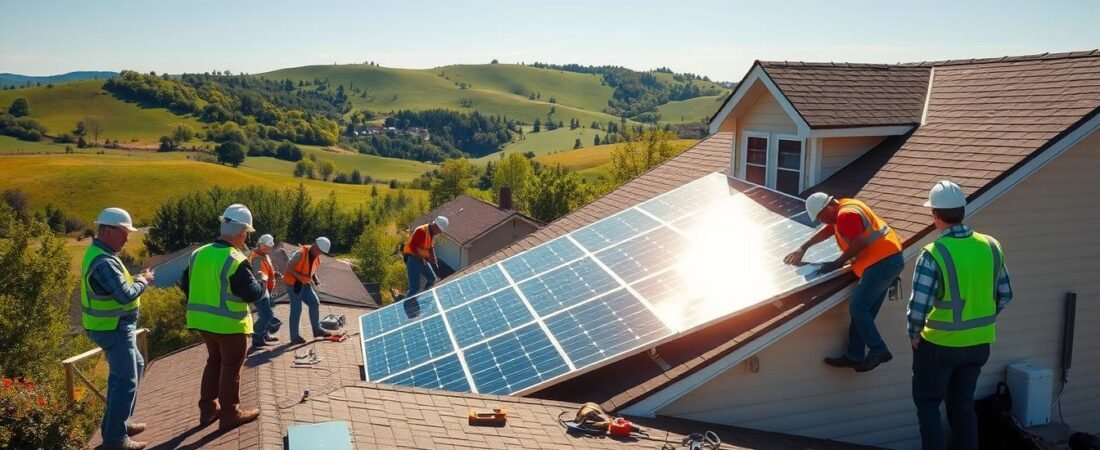
Ready to start going solar? This friendly guide gives a clear roadmap so homeowners can learn pennsylvania solar options and make smart choices. It covers permits, cost factors, and how a system can meet your energy needs.
We explain each step in plain words so the process feels simple and doable. You will find tips on choosing the right solar panel and getting a reliable installation team.
Whether you want lower bills or more independence from the grid, this guide helps you weigh benefits and risks. Use it to compare offers and to plan a smooth setup that fits your home.
Why Solar Energy is Growing in Pennsylvania
As rates climb, residents are looking for ways to make home power more predictable. Pennsylvania electricity prices rose about 31% from 2020 to 2024, so many homeowners seek alternatives that cut risk and stabilize monthly costs.
At 17.79 cents per kWh, state utility charges now sit above the national average. That gap makes clean energy options more attractive for families who want long-term savings and price certainty.
Demand for a reliable system has increased across the state as people respond to higher bills. By generating your own power, you can protect your home from future utility hikes and gain more control over monthly expenses.
Adopting solar energy also supports a more resilient and sustainable local grid. For a broader look at how adoption is changing the region, see this overview of solar Pennsylvania trends.
Understanding the Costs of Solar Panel Installation in Pennsylvania
Breaking down expenses gives a clear picture of what a home system will actually cost. That clarity helps you compare quotes and decide if the investment fits your budget.
System Size and Capacity
System size drives much of the total cost. A larger system produces more electricity but raises the upfront price and the estimated investment.
Typical investment: about $21,966 for an average solar panel system. Many homeowners weigh that against expected savings over the years.
Price Per Watt Considerations
Price per watt helps you compare bids from different companies. The average rate is roughly $2.82/W, which makes it easier to spot high or low offers.
- That average cost can show whether a quote is competitive.
- Financing via a loan or other loans spreads the cost and can make the project more accessible.
- Many owners save thousands dollars over years by lowering utility bills and relying more on self-generated energy.
Understanding total cost is key to forecasting long-term savings and the true value of the project for your home.
Federal and State Solar Incentives
Financial incentives from Washington and the state make clean energy more affordable for homeowners. The federal investment tax credit (ITC) still offers a 30% reduction on the total cost of your system, which can cut your upfront investment significantly.
At the state level, Pennsylvania awards one solar renewable energy credit (SREC) for every 1,000 kWh produced. SRECs trade on a market, and current values sit around $26–$35 per credit.
The combination of federal tax relief and SREC sales lowers the net cost and shortens the payback period. Monitoring SREC prices helps you time sales for the best return.
- Homeowners can claim the 30% investment tax credit to reduce taxable liability.
- SRECs provide ongoing value by selling renewable energy credits generated by your system.
- State and federal incentives together reduce the required investment and improve savings.
| Incentive | What it Does | Typical Value |
|---|---|---|
| Investment Tax Credit (Federal) | Reduces federal tax liability by a percentage of project cost | 30% of qualified cost |
| Solar Renewable Energy Credits (SRECs) | Sold for additional income based on generation | $26–$35 per credit (approx.) |
| Net Effect | Lowers out-of-pocket and boosts long-term returns | Varies by system size and market |
Tip: Track both federal rules and the SREC market to maximize available incentives and reduce your net cost over time.
How Net Metering Works for Your Home
When your system produces more than you use, the grid can act like a storage bank. Excess power flows to the utility, and your meter records those kilowatt-hours as credits.
Understanding Utility Credits
Pennsylvania law requires investor-owned utilities to offer 1-to-1 net metering. That means you receive full retail value for excess electricity your system sends to the grid.
During sunny hours your meter may run backward. Those credits roll over month to month and offset later bills, boosting long-term savings and lowering the system payback time.
| Feature | How It Works | Benefit |
|---|---|---|
| Credit rate | 1-to-1 retail value for exported energy | Maximizes value per kWh |
| Rollover | Credits carry forward month to month | Smooths seasonal swings, reduces annual cost |
| Accounting | Every kWh of renewable energy is tracked | Clear value for homeowners and better ROI |
Tip: Learn the details of local rules and see a clear summary at Pennsylvania net metering rules to understand how credits affect your price and long-term value.
Selecting the Right Solar Equipment
The gear you select sets the baseline for efficiency, reliability, and future cost savings. Choosing the right components helps homeowners get the most from available roof space while keeping long-term cost low.
High Efficiency Panels
High-efficiency modules that produce about 450 watts are now common as of 2025. These units let you maximize energy output when roof area is limited.
Tip: A compact, high-watt option often reduces the number of modules you need and can lower overall project cost.
Solar Inverter Setups
A good inverter converts generated electricity into usable power for your home. String inverters suit many roofs, while microinverters or optimizers improve output on shaded or complex layouts.
Battery Storage Integration
Adding battery storage keeps clean energy available after sunset and during outages. Even a modest battery can smooth peak use and boost self-consumption.
Warranty note: Reputable equipment commonly carries a 25-year warranty, giving long-term protection for your investment.
- Choose high-efficiency modules to maximize limited roof real estate.
- Match inverter type to roof layout for best electricity harvest.
- Integrate batteries if you want backup power and higher self-use.
Evaluating Potential Solar Installers
A careful vetting process helps protect your investment and ensures accurate performance estimates. Start by asking for proof of EAA certification; Pennsylvania requires EAA-Certified installers for photovoltaics.
Get at least three quotes from different companies. Compare total cost, projected energy production, expected payback, and warranty terms.
Look for companies with at least five years of experience. Longstanding firms are more likely to stand behind work and handle utility paperwork for net metering and credits.
- Confirm EAA-Certified credentials and liability insurance.
- Ask how the installer handles incentives, loans, and SREC or other credits.
- Read reviews and pose frequently asked questions about timelines and service.
A reputable installer will provide a detailed, written quote that lists system size, expected electricity output per year, total cost, and an estimated payback. That clarity can save homeowners thousands dollars over the life of the system.
Financing Options for Your Solar Project
How you fund a rooftop system shapes your monthly cash flow and long-term return. Start by weighing cash versus credit so you can decide if immediate ownership or lower upfront price matters more to your goals.
Solar Loans and Cash Purchases
Paying cash avoids interest and preserves the full investment tax credit for homeowners. Loans spread cost over years and can unlock faster adoption when savings outweigh the loan price.
Compare financed quotes closely: many loans include dealer fees. A side-by-side cash vs loan comparison reveals true price and predicted savings.
Leasing and Power Purchase Agreements
Leases or PPAs let you add a system with little or no upfront cost while the company owns and maintains equipment. Palmetto’s LightReach program, for example, offers a lease with a 90% production guarantee that protects expected output.
Note: Watch for escalator clauses that raise your energy price each year. Predictable rates support long-term budgeting.
- Tip: Decide if claiming federal incentives matters—ownership lets you use tax credits.
- Ask companies about flexible loans and total projected electricity savings over the loan term.
What to Expect During the Installation Process
Most crews follow a consistent checklist so your new system is safe, permitted, and ready to produce energy.
Site prep and permits: The installer handles permits, site checks, and any roof preparations before work begins. That saves homeowners time and reduces surprises.
Mounting and wiring: Technicians mount the modules securely to your roof and connect the wiring. This step focuses on durability and maximum energy output.
Timing and testing: A typical project takes a few days. After the crew finishes, the system must pass a final inspection before it ties to the grid.
Final steps: Once approved, the installer will test production and confirm expected electricity and power flow. Clear communication during these stages helps you know when your home will start saving on cost.
- Mounting is done with care for roof health and long-term performance.
- Permits and inspections ensure safety and code compliance.
- Testing verifies the system meets projected energy output.
Environmental and Financial Benefits of Going Solar
Choosing clean power can shrink your household carbon footprint and your monthly bills at the same time.
A typical 10 kW system offsets about 10 tons of carbon dioxide each year. That reduction helps local air quality and lowers your household emissions for many years.
Generating solar renewable energy at your home cuts reliance on the grid and locks in predictable electricity costs. Net metering lets you earn credits when production exceeds use, reducing later bills.
- Environmental: Big yearly cuts in CO2 and a clear boost for alternative energy locally.
- Financial: Long-term savings, potential income from selling a renewable energy credit, and protection from rising utility prices.
- Incentives: Federal and state programs improve payback and lower out-of-pocket cost for many homeowners.
| Benefit | What it Means | Typical Impact |
|---|---|---|
| Carbon reduction | Lower greenhouse gas emissions | ~10 tons CO2 per 10 kW system / year |
| Net metering credits | Exported electricity earns value on your bill | Reduces annual electricity cost |
| Financial returns | Incentives and renewable energy credits boost payback | Lower lifetime cost; potential income |
Tip: Compare quotes from reputable companies, check incentives, and model expected savings before any installation or loan decision.
Conclusion
This guide gives clear next steps so you can move from research to action with confidence. Choose options that match your goals for cost savings and reduced emissions. Good planning helps you get steady results.
Use net metering to capture full value for exported power and track credits carefully. Check equipment quality and compare any quote that lists expected output and warranty. A well-sized panel array and proper installation matter for long-term value.
We hope this guide answered your frequently asked questions and helped you learn pennsylvania solar choices. Research local installers, compare quotes, and take the next step toward greater energy independence today.